Noah’s ark is a mythical, massive-ship, that is said to have ‘saved’ all of the animals on Earth together with Noah’s family, before the great flood destroyed everything on the planet.
If we take a quick peek at history, we will find that ‘Noah’s Ark’ is a story from the Hebrew Bible, which tells how, by order of God (Yahweh or Jehovah), Noah built a boat for to save him, his family, and countless animals who, saved from the great flood, would repopulate the Earth with their offspring.
This story can be found both in the sacred texts of Judeo-Christianity (the Torah and the Old Testament) and in the Koran of the Muslims.
Its origin can be traced back to the Sumerian myth of Ziusudra, and to the eventual contact of the ancient Hebrews with Mesopotamian cultures after the fall of Jerusalem.
Despite the fact that in the past the universal flood was accepted as a historical fact, modern-day scholars remain skeptical regarding its literalness, given the lack of geological evidence for such an event.
However, several biblical scholars continue exploring Mount Ararat, where the Bible says the ark rests.
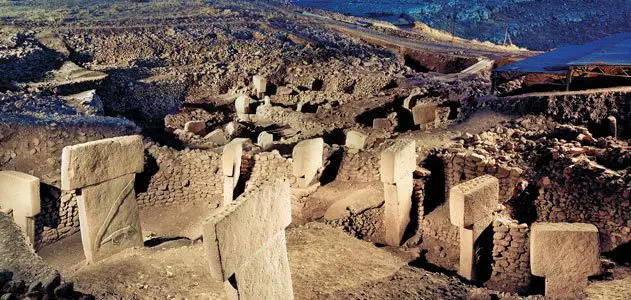
Many ‘Biblical researchers’ believe Noah’s Ark rest on Mount Ararat in Turkey. Image Credit: Shutterstock
Ummm…so, have found the Arc?
A recent discovery could shed light on the sacred texts of the Judeo-Christian tradition, specifically in relation to the Ark of Noah, the ship that according to the biblical story saved all animal species of Earth during the great Flood.
God, angry with the evil of man, told Noah to gather pairs of each of the animal species on Earth and shelter them in an ark where he and his family would survive the days following a massive, planetary flood.
The question—if of course, one considers this story to be real and historical—is evident: what happened to the ark after the Flood?
There are many scientists in the world who have tried to find evidence about it, and there are some who claimed to have found the remains of the ark.
According to Genesis 8:4 the Ark landed on the “mountains of Ararat” on the 150th day of the great flood.
A team of researchers claims to have found the remains of Noah’s Ark on a 90-meter thick glacier on Mount Ararat in Turkey.
According to researchers, they found Noah’s ark after combing through satellite images.
The old wooden structure would now be more than 4,800 years old and inside it, there are countless compartments, which would have served to accommodate each pair of animals.
While many have expressed enthusiastic emotions about the discovery, others prefer to remain cautious, waiting for more evidence to determine whether or not it is the remains of Noah’s Ark.
According to Noah’s Ark Ministries International, a documentary team based in Hong Kong, they’ve recovered wooden pieces from a massive structure which according to initial carbon dating results, dates back around 4,800 years.
The remains of the alleged Ark were found at around 13,000 feet above sea level.
“It’s not 100 percent that it is Noah’s ark, but we think it is 99.9 percent that this is it,” Yeung Wing-Cheung, a filmmaker accompanying the explorers, told The Daily Mail.
“The structure is partitioned into different spaces,” said Noah’s Ark Ministries International team member Man-Fai Yuen in a statement.
“We believe that the wooden structure we entered is the same structure recorded in historical accounts…”
The Ark isn’t on Mount Ararat
According to Dr. Andrew Snelling, in an article for Answersingenesis.org:
“Several teams have continued searching for the real Ark.
“Most of them have focused on Mount Ararat in northeastern Turkey, where eyewitness accounts of a wooden structure have spurred interest for centuries.
“The biblical reference to ‘mountains of Ararat’ as the landing site of the Ark suggests those mountains formed well before the Flood ended.
“The Flood was a global catastrophe that totally reshaped the earth’s geology, and the earth’s surface has continued to change since then.
“Perhaps the geology of the modern Mount Ararat region sheds light on whether we should be looking for Noah’s Ark on that mountain.”
Emiliano Garduno Galvez, who authorities say is in the U.S. illegally, pleaded guilty Wednesday to possessing an unregistered destructive device and civil disorder
Cambridge Police Department officers attempted to speak with the suspect and to use TASERs before the suspect ran at one of the officers, prompting a fatal shooting
An Amateur astronomer snapped a few extremely interesting images from the Orion nebula, and UFO hunters are turning towards his images as proof as massive, interstellar alien spaceships.
The Amateur Astronomer from North Carolina was exploring the Orion Nebula when he spotted a strange cigar-shaped UFO. Further analysis of the footage revealed a few mystery objects.
While the astronomer was focusing on his Newtonian telescope, he observed a massive cylinder-shaped UFO that popped up on the screen of his laptop, capturing the enigmatic event in a single frame that lasted for 30 seconds.
Notice the Cigar-shaped object to the center-right of the image. Image Credit MUFON
Immediately after noticing the object that ‘should not have been captured’ near the Orion Nebula, the amateur astronomer turned to MUFON for explanations.
“I was out collecting data on M42 Orion nebula, as I was fine focusing my 8 in astrograph / Newtonian Telescope this appeared on my laptop screen after the 1st I ran 5 frames @ 30.2-second sequence and it shows the movement of the objects at the bottom of the frames. The single cigar-shaped object was captured in a single 30.2-second frame and the 5-frame sequence followed because I’d thought the thrill was over Not the case. It had backup right behind it in the sequence. It’s not the 1st and surely not the last as I search the night sky for galaxies, nebulae and the truth that’s out there.”
More objects were allegedly spotted, and are visible at the bottom of the image. Image Credit: MUFONAre these cigar-shaped object really UFO’s, or is there another explanation? Image Credit: MUFON
Furthermore, after observing the UFO, the amateur astronomer noticed that the UFO sighting was not over as he identified several ‘other’ cigar-shaped objects which he also captured in a sequence of 5 frames at 30.2 seconds, and they clearly show the movement of objects at the bottom of the frames.
However, Facebook page UFO of Interest takes a closer look at the alleged UFOs, and offers a possible explanation proposed by Dave Greg and Jerry Bell from the Facebook group “dazzathecameraman”:
Here are the images of the mystery objects spotted by the amateur astronomer:
Just how ancient civilizations that existed on Earth thousands of years ago managed to erect massive structures, gigantic monoliths, Pyramids, or polish, cut, and transport blocks of stone weighing more than 100 tons remains an enigma for experts.
Some of the achievements of ancient cultures rival our very own capabilities today.
Furthermore, no matter where we look, we find stunning ancient structures that have left experts wondering, how ancient cultures were able to do it.
If we travel to Egypt, the land of the Pharaohs, in addition, the pyramids, we will find supermassive temples with blocks of stone fitted as if they were massive Lego blocks. Perfectly interlocking stones are seen in various temples in Egypt, and some of these structures have created confusion among experts who are unable to explain how ancient cultures did it.
Curiously, if we travel halfway around the globe to South America, we will find eerily similar characteristics in Bolivia and Peru.
If we take a look at the Koricancha temple, we will notice extremely smooth blocks of andesite that have been worked with such precision that some modern engineers have said: “they must have used laser-like tools, it’s impossible they used primitive tools like sticks and stones…”
The truth is ancient civilizations that existed on Earth thousands of years ago were far more advanced and capable than what we credited them for today.
Tiahuanaco is home to mind-altering structures. Within the Tiahuanaco complex in Bolivia, we find Puma Punku.
The Door of the Puma, as Puma Punku translates, features some of the largest stones ever seen in that part of the world. One particular block of stone at the site is 7.81 meters long, 5.17 meters wide, averages 1.07 meters thick, and is estimated to weigh about 131 metric tons. It still remains an enigma as to how the ancient builders of Puma Punku—and Tiahuanaco—managed to transport these massive stones from their quarries.
The precision cuts, sharp corners, and millimetric drill holes are another mystery which has left experts awestruck.
The Osirion temple in Egypt features construction details that eerily resemble those found in America, more precisely Ollantaytambo and Sacsayhuaman.
The Osirion temple offers us evidence of how ancient mankind managed to erect massive temples and place together gigantic blocks of stone to a millimetric precision, almost as if they could manipulate the weight of the stone, making them easier to transport.
The same can be said about the massive stones and structures and Ollantaytambo and Sacsayhuaman.
To get a ‘picture’ of what I am talking about, here are 20 images that have left archaeologists awestruck.
Features of the Coricancha Temple in Peru. Image Credit: ShutterstockWhat. A. View.The Ancient Stepwell of Chand Baori—with 3,500 narrow steps over 13 levels high. Image Credit: Pinterest.Qasr al-Farid—carved out of a single rock, and abandoned in the middle of the desert. Image Credit
The handbag of the gods. Scholars are unable to explain why these mysterious ‘handbags’ appear in illustrations from ancient cultures across the globe.The temple itself was built out of a single rock, 164 feet deep, 109 feet wide, and 98 feet high, making it ONE of the BIGGEST MONOLITHIC structures on the planet, carved out of a single rock.Ollantaytambo. Image by: Barry EverettImage of Ollantaytambo by Eduardo Pi Peret PhotographyExperts are still not sure what the mystery symbols depicted on the Concho Stone represent.The Stones at Sacsayhuaman.Sacsayhuaman: Incredible details as seen in other ancient sites such as Ollantaytambo, Machu Picchu. Image Credit: PinterestA panel at the Konark Sun Temple. Image credit: Surya InnOne of the best images of the 1200-ton block of stone at Baalbek.The Great Pyramid of Giza is the only eight-sided Pyramid.
A dissenting judge warned the ruling could undermine road safety, saying, “People who traverse our Florida highways are entitled to share the roads with sober and safe drivers”
Monterey Park Police Officer Gardiel Solorio “was more than an officer — he was a son, a brother, a friend and a hero. His sacrifice continues to inspire all of us,” the department wrote
Every time we think about Atlantis—the fabled lost city/continent—we think about Plato, the man who described its existence in his work Critias and Timaeus.
But have we ever asked ourselves where does the original story from Atlantis come from?
Plato did not invent Atlantis as many believe, but the story of the existence of this ‘mythical’ city/continent can be traced back in history.
To understand more about Atlantis, we must venture out and learn more about Solon, a highly respected and well known Greek Statement who lived between 638 BC – 558 BC.
Solon was a famous lawgiver of Athens, and he was notable for his poems and writings.
As explained by Plato, Solon travels to ancient Egypt to learn more about the history of its country, and look for potential trading outposts between Greece and Egypt.
It is believed that in an ancient tale, Solon wrote about the mythical city-continent of Atlantis—an elusive empire that has captured the interest and imagination of historians, archeologists, adventurers, philosophers and others for more than two thousand years.
So, who wrote about Atlantis first?
Well, from what we are able to understand, it was An Egyptian priest of very great age, named Sonchis, Sonchis of Sais— Sais being an ancient Egyptian town in the Western Nile Delta on the Canopic branch of the Nile.
Solon, after his travels to Egypt, met Sonchis, who in turn told him a great ancient civilization that had disappeared from Earth 9,000 years ago. Among many other things, it is believed that Sonchis told Solon stories about a series of ancient empires that existed on Earth, natural catastrophes that made them crumble, and great wars that had raged civilization in the past.
During his time in the city of Sais, Solon learned great information about Atlantis from Sonchis who described the incredible size and wealth of the Atlantean empire as best as he could.
Sonchis explained that Atlantis’ capital city was elaborately constructed, where great temples and palaces were erected, adorned by exotic gardens made of silver, gold and, ivory. Sonchis further described the capital of the Atlantean empire as being made of massive walls, which in turn were surrounded by circular islands protecting the inner citadel of the metropolis.
But, let’s hold on there for a sec and look at what Plato had to say about Sais, Atlantis and the priest who allegedly introduced the world to Atlantis.
First of all, we have to mention that the existence of Sonchis of Sais is a matter of debate among experts who cannot agree whether or not he actually existed.
An interpretation of Atlantis according to the Greek philosopher Plato.
Having that said, in Timaeus and Critias, written around 360 BC Plato described—through the voice of Critias—how Solon traveled to Sais and met with priests from the goddess Neith. It is there where an extremely old priest tells Solon about an empire that existed 9,000 years before him, which was at war with Athens. Eventually, this empire identified as ‘Atlantis’ was destroyed by a great catastrophe.
Plato does not mention the name of the Priests who told Solon about Atlantis, but Plutarch (46–120 AD), in his Life of Solon identified the priest as Sonchis:
Near Nilus’ mouth, by fair Canopus’ shores, and spent some time in study with Psenophis of Heliopolis, and Sonchis the Saïte, the most learned of all the priests; from whom, as Plato says, getting knowledge of the Atlantic story, he put it into a poem, and proposed to bring it to the knowledge of the Greeks.
So, this means that the history of Atlantis can briefly be resumed like this:
An empire existed 9,000 years before the life of Solon, and the Egyptian Priest Sonchis.
Atlantis eventually is destroyed by a catastrophe, and nearly all records of its existence are lost.
The only records remain are shared among priests of ancient Egypt.
Eventually, Solon travels to Sais where he meets an ancient Priest who knew about Atlantis.
Athanasius Kircher’s map of Atlantis, placing it in the middle of the Atlantic Ocean, from Mundus Subterraneus 1669, published in Amsterdam. The map is oriented with south at the top. Image Credit: Wikimedia Commons
Identified later as Sonchis of Sais, this priest explains to Solon that Atlantis was an extremely powerful empire that existed 9,000 years before them, and was eventually destroyed.
Solon returns to Greece where he mentions the existence of Atlantis.
Later, in Timaeus and Critias written in 360 BC, Solon traveled to Egypt and that he learned about the existence of Atlantis from an ancient Priest.
Plato writes that Atlantis was located in Timaeus:
“For it is related in our records how once upon a time your State stayed the course of a mighty host, which, starting from a distant point in the Atlantic Ocean, was insolently advancing to attack the whole of Europe, and Asia to boot. For the ocean there was at that time navigable; for in front of the mouth which you Greeks call, as you say, ‘the pillars of Heracles,’ there lay an island which was larger than Libya and Asia together; and it was possible for the travelers of that time to cross from it to the other islands, and from the islands to the whole of the continent over against them which encompasses that veritable ocean. For all that we have here, lying within the mouth of which we speak, is evidently a haven having a narrow entrance; but that yonder is a real ocean, and the land surrounding it may most rightly be called, in the fullest and truest sense, a continent. Now in this island of Atlantis there existed a confederation of kings, of great and marvelous power, which held sway over all the island, and over many other islands also and parts of the continent…” –Timaeus24e–25a, R. G. Bury translation.
The Ancient Anunnaki are often referred to as the immortal gods that lived on Earth during the ancient Sumerian time in Mesopotamia.
According to Mesopotamian mythology, the Anunna or Anunnaki were, initially, the most powerful gods and lived with Anu in heaven.
Later, without having established a clear motive for this change, the Igigi were considered as celestial gods while the term Anunna was used to designate the gods of the Underworld, especially seven gods who served as judges in the Underworld.
In the myth of Atrahasis it is stated that, before the creation of man, the gods had to work to live.
Then, the Anunna made a category of inferior gods, the Igigi work for them, until they rebelled and refused to continue working.
Then Enki created humanity so that it continued performing the tasks that the minor gods had abandoned and through cult would provide food to the gods.
In the Enûma Elish, it was Marduk who created humanity and then divided the Anunna between heaven and earth and assigned them tasks.
Next, the Anunna, grateful to Marduk, founded Babylon and built a temple in his honor, called Esagila.
So, who were the Anunnaki?
The reinvention of the Anunna term through its Akkadian form, Anunnaki, arose in 1964, after the publication of the book Ancient Mesopotamia: Portrait of a Dead Civilization, by Adolph Leo Oppenheim, who popularized this concept which was taken by different blogs and characters from the esoteric world and pseudoscientific portals.
Author Zecharia Sitchin published a dozen books known as Chronicles of the Earth from the 1970s where he described in great detail the Anunnaki.
In his Books, Sitchin offered translated ancient Sumerian clay tablets and texts which were written in a cuneiform script that describes the Anunnaki.
In the book the 12th Planet, Sitchin tells the arrival of the Anunnaki to Earth from a supposed planet called Nibiru about 450,000 years ago: tall beings about 3 meters in height with white skin, long hair and beard, who would have settled in Mesopotamia and that, by genetic engineering, accelerated the evolution of the Neanderthal to Homo Sapiens contributing their own genetics, for the need of slave workers.
According to Sitchin’s writings, the technology and power of the Anunnaki is something our civilization cannot replicate even today in the 21st century.
Sitchin stated that the ancient inhabitants of Nibiru had the ability for space travel and genetic engineering 450,000 years ago, and that they would have left traces of their existence all over Earth with small clues pointing to a still unknown technology that is present in various forms in the construction of pyramids (Egyptian, Mayan, Aztec and Chinese), in the megalithic site of Stonehenge, in the “spaceport of Baalbeck”, in the Nazca lines and in Machu Picchu.
The theories are many, and what some scholars refer to as a mythological species, others point towards interstellar travelers, that came to Earth thousands of years ago.
But if the Anunnaki were real? Who were they and who was the first of them? What is their bloodline and can we trace them back in history to specific deities?
There are various ‘family trees’ available on the Internet with a series of differences in them. For example, the following three (picture below) is a family tree more inclined to the Mesopotamian—especially Babylonian—version of the Anunnaki Bloodline, and evidence of that is the inclusion of Tiamat and Marduk.
The “Grand Assembly of the Anunnaki”, essentially the Family Tree of the ruling class (or the “Gods And Goddesses” of the Sumerian Texts) is given by Laurence Gardner, Genesis of the GReail Kings, Bantam Press, New York, 1999:
Pictured here is the Grand Assembly of the Ancient Anunnaki. Image credit
Florida Highway Patrol Trooper Craig Gaines died two weeks after being accidentally struck by a player while providing security at a Florida Atlantic University football game
The DOJ cited a federal investigation finding that only two of 8,000 permit applications were approved; the LASD attributed delays to a backlog inherited by the current administration