It is not a mystery that thousands of years ago, ancient cultures around the globe had the ability to somehow move supermassive blocks of stone with extreme facility.
Despite lacking ‘modern tools’ to do so, it is a well-known historic fact that cultures had the ability to move rocks of up to 1,000 tons, and transport them from their quarries to their final resting places, in temples, pyramids, and other monuments.
And while we still can’t figure out the how, we continue searching our planet discovering incredible ancient sites that are the ultimate proof that we still don’t know everything about our ancestors.
In this article, I’ve gathered a number of images from different archaeological sites across the globe that show the sheer number of megaliths quarried and moved by mankind thousands of years ago.
In addition to the fact that they quarried and transported stones up to one thousand tons, the ancients were also very gifted designers and engineers.
Some stones, like those found at the Khafre Valley Temple in Egypt, feature incredibly precise cuts and stones put together in such a way that every stone fits perfectly to the next one.
The most amazing thing perhaps is the fact that all of this was achieved without the use of mortar.
And curiously, if we compare the images of temples in Egypt to images of monuments in Bolivia or Peru; like Puma Punku, Sacsayhuaman, or even Ollantaytambo, we will notice an incredible similarity between the stones in South America and those in Africa.
It is almost as if these cultures used the same technique, the same technology, and the same principles thousands of years ago.
The only question that remains is, what were these techniques? What was the technology they used?
Where is it now? And why have we not found any evidence of it despite tedious archaeological work?
So, ask yourself after seeing these images; Did the ancients achieve all of this using sticks and stones?
Or, is there a slight possibility that we still have not figured out everything about ancient civilizations that lived on Earth thousands of years ago, and that somewhere out there the final piece of the puzzle remains to be found?
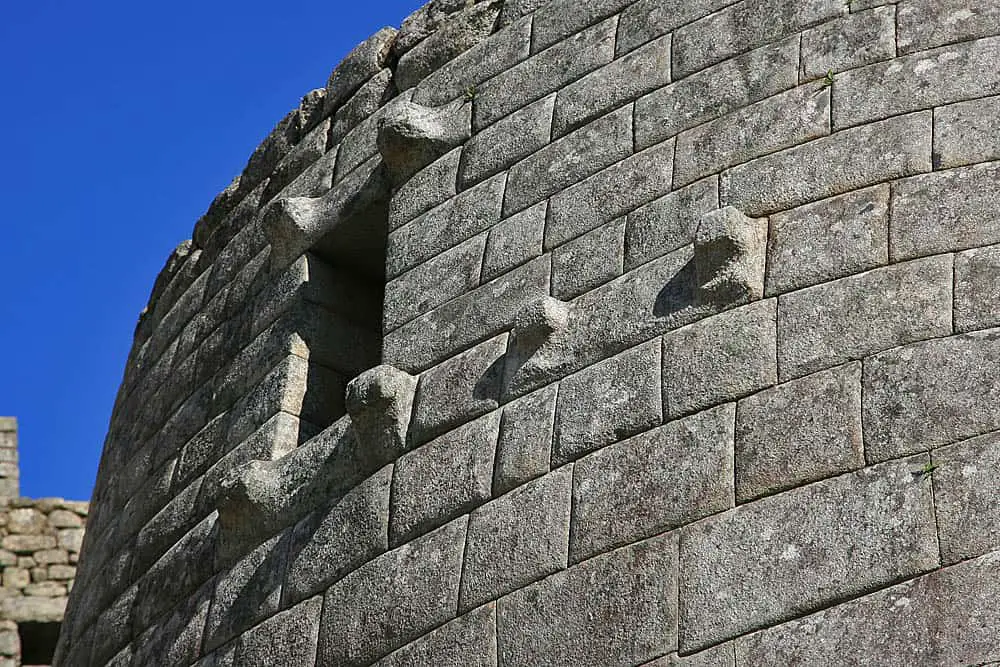
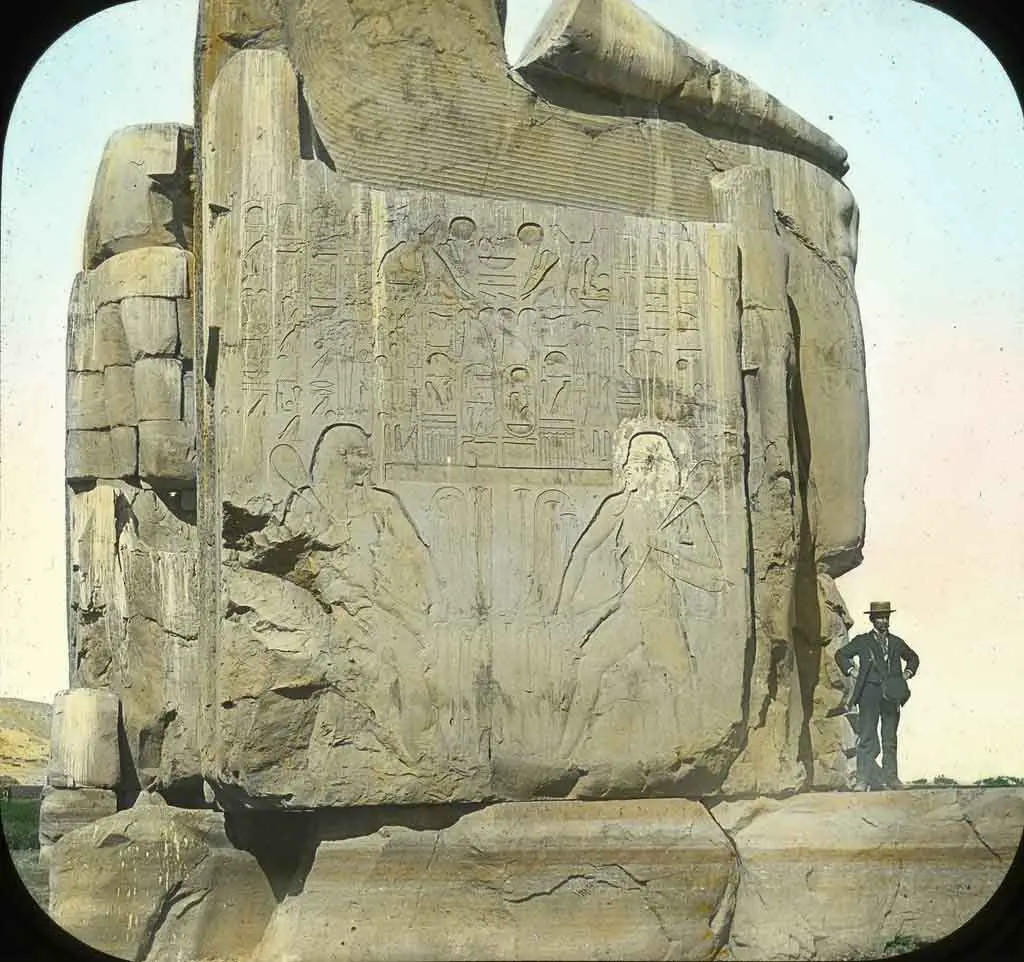
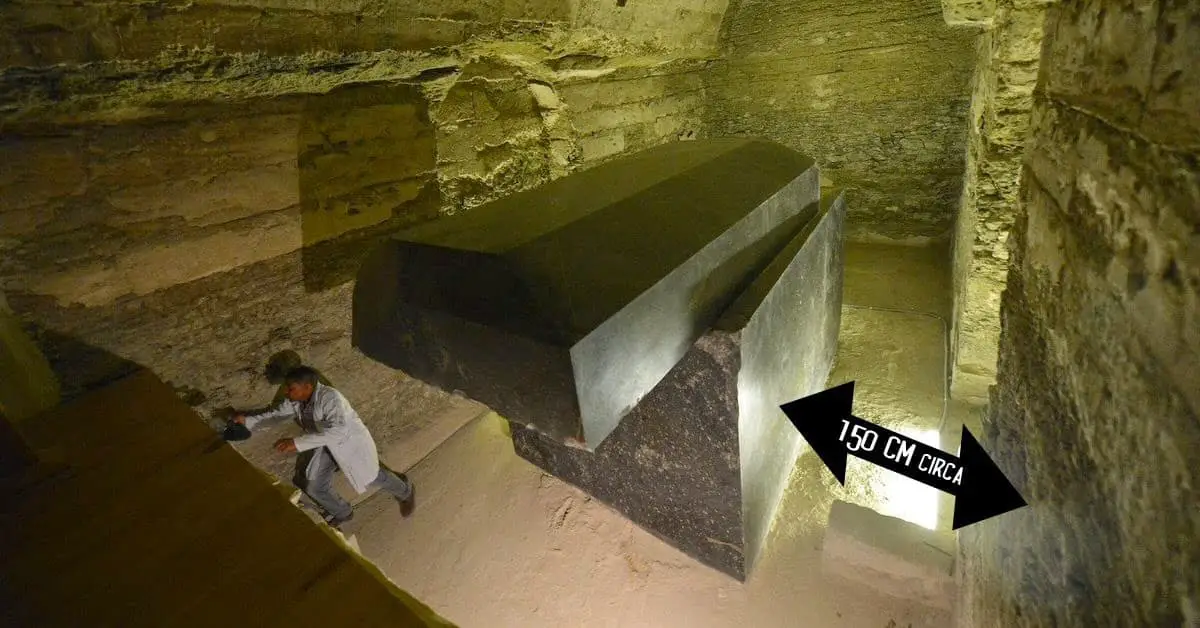
The valley temple of Khafre, on the bottom of the causeway from the Sphinx to the Great Pyramid. Check out the massive stones and their perfectly-polished surface. Image Credit: ShutterstockThese mesmerizing engineering skills have allowed the mortar-free facing to remain in position for thousands of years after the temple was built. How did they achieve this type of precision, thousands of years ago? Image Credit: Keith Payne.Khafre valley temple statue sockets. Image Credit: Wikimedia CommonsThe interior of the temple features stones that appear as if they were ‘bent’ by the builders. Image Credit: Keith Payne.Two composite images of the Valley Temple. ShutterstockAn image of the Temple of the Sun, Machu Picchu, Peru. Notice the incredible details of this structure. Again, not a single sheet of can fit in-between the rocks.Incan stonework, Palace of Inca Roca, Cuzco, Peru. Another example of extreme precision. Not a single sheet of paper fits between the rocks. Some of them look as if they were ‘fused’ together.Features of the Coricancha Temple in Peru. Image Credit: ShutterstockA compilation of images from the Coricancha temple.Another incredible image of the Coricancha temple stones.Polygonal masonry Inca brick at Coricancha. Image Credit: ShutterstockThe Stones at the Coricancha temple fit in perfectly like a Puzzle.How did the ancients achieve such precision? Image Credit: ShutterstockThis stone at Puma Punku features details that almost seem as if they were created using laser tools.The Stones at Puma Punku are an incredible feat of ancient engineering.The famous H blocks at Puma Punku, Their purpose remains a mystery.Another perfectly-carved stone block at Puma Punku.The purpose of the stones at Puma Punku remains a mystery.One of the H Blocks at Puma Punku.The stones at Ollantaytambo appeared to be glued together. They fit perfectly like a puzzle. Image by: Barry EverettAncient Perfection. Image by: Barry EverettStones at Ollantaytambo. Not only are the stones at Ollantaytambo, they appear to be fused. Image by: Barry EverettHow did the ancients achieve this perfection? Image by: Barry EverettPuzzle stones. Not a single piece of paper fits between the stones, Image by Barry EverettHow on Earth did the ancient builders achieve this type of perfection without the use of modern technology? Image by: Barry EverettSome of the stones feature mysterious ‘knobs’. Image by: Eduardo Pi Peret PhotographyThese are some of the largest stones at Ollantaytambo. Image by: Barry EverettHow were these stones carved? Image by: marlandc.comTalk about PRECISION. Ollantaytambo. A closeup of the massive blocks of stone at Ollantaytambo. Image credit: PinterestImage Credit: Woanderssein.comAnother striking image of the stones at Ollantaytambo. Image by: Barry EverettStones at Sacsayhuaman.Incredible stones at Sacsayhuaman.Sacsayhuaman: notice how well the ancients managed to place the structures. Such precision is incredible.Walls of SacsayhuamanThe construction of Sacsayhuamán remains a profound mystery for researchers who have failed to understand how ancient people managed to quarry, transport and place these megalithic stones.A perfect example of what we are trying to describe in this article. Image by Richard Cassaro.Another example by Richard Cassaro.Notice the similarity between the stones. Image Credit: Richard Cassaro.By rotating the image of Macchu Picchu we get a really nice feature. This is what the people in Cuzco call “the Inca´s face”. Maybe everything was built, carved and placed in its current position for a specific reason.In this image, you can see the side panel from one of the Colossi of Memnon, the last remaining structures from the mortuary temple of Amenhotep III, known as Kom el-Hetan. The image was taken around 1900.An old image of the Ramesseum. Experts have calculated that the Ramesseum had an approximate weight of 1,000 tons.One of the best images of the 1200-ton block of stone at Baalbek.The Stones at Baalbek are monstrously large.An image of the massive Sarcophagi at the Serapeum of Saqqara.The Sarcophagi at the Serapeum of Saqqara.Smooth as glass stone boxes precisely cut weighing 100 tons, underground in the Serapeum, SaqqaraNot only are the sarcophagi massive, they are also perfectly polished.The Osirion Temple. Image Credit: Shutterstock
High up in Earth’s orbit, millions of human-made objects large and small are flying at speeds of over 15,000 miles per hour. The objects, which range from inactive satellites to fragments of equipment resulting from explosions or collisions of previously launched rockets, are space debris, colloquially referred to as space junk. Sometimes the objects collide with each other, breaking into even smaller pieces.
Of the seven Earth-sized worlds orbiting the red dwarf star TRAPPIST-1, one planet in particular has attracted the attention of scientists. This planet orbits the star within the “Goldilocks zone”—a distance where water on its surface is theoretically possible, but only if the planet has an atmosphere. And where there is water, there might be life.
In the leading model of cosmology, most of the universe is invisible: a combined 95% is made of dark matter and dark energy. Exactly what these dark components are remains a mystery, but they have a tremendous impact on our universe, with dark matter exerting a gravitational pull and dark energy driving the universe’s accelerating expansion.
Like a toddler right before naptime, TRAPPIST-1 is a small yet moody star. This little star, which sits in the constellation Aquarius about 40 light-years from Earth, spits out bursts of energy known as “flares” about six times a day.
NASA’s next big eye on the cosmos is now fully assembled. On Nov. 25, technicians joined the inner and outer portions of the Nancy Grace Roman Space Telescope in the largest clean room at the agency’s Goddard Space Flight Center in Greenbelt, Maryland.
Quantum technology is accelerating out of the lab and into the real world, and a new article argues that the field now stands at a turning point—one that is similar to the early computing age that preceded the rise of the transistor and modern computing.
A collaborative research team from the Institute of Solid State Physics, the Hefei Institutes of Physical Science of the Chinese Academy of Sciences, has discovered a high-energy-density barocaloric effect in the plastic superionic conductor Ag₂Te₁₋ₓSₓ.
When Middletown Police Department officers responded to the stabbing, the suspect fled on foot, climbed through a window of a locked cruiser and drove off
Acoustic signals have been important markers during NASA’s Mars missions. Measurements of sound can provide information both about Mars itself—such as turbulence in its atmosphere, changes in its temperature, and its surface conditions—and about the movement of the Mars rovers.
MPE Director and Nobel Laureate Reinhard Genzel is spearheading an open letter signed by nearly 30 eminent international astronomers urging the Chilean government to relocate the proposed INNA industrial complex. The project threatens the world-renowned dark skies over ESO’s Paranal Observatory, the premier site for cutting-edge astronomical research.
If you look across space with a telescope, you’ll see countless galaxies, most of which host large central black holes, billions of stars and their attendant planets. The universe teems with huge, spectacular objects, and it might seem like these massive objects should hold most of the universe’s matter.
Searching for technosignatures—signs of technology on a planet that we can see from afar—remains a difficult task. There are so many different factors to consider, and we only have the technological capabilities to detect a relatively small collection of them.
A boiling sea of quarks and gluons, including virtual ones—this is how we can imagine the main phase of high-energy proton collisions. It would seem that particles here have significantly more opportunities to evolve than when less numerous and much “better-behaved” secondary particles spread out from the collision point. However, data from the LHC accelerator prove that reality works differently, in a manner that is better described by an improved model of proton collisions.
Although its existence had been theorized for decades, the Higgs boson was finally observed to exist in 2012 at the Large Hadron Collider (LHC) at CERN. Since then, it has continued to be heavily studied at the LHC. Now, a new study from the researchers at CERN combines the last two runs of ATLAS—one of the two general-purpose detectors at the LHC—to lay out evidence that the Higgs boson can decay into a muon–antimuon pair.