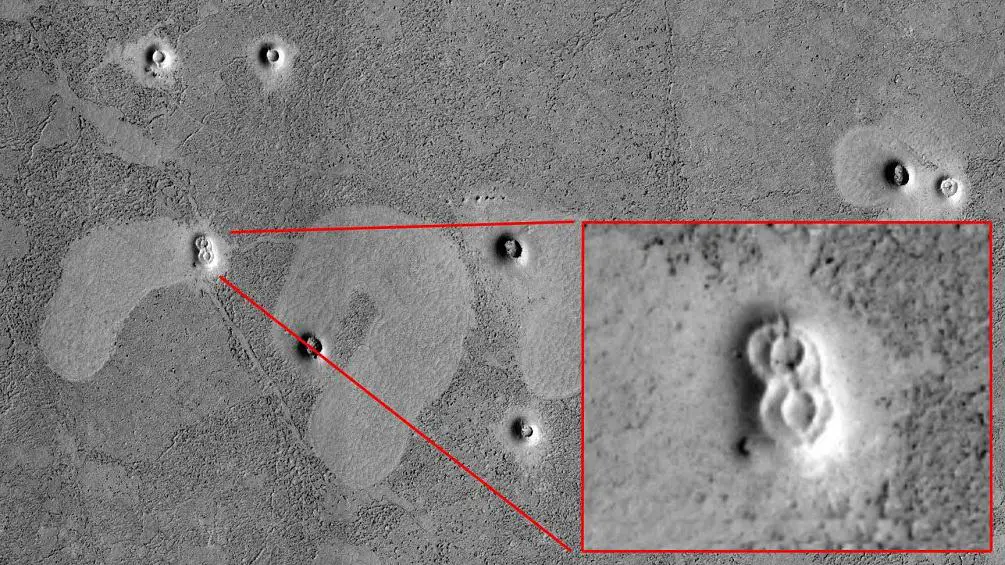
Class A; August 2025; Maine, Oxford County
|
|
||
|
The great Sphinx of Giza is considered an ancient marvel not only because of its size and confusing design but because of the countless mysteries that surround this ancient structure. Did you know that the Ancient Egyptians have no records about the Sphinx being built? Curiously, this ancient monument was discovered–almost entirely buried in Sand—in 1817, when the first modern archaeological dig, led by Giovanni Battista Caviglia managed to uncover the Sphinx’s chest completely. This ancient monument has captured the imagination of not only archaeologists but scientists and tourists who have visited this ancient statue since time immemorial. Let’s take a look at some of the most interesting facts about the Sphinx, you most likely didn’t know.
The Great Sphinx of Giza faces the rising Sun. Whoever built the Great Sphinx, wanted it to be aligned. The Sphinx is oriented due east facing the rising sun near the 30th parallel. According to some texts, ancient Egyptians referred to the Sphinx as balhib and bilhaw. Circa 1500 B.C.E. it was referred to as Hor-em-akht – Horus in the Horizon, Bw-How Place of Horus and also as Ra-horakhty Ra of Two Horizons. The Arabs knew the Sphinx as Abu al-Hawl (Father of Terror), which apparently is identified with the ancient Greek myth. The Great Sphinx of Egypt is considered the largest single-stone statue in the world and around 200 tons of stone were quarried in the construction phase to build the temple next to it. The Great Sphinx originally had a beard, several pieces of the beard of the Sphinx are located in the British Museum in London and the Cairo Museum. Author Robert K. G. Temple proposes that the Sphinx was originally a statue of the Jackal-Dog Anubis, the God of the Necropolis, and that its face was recarved in the likeness of a Middle Kingdom pharaoh, Amenemhet II. First-century writer Pliny the Elder mentioned the Great Sphinx in his Natural History, commenting that the Egyptians looked upon the statue as a “divinity” that has been passed over in silence and “that King Harmais was buried in it. Geologists and scholars agree that in the distant past Egypt was subjected to severe flooding, thus water erosion is present on the construction of the Sphinx. Wind erosion cannot take place when the body of the Sphinx is covered by sand. Edgar Cayce, a modern prophet—also known as the modern-day Nostradamus—prophesied in 1932 that the Sphinx was built in 10500 BCE by the Ancient Atlantean civilization. Furthermore, he stated that a secret room is located underneath it called the ‘Hall of Records’ containing the secrets and wisdom of the ancient Atlantean civilization and the human race. The Hall of Records is said to house the knowledge of the Ancient Egyptians documented in ancient papyrus scrolls and is believed to account for the history of the lost continent of Atlantis, as well as its location. Compared in importance, the Egyptian Hall of Records is just as the Great Library of Alexandria, which housed Grecian Knowledge. Charles Thompson, who explored the Sphinx in 1733, mentioned entrances and a “hole in the top of the back” of the Sphinx. There are three passages into or under the Sphinx, the “Tomb of Osiris” is one of the most incredible discoveries linked to the Sphinx, located 95 feet below the surface behind the back of the Sphinx. It is believed to be the resting place of Egyptian God Osiris. Interestingly, in 1987 a Japanese team from Waseda University (Tokyo), under the direction of Sakuji Yoshimura carried out an electromagnetic sounding survey of the Khufu Pyramid and Sphinx. Experts discovered: A. South of the Sphinx. The Japanese indicated the existence of a hollow 2.5 m. to 3 m. underground. And, they found indications of a groove on the Sphinx body that extends beneath the Sphinx. B. North of the Sphinx. The Japanese found another groove similar to the southern one which may indicate that maybe there is a tunnel underneath the Sphinx connecting the south and north grooves. C. In front of the two paws of the Sphinx. The Japanese found another hollow space about 1 m. to 2 m. below surface. Again, they believe that it might extend underneath the Sphinx. According to secrethistoy.wikia.com, there is also documented evidence of a large rectangular entrance on top of the hips at the back of the sphinx. In 1995, workers renovating a nearby parking lot uncovered a series of tunnels and pathways, two of which plunge further underground close to the Sphinx. In 1857, Auguste Mariette, founder of the Egyptian Museum in Cairo, unearthed the much later Inventory Stela (estimated Dynasty XXVI, c. 678–525 BC), which tells how Khufu came upon the Sphinx, already buried in sand. The inventory stela—made of polished granite and decorated with a commemorative inscription and a so-called apparition window—was found in Giza during the 19th century. The stela presents a list of 22 divine statues owned by a Temple of Isis, and goes on to claim that the temple existed since before the time of Khufu (c. 2580 BC). The stela was discovered in 1858 at Giza by the French archaeologist Auguste Mariette, during excavations of the Isis temple. The tablet was located very close to the Great Sphinx of Giza. This ancient stela points to the possibility that the Great Sphinx of Giza was built before the reign of Khufu and not by him. The Stela reads:
According to a study presented at the International Conference of Geoarchaeology and Archaeomineralogy held in Sofia titled: GEOLOGICAL ASPECT OF THE PROBLEM OF DATING THE GREAT EGYPTIAN SPHINX CONSTRUCTION, there is conclusive evidence to suggest that the Great Sphinx of Giza dates back 800,000 years. However, there are Geological findings that indicate that the Sphinx may have been sculpted sometime before 10,000 BC, a period that coincides with the Age of Leo, or the Lion, which lasted from 10,970 to 8810 BC. According to Graham Hancock, computer simulations show that in 10,500 BC the constellation of Leo housed the sun on the spring equinox – i.e. an hour before dawn in that epoch Leo would have reclined due east along the horizon in the place where the sun would soon rise. This means that the lion-bodied Sphinx, with its due-east orientation, would have gazed directly on that morning at the one constellation in the sky that might reasonably be regarded as its own celestial counterpart. Interestingly, Gaston Maspero, a French Egyptologist known for popularizing the term “Sea Peoples” in an 1881 paper, wrote in the book the Dawn of Civilization “… the Sphinx could have existed since the days of the followers of Horus,” a race of predynastic and semi-divine beings, which, according to beliefs of the ancient Egyptians had ruled thousands of years before the Pharaohs of Egypt.” (source) No. Evidence. Whatsoever. The Ancient Egyptians were splendid record keepers. In fact, they made it sure to write down nearly everything so future generations could appreciate their accomplishments. Strangely, there are no written texts that speak about the Sphinx. It is as if the Great Sphinx wasn’t built by the Ancient Egyptians. Residues of red pigment are visible on areas of the Sphinx’s face. Traces of yellow and blue pigment have been found elsewhere on the Sphinx, leading Mark Lehner to suggest that the monument “was once decked out in gaudy comic book colors” During a traffic stop, the man resisted arrest, disarmed multiple officers and fired a shot that wounded one before Lansing police returned fire
Total crime is down 27% in 2025, with Syracuse PD officers walking beats and working alongside community intervention teams
Topological quantum systems are physical systems exhibiting properties that depend on the overall connectivity of their underlying lattice, as opposed to local interactions and their microscopic structure. Predicting the evolution of these systems over time and their long-range quantum correlations is often challenging, as their behavior is not defined by magnetization or other parameters linked to local interactions.
Built thousands of years ago, these temples defy everything we know about the capabilities of ancient cultures. From laser-like precision to the transportation and placement of huge granite block—some of them weigh over 80 tons—these temples prove that ancient civilizations were far more advanced than we are crediting them for.  There are countless ancient temples scattered across the globe. Most of them remain an enigma or historians and archaeologists who are left awestruck by the beauty and complexity of these ancient structures. Most of these temples were built without the use of modern tools, yet show a precision that today is attributed to lasers, power tools, and heavy machinery. How did ancient man transport blocks of stone weighing over 50 tons? How did they achieve laser-like precision on walls, limestone and andesite blocks? How was it possible for ancient man to carve entire temples and caves out of a mountain when they did not possess the technology we do today? In this article, we take a look at four stunning ancient temples that will make your Jaw drop! The Konark Sun Temple  Located at Konark in Orissa, India, the Konark Sun temple is believed to have been constructed by king Narasimhadeva I of Eastern Ganga Dynasty in 1255 CE. Shaped as one MASSIVE chariot, it features some elaborately carved characteristics like carved stone wheels, pillars, and walls. A major part of the structure is now in ruins. Dedicated to the Sun God Surya, the name of the temple ‘Karnak’ derives from the combination of the Sanskrit words, Kona (corner or angle) and Ark (the sun). The temple features 24 intricately carved wheels which are adorned by 7 horses which are depicted as if they were pulling the temple. “The wheels of the Karnak temple are more than wheels. They are actually sundials and time can be calculated precisely by the shadows cast by the spokes”. Originally, the temple was erected at the mouth of the Chandrabhaga River, but since then the water line has receded. Major parts of the structure collapsed during the 17th century C.E., and it is believed that the collapsed structure contained a 52-ton magnet at the top. Experts believe that the magnet—which collapsed—cauised the mains statue of the temple to levitate in mid-air. Padmanabhaswamy Temple  Located in Thiruvananthapuram, Kerala, India, this ancient temple features a mixture of the indigenous Kerala style and the Dravidian style (kovil). It is noteworthy to mention that this is the RICHEST Hindu temple in the world, with an estimated $22 billion worth of gold and jewels stored in underground vaults According to reports, only 5 of the 8 underground vaults had been opened and explored. Referred to as Vault B, it is the most mysterious chamber in the temple and remains unexplored. A massive iron door guards the entrance to the chamber. Depicted on the door are two gigantic cobras which stand as a warning to those trying to enter it. Legends say that the massive iron door can only be opened by those who know a mystic chant. It is believed that if the door is opened in any other way, it would bring great misfortune upon the world. The temple is one of the 108 principal Divya Desams (“Holy Abodes”) in Vaishnavism, and is glorified in the Divya Prabandha. Curiously, there isn’t a single historic record that mentions the EXACT date when the temple was founded. Brihadeeswarar Temple  Located in Thanjavur in the Indian state of Tamil Nadu, the Brihadeeswarar Temple is dedicated to Lord Shiva. It is one of the largest temples in India and is an example of Dravidian architecture during the Chola period. According to reports, the temple was built by Raja Raja Chola I and was completed in 1010 CE, the temple turned 1000 years old. It features a massive 40-meter-high Vimana—one of the largest in the world. Interestingly, the entire temple complex was built out of granite, and the nearest source is located some 60 kilometers from the temple. It is believed that around 130,000 tons of granite were used in its construction. One of the largest pieces is the Kumbam, a round structure on the top of the temple made out of granite and has a weight of around 80 tons. Now think for a minute, how did the ancients manage to transport these massive blocks, and place the 80-ton statue on top of the temple over 1,000 years ago? Kailasa Temple  Also located in India, the Kailasanatha temple or Kailasa, is located in Ellora, Maharashtra, India. It is one of the LARGEST rock-cut temples in the world. This megalith was carved out of one single rock and is considered by many scholars as one of the most remarkable cave temples in India. The Kailasanatha temple (Cave 16) is one of the 34 cave temples and monasteries known collectively as the Ellora Caves. Its construction is generally attributed to the 8th-century Rashtrakuta king Krishna I in 756-773 CE. The Kailasa temple is the 16th from a total of 34 caves which were literally excavated out of the surrounding rock. Mainstream scholars indicate that the ancient caves were built sometime around the fifth and tenth centuries AD, but many others disagree suggesting the caves are much older. Many researchers believe that the builders of the Kailasa temple used a vertical excavation method in order to achieve what they did. They started at the top of the original boulders and worked their way downward carving out one of the most fascinating ancient temple complexes on the planet. But how did they do it? What did the ancient builders of the Ellora caves use to excavate and build? Mainstream scholars indicate that the caves were built with the use of hammers, chisels, and picks, thousands of years ago. YouTube Video Here: https://www.youtube.com/embed/e84hf1hMYBo?feature=oembed&enablejsapi=1
Evidence of what appear to be artificially created structures on the surface of Mars have been found in countless images from the red planet. In addition to the many odd findings on Mars, the most fascinating statement about the red planet come from General Stubblebine said: “There are structures on the surface of Mars. I will tell you for the record that there are structures underneath the surface of Mars that cannot be seen by the Voyager cameras that went by in 1976…” Mars has given us so much to think about in the last couple of years that its hard to put it all together. From a barren, and desolate planet, Mars has proven us that it’s more interesting than we’d ever thought before. Mars is approximately half the diameter of Earth with a surface area only slightly less than the total area of Earth’s dry land. Mars is less dense than Earth, having about 15% of Earth’s volume and 11% of Earth’s mass, resulting in about 38% of Earth’s surface gravity. But Mars is extremely similar to Earth in many ways. Experts have proven that the red planet was once strikingly similar to Earth, having an atmosphere, lakes, rivers, and oceans covering its surface. Not long ago, NASA revealed that Mars could have supported life as we know it but everything change when the red planet lost its atmosphere. According to scientists, the slow destruction of our neighbor’s planet atmosphere was caused by “huge rope-like tendrils of magnetic rotations. The red planet’s once hospitable atmosphere was blown away in the distant past. This means that when Mars was much younger, it was much warmer and wetter, meaning that it was a very good candidate for life to develop. Scientists believe that Mars’ oceans evaporated due to the planet’s thinning atmosphere which caused it to leak into space. Although Mars has no evidence of a structured global magnetic field, observations show that parts of the planet’s crust have been magnetized, suggesting that alternating polarity reversals of its dipole field have occurred in the past. However, there are more things on Mars that have caused confusion among experts. NASA’s rovers exploring Mars have noticed spikes in methane readings on the surface of the red planet. On Earth, 90% of all methane in the atmosphere is produced by living organisms. Curiosity captured traces of methane on the Red Planet and scientists believe this could point to the presence of life on the red planet, at this precise moment, although there are other possible explanations. But while Mars may not have life now on its surface, many scientists argue that in the distant past, the red planet may have supported life—and not only primitive life—but advanced complex life forms that may even have built structures on its surface. One such scientist is Dr. John Brandeburg, a plasma physicist who got his degree from UC Davis and who has seemingly had a distinguished career as a scientist argues that Martian life was purposefully destroyed with nukes.
“Mars xenon is found to match closely the component in the Earth’s atmosphere produced by Earth’s nuclear weapons programs, both hydrogen bomb testing and plutonium production, both of which involve large amounts of fission with fast neutrons. It is found that Mars xenon can be approximately by a mixture of 70% Nuclear Testing xenon, mixed with 30% natural Earth xenon, suggesting that Mars xenon was similar to Earth’s before a large nuclear event altered it dramatically.” In a scientific paper, Dr. Brandenburg argues: that Mars shows, “…based on new data, evidence that during this period of Earthlike climate, biological evolution produced, at length, a humanoid civilization leaving ruins at several sites, Cydonia Mensa and Galaxias Chaos being two sites most intensively investigated. Data from these sites formed the basis for the Cydonian Hypothesis (Brandenburg, DiPietro, and Molenaar, 1991) of an ancient, indigenous, approximately Bronze Age civilization on Mars.” And curiously, each day new images from Mars prove that there’s something odd on its surface. In the last couple of years, countless images from Mars have been analyzed by alien hunters across the globe. Some of them—awkwardly—show what appear to be artificially made structures on the surface of the red planet. All jokes aside, some of the stuff found on Mars makes you think “what if somehow, life on Mars developed millions of years ago, and was eventually wiped out?” Would we not find traces of such life today? Images beamed back by NASAs Mars Reconnaissance Orbiter show an area on the surface of Mars covered with odd ‘structures’. NASAs MRO captured numerous images of strange shaped ‘craters’ on the surface of the red planet. The images show a surface covered in ‘secondary craters’ – but astronomers are mystified by how they developed their raised appearance. In a statement, NASA scientists said: “Secondary craters form from rocks ejected at high speed from the primary crater, which then impact the ground at sufficiently high speed to make huge numbers of much smaller craters over a large region. In this scene, however, the secondary crater ejecta has an unusual raised-relief appearance like bas-relief sculpture.”
NASA has admitted it does not have a conclusive answer to this enigma. “One idea is that the region was covered with a layer of fine-grained materials like dust or pyroclastics about 1 to 2 meters thick when the Zunil impact occurred (about a million years ago), and the ejecta served to harden or otherwise protect the fine-grained layer from later erosion by the wind,” wrote NASA. In addition to the above image from Mars, other areas on the surface of the red planet show equally puzzling ‘structures’. UFO and anomaly hunters see these structures as conclusive evidence that an ancient civilization may have existed on the surface of Mars in the distant past. Located near Elysium Planitia near the red planet’s equator are a series of structures that have sparked an online debate about ancient life on Mars. The ‘controversial’ images were also taken by NASA’s Mars Reconnaissance Orbiter –MRO. If we search for further information about Mars, and the possibility that I was inhabited at some point in the distant past, we come across one of the most fascinating statements about the red planet made when General Stubblebine said: “There are structures on the surface of Mars. I will tell you for the record that there are structures underneath the surface of Mars that cannot be seen by the Voyager cameras that went by in 1976. I will also tell you that there are machines on the surface of Mars, and there are machines under the surface of Mars that you, can look at, you can find out in detail, you can see what they are, where they are, who they are and a lot of detail about them.” (Dolan, Richard. UFOs And The National Security State: New York: Richard Dolan Press)(source 2) The San Jose officer, a Medal of Honor recipient, was reinstated with back pay and legal fees after winning arbitration
Topological spin textures, spatially organized patterns linked to the intrinsic angular momentum of particles, have proved to be highly advantageous for the development of spintronics and quantum technologies. One of the most studied among these textures are skyrmionic textures, which are two-dimensional and stable patterns of spin orientation. Recently, the study of skyrmionic textures has gained significant attention in the field of optics and photonics, revealing novel physical properties and promising potential applications.
Federal prosecutors say the suspect, who was an international affairs specialist, cursed at Border Patrol agents and threw food during a heated encounter
Elon Musk’s SpaceX announced Friday that its Starship megarocket is scheduled to blast off on a new test flight next weekend after recent attempts have ended in fiery explosions.
Researchers at Rice University and collaborating institutions have discovered direct evidence of active flat electronic bands in a kagome superconductor. This breakthrough could pave the way for new methods to design quantum materials—including superconductors, topological insulators and spin-based electronics—that could power future electronics and computing technologies.
This temple complex located near Tiwanaku, Bolivia is one of the most incredible ancient ruins you will find in South America. At a distance of around 45 miles west of La Paz Bolivia we find one of the most magnificent ancient sites on the surface of our planet. The sheer number of megalithic stones found at Puma Punku are amongst the largest found on the planet. Puma Punku shatters all traditional views on ancient cultures. The incredibly precise stones, precision cuts, and polished surfaces have defied explanation for centuries. The andesite stones used in the construction process of this megalithic site were cut with such precision that they fit together perfectly, and are interlocked with each other without the use of mortar. This ancient site continues to defy the countless theories put forth by mainstream scholars, historians, and scientists. This ancient site—together with other sites like Teotihuacan in modern day Mexico, the Giza plateau in Egypt, Ollantaytambo, and Sacsayhuaman, among others—is what I like to call an ancient Wikipedia site since it offers us countless details about our ancestors, their lives, ability, knowledge, and skills. In this article, we bring you 30 mind-bending facts about Puma Punku that you probably have never read about before.  This fascinating ancient ‘alien’ complex is located just 45 miles west of La Paz, high in the Andean mountains. Puma Punku is located at an altitude of 12,800 feet—this makes it even harder to explain how the ancient quarried, transported and put into position the massive rocks as Puma Punku is located ABOVE the natural tree line, which in turn means NO trees grew in that area which means that no trees were cut down in order to use wooden rollers. Furthermore, there is no evidence of the wheel in Tiwanakan culture. Puma Punku is believed to date to around 536AD. However, many authors argue that the site is much older and could predate the Inca themselves. Puma Punku was never complete. Experts argue that the site was abandoned before it was completely finished. It is important to note Inca themselves denied building the Tiahuanaco complex which means that the Tiahuanaco culture existed INDEPENDENTLY of the Inca, predating them as well. The ancient site of Puma Punku is part of an even larger complex that once belonged to the ancient Tiahuanaco culture, which predates the ancient Inca by millennia. The sheer number of megalithic stones found at Puma Punku are amongst the largest found on the planet. The incredibly precise stones, precision cuts, and polished surfaces have defied explanation for centuries. According to oral legends, the first inhabitants of Puma Punku were unlike ordinary humans and supernatural powers which allowed them to ‘carry’ megalithic stones through the air with the use of SOUND. Among the largest stone blocks found at Puma Punku we can find one with the following characteristics: 7.81 meters long, 5.17 meters wide, averages 1.07 meters thick, and is estimated to weigh about 131 metric tons. The second largest stone block found within the Puma Punku is 7.90 meters long, 2.50 meters wide, and averages 1.86 meters thick. Its weight has been estimated to be 85.21 metric tons. The most famous features of Puma Punku are its so-called H-Blocks. The H blocks at Puma Punku have approximately 80 faces each. The H blocks match each other with such an extreme precision that the architects most likely used a system of preferred measurements and proportions. Archaeologists argue that the transport of these stones was accomplished by the large labor force of ancient Tiwanaku. Several theories have been proposed as to how this labor force transported the stones, although these theories remain speculative. Two of the more common proposals involve the use of llama skin ropes and the use of ramps and inclined planes. In addition to somehow transporting massive blocks of stone across great distances, the ancient engineers that built Puma Punku and Tiahuanaco were also adept at developing a civic infrastructure at this complex, constructing functional irrigation systems, hydraulic mechanisms, and waterproof sewage lines. Furthermore, the blocks present at Puma Punku were so precisely cut as to suggest the possibility of prefabrication and mass production, technologies far in advance of the Tiwanaku’s Inca successors hundreds of years later. Researchers believe that these two blocks of stone were quarried near Lake Titicaca approx. 10 km from Puma Punku. Other stone blocks found at Puma Punku have been quarried near the Copacabana Peninsula about 90 km away from and across Lake Titicaca. So perhaps this is one of the biggest mysteries at Puma Punku. Each stone at Puma Punku was finely cut to interlock with the surrounding stones and the blocks fit together like a puzzle, forming load-bearing joints without the use of mortar. The precision challenges today’s engineering abilities. A common engineering technique is to cut the top of the lower stone at a certain angle and placing another stone on top of it which was cut at the same angle. What baffles scientists, engineers and archaeologists is the precision with which this was achieved. The precision with which these angles have been utilized to create flush joints is indicative of a highly sophisticated knowledge of stone-cutting and a thorough understanding of descriptive geometry. Some of the joins we find at Puma Punku are so well placed, and so precisely locked into place that you wouldn’t be able to fit a paper in between them. The level of masonry we find at Puma Punku is just amazing. In Aymara—an Aymaran language spoken by the Aymara people of the Andes—Puma Punku’s name means “The Door of the Puma”. At Puma Punku you will find incredible stones with perfect right angles, almost smooth as glass, this makes Puma Punku unique. Only few places on earth display this type of stone work. Tiahuanaco is located near Puma Punku, in fact, it’s less than a quarter mile northeast of Puma Punku. Scientists believe Tiahuanaco was once the center of a civilization with more than 40,000 inhabitants. Puma Punku and Tiahuanaco are part of a large temple complex or monument group. At its peak, Pumapunku is thought to have been “unimaginably wondrous,” adorned with polished metal plaques, brightly colored ceramic and fabric ornamentation, and visited by costumed citizens, elaborately dressed priests, and elites decked in exotic jewelry. The Puma Punku complex, as well as its surrounding temples, the Akapana pyramid, Kalasasaya, Putuni, and Kerikala, functioned as spiritual and ritual centers for the Tiwanaku. Tiahuanaco is probably the greatest Native American civilization that many people haven’t heard of. The Tiwanaku civilization—which Puma Punku belonged to—appears to some to have peaked from 700 AD to 1000 AD, by which point the temples and surrounding area may have been home to some 400,000 people. Curiously, as many other advanced civilizations across the Americas, this culture seems to have dissolved rather abruptly sometime around 1000 AD, and researchers are still seeking answers as to why. Reference: The Journal of the Society of Architectural Historians. vol. 56, no. 2, pp. 146-167 Young-Sánchez, Margaret (2004). Tiwanaku: Ancestors of the Inca. Denver, CO: Denver Art Museum. Vranich, A., 1999, Interpreting the Meaning of Ritual Spaces: The Temple Complex of Pumapunku, Tiwanaku, Bolivia. U.S. Attorney General Pam Bondi has directed federal prosecutors to investigate cities and states that hinder immigration enforcement
A team of scientists from Korea and Japan has discovered a new type of crystal that can “breathe”—releasing and absorbing oxygen repeatedly at relatively low temperatures. This unique ability could transform the way we develop clean energy technologies, including fuel cells, energy-saving windows, and smart thermal devices.
|
||
|
Copyright © 2026 Paranormal News Network - All Rights Reserved Powered by WordPress & Atahualpa 104 queries. 0.112 seconds. |
||