Organic molecules detected in the watery plumes that spew out from cracks in the surface of Enceladus could be formed through exposure to radiation on Saturn’s icy moon, rather than originating from deep within its sub-surface ocean.
|
|
||
|
New research using NASA’s powerful JWST telescope has identified a planet 41 light years away which may have an atmosphere. The planet is within the “habitable zone,” the region around a star where temperatures make it possible for liquid water to exist on the surface of a rocky world. This is important because water is a key ingredient that supports the existence of life.
Space changes you. It strengthens some muscles, weakens others, shifts fluids within your body, and realigns your sense of balance. NASA’s Human Research Program works to understand—and sometimes even counter—those changes so astronauts can thrive on future deep space missions.
Selecting the right spot to smash a spacecraft into the surface of a hazardous asteroid to deflect it must be done with great care, according to new research presented at the EPSC-DPS2025 Joint Meeting in Helsinki. Slamming into its surface indiscriminately runs the risk of knocking the asteroid through a “gravitational keyhole” that sends it back around to hit Earth at a later date.
The iridescent blue of butterfly wings has inspired researchers to find a solution to a challenge previously considered insurmountable—dynamically tuning advanced optical processes at visible wavelengths.
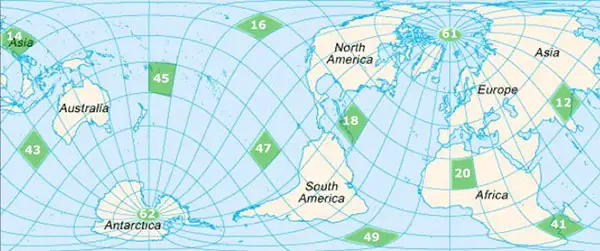
Among the 12 Vortices, we find the Bermuda Triangle, Mohenjo-Daro, and even Antarctica. Nearly all of these Vortices are characterized by magnetic anomalies and abnormal phenomena. Planet Earth is a unique planet in the universe: It’s the only one that has life. But that’s not the only reason why Earth is such wonderful places. What makes our planet even greater is the fact that Earth is shrouded in mystery. Countless things about our planet have still not been understood by experts, and it seems that the more we research, the more questions arise. There are certain points on Earth where known physics cannot be applied. These areas are ‘ruled’ by strange energies that have been present there since time immemorial. Usually marked by extremely weird phenomena, countless disappearances have been registered in some of those places. These Earth points are referred to as vortices, Vile Vortices. In this article, we take a look at some of these mysterious areas and where they are located on Earth. Some of them appear to be geometrically interconnected. These strange places were plotted by biologist and writer Ivan T. Sanderson, the founder of the Society for the Investigation of the Unexplained and curiously, one of Charles Fort’s earliest followers. Sanderson wrote about Earth’s vortices in 1972, in a piece for Saga magazine entitled The Twelve Devil’s Graveyards Around the World in which he plotted the disappearance of ships and planes on a global scale, pointing out 12 areas on Earth that stood out in particular. Although some of them might be less famous than others, nearly all of them are characterized by magnetic anomalies and abnormal phenomenon. What is perhaps the most important thing, ten of the vortices plotted by Sanderson are located in tropical climates. Furthermore, five vortices can be found along the Tropic of Cancer, while five others are located along the Tropic of Capricorn. Two more vortices are found at Earth’s North and South Poles. Strangely, the twelve points are equidistant and together, they form the twelve tips of an icosahedron,
Here’s the list with no significant order. Bermuda Triangle, we all know where the Bermuda Triangle is right? For those who don’t know, the Bermuda Triangle is a loosely defined region in the western part of the North Atlantic Ocean, forming a triangle between Florida, Bermuda and Puerto Rico. Easter Island—where the giant statues are found. The North Pole The South Pole Karachi—the home of the ancient city of Mohenjo-Daro. It is considered as one of the earliest major cities on Earth and it’s the area where according to numerous authors and researchers we find ground zero for the detonation of ancient nuclear weapons. Hamakulia, located east of Hawaii. It is an area where according to some researchers was once home to a high-energy volcano Devil’s Sea, south of Tokyo. This area is known for disappearances of ships and airplanes. The Wharton Basin—an area on Earth with great depths and largely unexplored. New Hebrides Trench, located between the islands of Vanuatu and New Caledonia. Its deepest point is believed to reach over 25,000 feet (7,600 meters). Who knows what’s down there! The Megalithic Ruins of Algeria, located just south of the city of Timbuktu. The South Atlantic Anomaly. An area where according to researchers, the innermost Van Allen radiation belt dips extremely close to the Earth’s surface, one of the possibilities why the region is so anomalous. The megaliths of Zimbabwe. Home to supermassive stone structures. They are located near an area of the Sahara desert where mysterious plane disappearances occur. Sanderson believed that the anomalous activity surrounding these areas may be due to electromagnetic disturbances caused by the flow of hot and cold air. As you can see, mystery connects all of the above-mentioned vortices. According to author and researcher David Hatcher Childress, “we are speaking about an intelligent geometric pattern into which, theoretically, the Earth and its energies are organized—and possibly in which the ubiquitous megalithic sites are also positioned.” Featured image by edlo Using the Hubble Space Telescope (HST), Italian astronomers have observed five blue straggler stars in the globular cluster 47 Tucanae. Their results show that one of these stars has a white dwarf companion. The discovery is presented in a paper published Aug. 28 on the arXiv preprint server.
Quantum mechanics theory predicts that, in addition to exhibiting particle-like behavior, particles of all sizes can also have wave-like properties. These properties can be represented using the wave function, a mathematical description of quantum systems that delineates a particle’s movements and the probability that it is in a specific position.
A team of researchers led by the Instituto Galego de Física de Altas Enerxías (IGFAE) from the University of Santiago de Compostela (Spain) has measured for the first time the speed and direction of the recoil of a newborn black hole formed through the merger of two others. The result, published today in the journal Nature Astronomy, offers new insights into some of the most extreme events in the universe.
About 80% of the universe’s mass is thought to consist of dark matter. Yet, little is known about the composition and structure of the particles that make up dark matter, presenting physicists with some fundamental questions. To explore this elusive matter, researchers are attempting to capture photons, or light particles, which are produced when dark matter particles collide with the visible matter we are familiar with.
The enigmatic 3,000-year-old vignette from the Djedkhonsuiefankh funerary papyrus found on display in the Cairo Museum illustrates an uncanny scene: a disc-shaped object, depicted as being extremely bright, with a landing gear deployed on top of a Sphinx. Could this really be an alien UFO? Alien hunters believe this is the ultimate evidence there is a deep connection between Ancient Egypt and otherworldly beings. The object seen on top of the Sphinx is unlike any other “boat“ seen in ancient Egyptian mythology. In fact, it’s unlike anything previously seen in their iconography or symbolism.
There are similar depictions of alleged flying machines at the temple of Seti I, but these have been debunked as being the result of palimpsest. The curious object seen in the vignette from the Djedkhonsuiefankh funerary papyrus was painted by the ancients as a Disc that radiates extremely bright light, and when you take a look at modern-day depictions of UFOs, it kinda looks exactly how people would describe a UFO today. This ancient papyrus—you can see it here—is featured in a study titled: Cosmic Space and Archetypal Time, Depictions of the sky-goddess Nut in three royal tombs of the New Kingdom and the relation to the Milky Way, by Amanda-Alice Maravelia. And if we take a close look at the ancient manuscript, it’s clear that it is a disc-shaped object which has a radiating dome on top. It is depicted as having ‘landed’ on the Sphinx, with three leg-like tripods seen protruding from the object. But what makes the Sphinx so special? And what if this really is a UFO—and not a plant or some sort of bug? Yup, could be a plant-flower, or even some sort of but? Right? What if there is another explanation as to what the object is? I meant just because it looks like a disc-shaped object that’s landed on the Sphinx, doesn’t mean it is one… The truth is that the origin of the Sphinx is unknown and that doesn’t really help much when you see a papyrus like this one. The degree of erosion that we see on it suggests it dates back to 10,000 BC. It’s an ancient monument whose secrets have remained hidden for thousands of years. It is reported that researchers have found passages into hidden chambers beneath the Sphinx and some even venture out and say that the Sphinx may hold the truth behind our very existence. It is rightfully referred to as one of the most mysterious monuments on the surface of the planet.
When the massive monument was found for the first time, it was covered—up to its head—by sand. For centuries, most visitors and researchers who visited the area believed this was all that existed. However, French engineer Emile Baraize was convinced that much more lies beneath the surface than even archaeologists were aware of, the reason why he commissioned an excavation to uncover the rest of the Sphinx. Finally, after 11 years of extensive digging, Baraize and his team unearthed a massive body resembling a lion, reintroducing the massive monument to the world in its full splendor. It is the largest monolithic sculpture on Earth. Curiously, in addition to the above-mentioned papyrus which “illustrates” the disc-shaped object, there is another ancient manuscript considered as the ultimate evidence of alien contact in ancient Egypt. Called the Tulli Papyrus, the ancient manuscript details an incredible scene. The translation of the text according to R. Cedric Leonard states: “In the year 22, of the third month of winter, sixth hour of the day […] among the scribes of the House of Life it was found that a strange Fiery Disk was coming in the sky. It had no head. The breath of its mouth emitted a foul odor. Its body was one rod in length and one rod in width. It had no voice. It came toward His Majesty’s house. Their heart became confused through it, and they fell upon their bellies. They [went] to the king, to report it. His Majesty [ordered that] the scrolls [located] in the House of Life be consulted. His Majesty meditated on all these events which were now going on. After several days had passed, they became more numerous in the sky than ever. They shined in the sky more than the brightness of the sun, and extended to the limits of the four supports of heaven […] Powerful was the position of the Fiery Disks. The army of the King looked on, with His Majesty in their midst. It was after the evening meal when the Disks ascended even higher in the sky to the south. Fish and other volatiles rained down from the sky: a marvel never before known since the foundation of the country. And His Majesty caused incense to be brought to appease the heart of Amun-Re, the god of the Two Lands. And it was [ordered] that the event [be recorded for] His Majesty in the Annals of the House of Life [to be remembered] forever.” Could it be that the enigmatic disk-shaped object on top of the Sphinx is one of those strange Fiery Disk’s mentioned in the Tulli Papyrus? You can find out more about the mystery object in Wayne Herschel’s book: The Hidden Records.NOTE: This article MAY NOT be copied, rewritten or republished without express permission from the Author of the article. Plastic pollution is everywhere: in rivers and oceans, in the air and the mountains, even in our blood and vital organs. Most of the public attention has focused on the dangers of microplastics. These are fragments smaller than 5 millimeters.
Heat affects not only our well-being, but also the performance and lifespan of systems and devices. However, it is often difficult to measure these effects accurately.
Playwright Tom Stoppard, in “Rosencrantz and Guildenstern are Dead,” provides one of the best definitions of science: “The scientific approach to the examination of phenomena is a defense against the pure emotion of fear.”
At any given moment, trillions of particles called neutrinos are streaming through our bodies and every material in our surroundings, without noticeable effect. Smaller than electrons and lighter than photons, these ghostly entities are the most abundant particles with mass in the universe.
|
||
|
Copyright © 2026 Paranormal News Network - All Rights Reserved Powered by WordPress & Atahualpa 141 queries. 0.144 seconds. |
||