Did you know that in Tibet and India alone, there are more than 160,000 documented cases of people, who after many years of spiritual preparation, manage to transform their physical body into a body of pure light/Energy?
In order to attain a “Rainbow Body”, a person has to be able to liberate their body into light by having only loving thoughts, among other things of course. It is believed that every five years on average, an advanced Buddhist monk enters into this enlightened state. This process is extremely powerful and it is said that weeks before being able to achieve this transformation, some Buddhist monks can engrave their hand or foot onto a wall. According to reports, it takes around 7 days for a body to eventually shrink, dissolve into light and transcend.
There are more than 160,000 documented cases of people transforming their body into light.
In Sufism— or Taṣawwuf which is often defined as “Islamic mysticism”, “the inward dimension of Islam”, or “the phenomenon of mysticism within Islam”—it is called “the most sacred body” and the “supra celestial body.”
Taoists refer to it as “the diamond body,” and those who have attained it are named “the immortals” and “the cloud walkers.”
Yogic schools and Tantric teachings call it “the divine body,” while in Kriya yoga it is referred to as “the body of bliss.”
In Vedanta, “the superconductive body,” while the ancient Egyptians called it “the luminous body or being” (akh) or the karast.
In the Mithraic liturgy, it was dubbed as “the perfect body.” In the Hermetic Corpus, it is referred to as “the immortal body,” while in the alchemical tradition, the Emerald Tablet calls it “the golden body.”
However, this amazing phenomenon is not exclusive to ancient times.
There are even recent testimonies about Tibetan monks who reached this state after a deep process of purification.
For example, ordained Catholic priest Francis Tiso documented the case of Khenpo Achö, a Gelugpa Monk of Kham, Tibet, who died in 1998 and how he managed to transform his body into a body of light.
David Steindl-Rast, a Benedictine monk proposed in 2002 a scientific investigation with the Institute of Noetic Sciences to study the so-called Body of Light, or Rainbow Body, saying that; “If we can establish as an anthropological fact that what is described in the resurrection of Jesus has not only happened to others but is happening today, it would put our view of human potential in a completely different light”
Eventually, David Steindl-Rast contacted Father Francis Tiso who was known for frequently traveling to Tibet, and asked him to look into this incredible phenomenon.
Father Tiso said to have witnessed a rainbow appearing over Khenpo Achö’s house a few days before his death in September 1998, and that dozens of rainbows appeared afterward.
Khenpo Achö’s body started changing soon after his last breath. His skin turned shiny white, and his appearance began to change. Khenpo Achö’s was eventually wrapped in a yellow robe which all Gelug Monks wear. As days passed the body of Khenpo Achö started shirking. After seven days had passed, no body remained.
The event was well-recorded by local press who gave specific accounts of what had occurred and “The Rainbow Body,” appeared in an Institute of Noetic Sciences Review 59 (March–May 2002).
Curiously, the rainbow body of Khenpo Achö was also mentioned by Matthew T. Kapstein in The Presence of Light: Divine Radiance and Religious Experience(University of Chicago Press, 2004).
Tulku Pema Rigtsal, a Nepalese Monk recountsAchö’s transfiguration:
“Recently, on August 29, 1998, at Dome Khamngak in Azi Rong in Tibet, Khenpo Achö, eighty years of age, attained physical dissolution. One day at noon, lying in bed, without having suffered any recent illness, while in the posture of a sleeping lion and reciting the six-syllable mantra, he attained Buddha in the primordial basic matrix of alpha-purity, his heart of clear light reality perfected beyond the intellect. As his body dissolved into light, his wrinkles vanishing, he seemed like an eight-year-old child with a beautiful complexion. After a week had passed, when people came to know of his death, they performed his death puja secretly in order to deceive the authorities, and at that time, rainbows appeared inside and outside, and a pleasant aroma pervaded the place. His body gradually diminished in size, and at the end, he attained Buddha; not even his nails and hair were left behind. It was just like a bird flying from a rock— people nearby have no idea where it might have gone’.
“. . . my precious teacher Dzogchen Lama Karma Rinpoche passed away on the 11th of November, 2013. Yesterday I received extraordinary news from my Dharma friends in the holy Dzogchen area of Tibet that the sacred body of my kind teacher Lama Karma has obviously and dramatically shrunk in size. Lama Karma’s body was about 175cm (approx. 5’9”) tall, but two weeks after he passed away, his seated body has now shrunk to about 20cm (approx. 8”), which means his body, including his skeleton, shrank nearly 80%. According to Dzogchen tantra, this kind of miraculous display shows he has attained the Small Rainbow Body, which is a sign that he has attained the supreme accomplishment of Buddha in this very life. Please deeply rejoice in his devoted practice and realization of Dzogchen. In doing so, you accumulate immeasurable merit. If his body continues to shrink and totally disappears, then this miracle will be categorized as Light Body or Atomless Body. I will describe these various miraculous results of Dzogchen practice later in this message.”
A thousand years older than Stonehenge, and 500 years older than the Pyramids of Giza, Newgrange is an ancient monument that consists of approximately 200,000 tons of rock and other materials. It is 85 meters (279 ft) wide at its widest point.
One of the most famous ancient sites in Ireland is Newgrange, a monument built between 3,300-2,900 BC according to carbon 14 tests (Grogan 1991).
This makes it 500 years older than the Great Pyramid of Giza of Egypt, and 1,000 years older than Stonehenge (although the first stages of Stonehenge are approximately about the same time as Newgrange). This ancient monument also predates the Mycenaean culture of ancient Greece.
It remained lost during more than 4,000 years due to a decrease of the mound until it was discovered in the XVII century by people who looked construction stones and described it as a cave.
Newgrange was excavated and restored between 1962 and 1975 under the supervision of Professor Michael J O’Kelly, of the Department of Archeology at the University College Cork (O’Kelly 1986).
The intricately carved monument predates the Pyramids of Giza by around 500 years. Image Credit: Shutterstock.
Most of the stones (200,000 tons of rock) come from the vicinity of the construction, although the granite and quartz stones of the façade were transported from more distant places, probably from Wicklow and Dundalk Bay, respectively.
The true purpose of this ancient monument remains a mystery, although experts believe it was a religious center of some sort.
Interestingly, Newgrange appears to be astronomically oriented: every year, on the morning of the winter solstice, sunlight penetrates the passage and illuminates the floor of the chamber for 17 minutes.
Newgrange features numerous examples of abstract Neolithic rock art. Image Credit: Shutterstock.
Some have speculated that the Sun would have had great importance in the religious beliefs of the people who built it, and others have taken the finding as a reference for archaeoastronomic studies in other similar monuments although Newgrange’s alignment is the only one that has been reliably demonstrated and it could be the result of chance.
The entire monument was intricately carved.
The Megalithic stone at the entrance of Newgrange. Image Credit: Wikimedia Commons.
Newgrange contains numerous examples of abstract Neolithic rock art carved onto it which provide decoration, although some authors have speculated that their design is more than just art, for researchers have demonstrate a close connection between the ancient site and the sun, specifically the Winter Solstice; the rising sun shines directly along the long passage, illuminating the inner chamber and revealing the carvings inside, notably the triple spiral on the front wall of the chamber.
The carvings at Newgrange fit into ten categories, five of which are curvilinear (circles, spirals, arcs, serpentiform and dot-in-circles) and the other five of which are rectilinear (chevrons, lozenges, radials, parallel lines, and offsets).
They are also marked by wide differences in style, the skill-level that would have been needed to produce them, and on how deeply carved they are.
As for the exact purpose of the monument, several authors believe Newgrange may have been centered on astronomy, engineering, geometry, and mythology associated with the Boyne monuments.
Researchers speculate that the monument was an important astronomical center and that the sun formed a crucial part of the religious beliefs of the Neolithic people who built it.
After spotting a firearm inside a vehicle, the Louisiana State Police trooper told a suspect he was being detained; the man then struggled with the officer, allegedly reaching for the gun
The Marysville Police Department and the Yuba County Sheriff’s Office denied workplace safety violations alleged by CAL-OSHA in the shooting death of Officer Osmar Rodarte
The surprising discovery was made thanks to the DNA analysis of the 10,000-year-old skeleton of the so-called Cheddar man, whose DNA was unusually well preserved possibly due to the cold and stable conditions of the limestone cave in which it was discovered.
The find suggests that the first inhabitants of the British Islands developed white skin much later than previously thought.
An analysis of the 10,000-year-old skeleton of ‘Cheddar Man’, considered the first Briton, has revealed that the pigmentation of his skin was ‘dark to black’, he had curly hair and blue eyes. The surprising discovery, made by scientists at University College London (UCL) and the Natural History Museum, suggests that the clearest pigmentation that is now considered a defining feature of northern Europe is a much more recent phenomenon.
This is what The Cheddar Man, the First Brit may have looked like. Image Credit: Channel 4 / EFE/ London Natural History Museum.
The pioneering work was carried out by a team of experts in Human Evolution and DNA for a new Channel 4 documentary called, ‘First Brit: Secrets of the 10,000-Year-Old Man’.
“The genetic profile of Cheddar Man places him next to other Europeans of the Mesolithic Age of Spain, Hungary, and Luxembourg, whose DNA has already been analyzed. These hunter-gatherers migrated to Europe at the end of the last ice age and the group included Cheddar man’s ancestors, “explained Professor Mark Thomas of the UCL, who managed to plot out the look of Cheddar Man based on DNA analysis.
Currently, around 10% of British Native descendants can be linked to that population. The Cheddar Man was unearthed in 1903 in Gough’s cave in Cheddar Gorge, Somerset, and has been a subject of constant mystery and intrigue.
Experts have tried to reveal what Cheddar Man looked like for more than 100 years, hoping that one day, this 10,000-year-old ancient Brit would reveal more about our earliest ancestors.
Only now, and thanks to state-of-the-art DNA and facial reconstruction have experts managed to see what Cheddar man looked like, and ponder about how 300 generations later he relates to us today.
The Dutch “paleoartists” Alfons and Adrie Kennis created a model of the Cheddar man based on the recent scientific findings: a masculine face with long curly hair, short beard, and remarkable blueish eyes.
“From the air, Teotihuacan’s city layout mysteriously resembles a computer circuit board with two massive processor chips, which in this case are represented by the Pyramid of the Sun and the Moon.
The ancient city of Teotihuacan is one of the oldest Pre-Columbian cities in the American continent.
Built by an unknown civilization, the mysterious city was found devoured by vegetations when the ancient Aztecs arrived.
Excavations have shown that the structures of Teotihuacan have abnormal amount of Mica embedded into them, a fact that raises numerous questions.
An aerial view of Teotihuacan. Image Credit: Shutterstock.
Teotihuacan, the city of the gods
Teotihuacan from Nahuatl: Teōtihuācan, is the ”place where men become gods,” the “place where the gods were made, or city of the gods”. The name of Nahuatl origin was used by the Mexica, Aztecs, to identify this city built by a civilization before them and which was already in ruins when the Mexica saw it for the first time.
To date the name given by its original inhabitants is unknown.
The remains of the city are located northeast of the Valley of Mexico.
The city is shrouded in mystery for a number of reasons. Despite the fact that it was one of the most influential cities in the American continent, we know very little about it. In fact, the origins of Teotihuacán are still the subject of research among experts.
Around the beginning of the Christian era, Teotihuacan was a village that gained importance as a center of worship in the Anáhuac basin.
The first significant constructions are believed to have been erected at that time, as shown by excavations performed at the Pyramid of the Moon.
The city grew in importance during the Classic Period (3rd to 7th centuries AD).
An illustration of a computer circuit board. Image Credit: History.
At that stage, the city was an important commercial and political node that reached an area of almost 21 km2, with a population ranging from 100,000 to 200,000 inhabitants.
The influence of Teotihuacan was felt in all the directions of Mesoamerica, as shown by the discoveries in cities such as Tikal, Monte Albán, and other sites that had an important relationship with Teotihuacan.
Scholars are unsure of the ethnic identity of the first inhabitants of Teotihuacan.
Among the candidates are the Totonacs, and the Nahuas.
An illustration of Teotihuacan. Comparing it to the image above, does it resemble a modern-day circuit board? Image Credit: History.
The most recent hypotheses suggest that Teotihuacan was a cosmopolitan city in whose flourishing groups of diverse ethnic origin were involved.
However, these are mere assumptions.
As noted previously, the identity of the people who founded Teotihuacan is a mystery.
Teotihuacan had long been abandoned before the arrival of the Spaniards to Mesoamerica. This means that the few references to the city that were preserved in the historical sources produced in the years after the Conquest of Mexico do not speak properly about the inhabitants of Teotihuacan but of the representation of those who lived after the Teotihuacan collapse.
The Nahua informants of Bernardino de Sahagún thought that Teotihuacan was the place where the gods met to give rise to Nahui Ollin, the Fifth Sun according to native mythology, a period which illuminates the contemporary era.
According to colonial sources, the Nahuas thought that Teotihuacan was built by the quinametzin, a race of giants that populated the world during the previous era and whose survivors hid away.
The temples, the pyramids of the city were imagined as massive tombs of the Gods who founded the city, a sacred place where after death, men would become gods.
For reasons that have not yet been fully elucidated, Teotihuacan collapsed towards the middle of the 8th century, giving rise to the Mesoamerican Epiclassic Period.
Teotihuacan was also apparently built mimicking the three stars of Orion.
According to archaeologists, the advanced design of Teotihuacan suggests that the ancient builders had the knowledge not only of architecture but of complex mathematical and astronomical sciences. One of the most amazing details about Teotihuacan, and what makes it different from other ancient sites is that when observed from the air, Teotihuacan’s city layout strangely resembles a computer circuit board with two large processor chips— the Sun Pyramid and the Moon Pyramid.
Researchers have also found numerous and remarkable similarities to the Great Pyramids of Egypt.
However, if the idea of Teotihuacan resembling a modern computer board doesn’t arouse your imagination, perhaps large amount of mica embedded into the monuments of Teotihuacan will.
Archaeologists have found that Teotihuacan’s structures are embedded with mica.
This mineral is found 3,000 miles away in Brazil and is found in nearly all buildings, housing complexes, temples and along the roads of Teotihuacan.
Excavations have revealed that the pyramid of the Sun in Teotihuacan contained considerable amounts of mica in layers up to 30 cm.
Certainly, Mica was not included in these constructions for decoration because you couldn’t actually see it, so it is clear that this mineral was incorporated into the monuments for another purpose.
Mica is stable when exposed to electricity, light, moisture, and extreme temperatures. It has superior electrical properties as an insulator and as a dielectric, and can support an electrostatic field while dissipating minimal energy in the form of heat; it can be split very thin (0.025 to 0.125 millimeters or thinner) while maintaining its electrical properties, has a high dielectric breakdown, is thermally stable to 500 °C, and is resistant to corona discharge.
At Teotihuacan, we basically have a massive ancient city, whose builders are unknown to history, with pyramids and surrounding structures that resemble a computer board when seen from the air.
In addition to that, we know that the builders of the ancient city incorporated Mica into the structures of the city. Mica wasn’t placed there for aesthetic purposes, which raises numerous questions. Is there perhaps an otherworldly influence behind Teotihuacan? And, is it possible that the entire city was not only built to serve as city, but to harness some sort of energy?
Technically speaking, these artifacts should not exist, and according to mainstream science, they don’t. Yet all around the globe, a set of enigmatic objects have been found that point towards the possibility that advanced life may have flourished on Earth, before the arrival of modern humans, millions of years ago.
Despite this fact, a number of strange, and extremely ancient artifacts have been found all around the globe that ultimately question the human origins and human history.
How long ago did modern humans appear on Earth? Where did we come from? And, is it possible that before the arrival of Homo Sapiens, another different species inhabited Earth, perhaps millions of years ago?
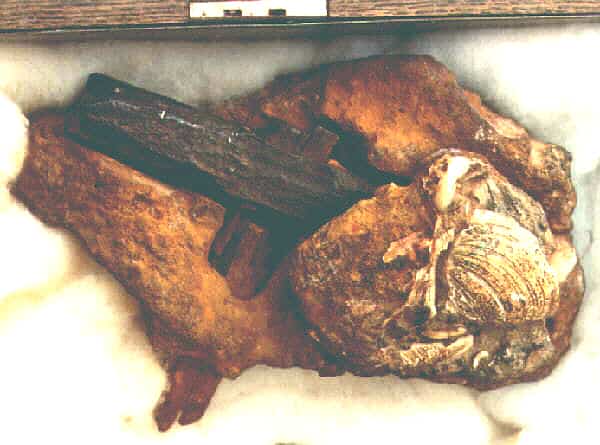
Ancient Hammer predating humans.
Let’s take a look at an artifact discovered in London, Texas, USA, in 1934. What appears to be an ordinary hammer is, in fact, a hammer embedded in stone.
What makes this extremely interesting is the age of the object; it is believed to date back 400 million years. Impossible right?
It is believed that this mysterious hammer originated from rock that belongs to the Ordovician era, more than 400 million years ago. Researchers consider that since the head of the hammer was found embedded into the rock, it points to the possibility that the embedding process was performed under different atmospheric conditions to the current, and different atmospheric pressure more similar to those in the remote past.
According to studies of the Metallurgical Institute of Columbia, the inside handle underwent the process of carbonization, the head of the hammer was built with an iron purity only achievable with modern-day technology. According to analysis, the head of the hammer consists of 97 pure iron, 2 percent chlorine, and 1 percent sulfur.
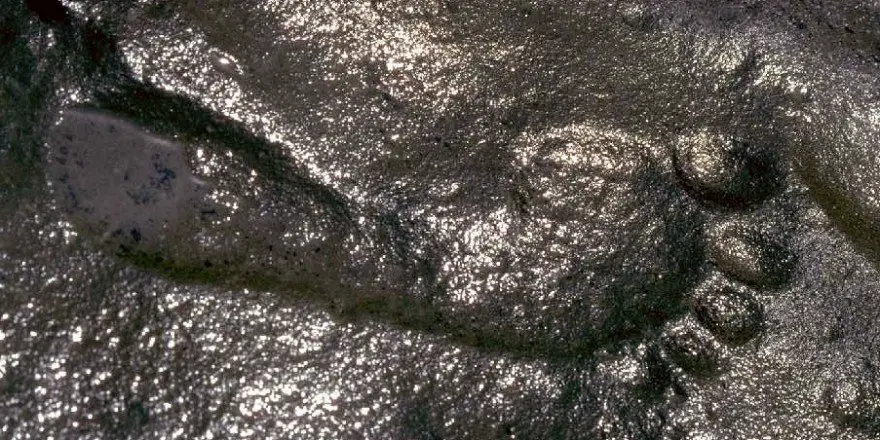
There’s a 290-million-year-old footprint, and it should not exist. Ever.
A rock belonging to the Permian period—some 290 million years ago—has a curious detail on its surface.
Discovered in New Mexico, the Permian Period rock features a human footprint. But, humans did not exist on Earth 290 million years ago, so how’s that possible? Curiously, the Permian (along with the Paleozoic) ended with the Permian–Triassic extinction event, the largest mass extinction in Earth’s history, in which nearly 90% of marine species and 70% of terrestrial species died out. Recovery from the Permian-Triassic extinction event was protracted; on land, ecosystems took 30 million years to recover.
As noted by Dr. Don Patton, the footprint is genuine. If it is, it would mean that hundreds of millions of years ago, a different type of human called Earth their home. Of course, according to scientific evidence, that’s not really possible. The Permian Period was a time way beforebirds, dinosaurs, and MAN, were supposed to exist.
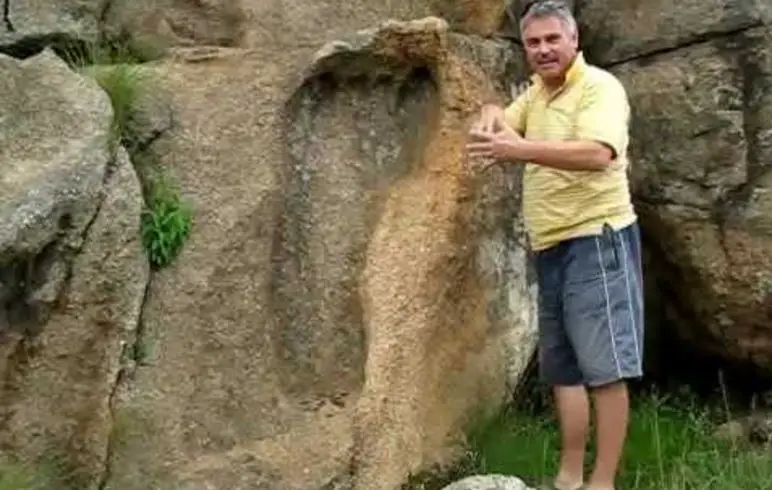
A Giant footprint which makes absolutely no sense.
It’s huge. It’s old. It’s striking.
Located in South Africa, in the vicinity of the town of Mpaluzi, close to the border with Swaziland is a mysterious rock that has an incredible feature.
A massive granite block has a massive footprint embedded on its surface. Geologists believe that the granite block dates back some 200 million years.
This fascinating footprint was discovered over a hundred years ago when a hunter called Stoffel Coetzee stumbled across it in 1912 while hunting in the area. The footprint left behind on ‘rough granite’ measures staggering 4 feet in length.
Ok, this one isn’t an artifact, but rather evidence of many artifacts combined on Earth.
Many researchers believe that there are several pieces of evidence pointing towards the existence of highly advanced ancient civilizations that existed on Earth millions of years ago.
According to Dr. Alexander Koltypin, a geologist and the director of the Natural Science Research Center at Moscow’s International Independent University of Ecology and Politology, there’s evidence of million-year-old structures scattered across the globe.
During his long career, Dr. Koltypin has studied numerous ancient underground structures mainly in the Mediterranean and has identified numerous similarities which have led him to believe that many sites were interconnected. But most incredibly, the weathering of the structures together with their material composition and extreme geological features has led him to believe these megastructures were built by advanced civilizations that inhabited Earth millions of years ago.
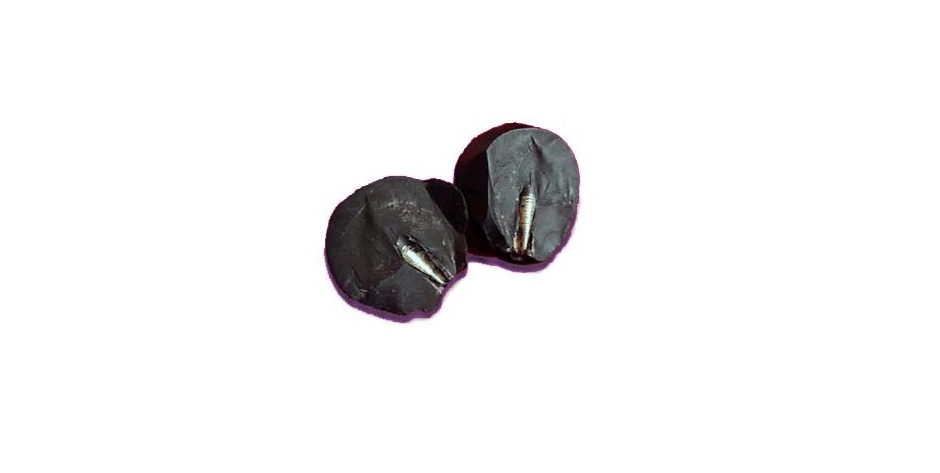
A 300 million-year-old screw?
Apparently, we’ve got history all wrong.
What is the chance that there are numerous objects recovered across the globe that date back millions of years? If humans weren’t around at that time, who built them?
According to reports from Chinese News agencies, a mysterious object discovered in 2002 could be evidence of prehistorical civilizations. Tests have failed to show the exact composition of the mysterious rock, researchers that include geologists and physicists from the National Land Resources Bureau of Gansu Province, Colored Metal Survey Bureau of Gansu Province, the Institute of Geology and Minerals Research of China Academy, Lanzhou Branch, and the School of Resources and Environment of Lanzhou College are unsure of the origin of the artifact and point out that at this time, all theories are possible.
According to Lanzhou Morning News; After a discussion about the possibility of being man-made and the possible reasons for its formation, scientists unanimously labeled the stone as one of the most valuable in China and in the world of collections, researchers, and Archaeological studies.”
After many studies, Chinese scientists concluded that the artifact had not been made by contemporary hands or by current technology levels, the most accepted hypothesis is that it is a product of a prehistoric civilization.
The FBI called “Operation Summer Heat” a “record-setting” operation as it aimed to remove gang members, drug traffickers, child predators and bank robbers from the streets
Retired Officer Chad Millward, recognized for saving lives during the Atlas Fire, was piloting a REACH Air helicopter when it crashed on Highway 50 in Sacramento
In a massive study that included 24 researchers and published in two scientific papers, experts found that our planet suffered the impact of a space object as early as 12,800 years ago when humans were already sedentary and were beginning to form the very first complex societies around the planet.
The study titled Extraordinary Biomass-Burning Episode and Impact Winter Triggered by the Younger Dryas Cosmic Impact ~12,800 Years Ago” analyzed geochemical and isotopic markers and found that massive fires would have been responsible, in part, for the disappearance of large mammals.
“The study includes measurements made at more than 170 different sites around the world,” said Adrian Melott, Professor Emeritus of Physics and Astronomy at the University of Kansas and one of the authors of the research.
According to Melott and his colleagues, the new data indicates that the disaster was unleashed when the Earth collided with fragments of a disintegrating comet that was approximately 100 kilometers in diameter, whose remains persist in our solar system to this day.
A chaotic time for early society
This impact would have caused fires so large that the resulting dust clogged the sky and prevented sunlight from entering.
The climate cooled rapidly, the plants died, the food sources were exhausted, and the glaciers moved forward again.
The oceanic currents moved, forming an almost glacial era that lasted a thousand years more.
“The hypothesis is that a massive comet fragmented and the pieces hit Earth, generating this disaster,” said Melott.
“A number of different chemical signatures – carbon dioxide, nitrate, ammonia, and others – seem to indicate that an astounding 10% of the earth’s surface, or about 10 million square kilometers, was consumed by fires.”
Furthermore, according to Melott, pollen analysis suggests that pine forests were probably burned to be replaced by poplars, which is a species that colonizes cleared areas.
In fact, the authors postulate that the cosmic impact could have triggered the episode of the Recent Dryas, the burning of biomass, the extinction of the late Pleistocene of larger species (of which we were blamed) and the cultural changes in humans and the decrease in population.
“The estimates imply that the impact would have depleted the ozone layer, causing increases in skin cancer and other negative health effects,” said Melott.
“The impact hypothesis remains a hypothesis, but this study provides a large amount of evidence, which we argue can only be explained by a very large cosmic impact.”
If confirmed the hypothesis of this study which seems to have been recorded by ancient cultures, would indicate that humans not only survived a cataclysmic event, but we took advantage of it and we could start to repopulate the planet.
What Graham Hancock said
Curiously, that’s exactly what world-renowned author Graham Hancock said a few times already.
According to Mr. Hancock, an extremely advanced ancient civilization—that flourished during the Ice Age—was wiped out from the surface of the planet some 13,000 years ago due to a massive comet strike, and the ancients left us a warning of future events.
As explained in the book Magicians of the Gods: The Forgotten Wisdom of Earth’s Lost Civilization, Mr. Hancock argues; “Near the end of the last Ice Age 12,800 years ago, a giant comet that had entered the solar system from deep space thousands of years earlier, broke into multiple fragments. Some of these struck the Earth causing a global cataclysm on a scale unseen since the extinction of the dinosaurs. At least eight of the fragments hit the North American ice cap, while further fragments hit the northern European ice cap.”
So, is this just another result of Hoaxed content on the internet, or could this be a real image of a pterodactyl?
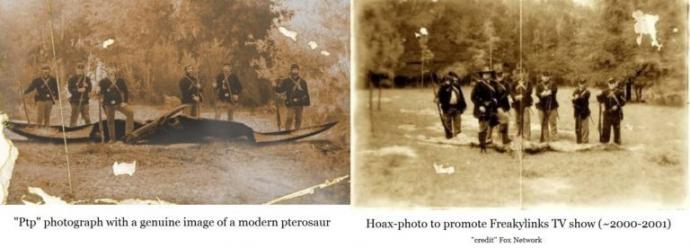
Quite possibly the most famous photograph in history related to the existence of Pterodactyls is an image that allegedly dates back to the American Civil War in 1864.
According to the story behind the mystery image, a giant flying creature was shot down by soldiers during the American Civil War in 1864 near the city of Vicksburg.
The story says that the soldiers said that the creature was like “some kind of unknown bird or a monster.”
In a surprising twist of the story, a second photograph appeared on the Internet that showed a similar scene.
This picture was created for a television program called FreakyLinks, which aired on the Fox network from 2000 to 2001.
The fake image showed soldiers standing on the body of another pterosaur.
There are two versions of the image
There are numerous forums on the internet that have tackled the mystery behind the image which allegedly shows a creature which, according to mainstream scientists, has been extinct for at least 65 million years.
Many experts in photography claim that the real civil what photo, the one FreakyLinks copied, is, in fact, the authentic version and not photoshopped one, while the one from FreakyLinks is clearly a reenactment of the original image.
The photo has become so popular, that there is an entire website dedicated to it.
Called Live Pterosaur, the website offers an adventure in Cryptozoology.
According to the website, “the ideas presented in this “Live Pterosaur” site relate mostly to eyewitness accounts: real-life encounters with creatures called “prehistoric” or “pterodactyl-like.” Expect few references to fossils. Enter these pages with an open mind and compare points of view. Whether you consider yourself an evolutionist or creationist, or just a curiosity, you might find yourself sympathizing with at least one of the ideas. If you leave this site disbelieving in living pterosaurs, however, know that some people do believe in living pterosaurs: Intelligent, educated people, can disbelieve in total extinction of pterosaurs.”
The website mentioned above was created by a man named Jonathan Whitcomb who is a cryptozoologist and “dissenting scientist,” as described on his website.
Whitcomb offers a great deal of information about the extinct creatures and a number of stories of alleged sightings of Pterosaurs.
Ok, so we know there are two images of the American Civil War Pterodactyl, and an entire website dedicated to Pterosaur’s, but is the image real or not?
According to the website Modern Pterosaur, the first image, the one FreakyLinks chose to falsify is real for a number of reasons explained again by Whitcomb.
According to the author, at first the wings of the Pterosaur looked way off, and some people said that they looked like parts of a canoe. However, a man who supposedly knows about Canoas contacted Whitcomb via email to speak about the Civil War image saying:
I’m 67 years old and remember this photo from when I was young. . . I’ve canoed all my life. I’ve owned several of them. Those aren’t halves of a canoe! Too narrow, too shallow. And not a dugout canoe!
Furthermore, as noted by Whitcomb; “The solar shadows tie the soldier’s boot to the animal, and a number of details in the head, neck, and other areas—those correlate well with the anatomy of a Pteranodon.”
However, numerous skeptics like Loen Colman, an American cryptozoologist who has written over 40 books on a number of topics, including cryptozoology. According to Colman the image of the Pterosaur is clearly a fake.
Others seem to agree with Colman.
Another man who talked about the civil war image was Glen Kuban who concluded like Colman that both the image by FreakyLinks and the one it was copied from are a hoax and most likely the result of photoshop.
But, despite the heavy criticism it has received, the old photo, now called “Ptp,” was supposedly declared genuine by two scientists, in January of 2017.
However, Skeptoid seems to have solved the mystery behind the image.
As noted by Brian Dunning, in his article titled “The Civil War Pterosaur,” “For it turns out — drum roll please — that the mystery of the PTP photo is one that has a verified solution, one which so many of these people struggling to prove it or disprove it overlooked. While they all agree that the PTP’s photo’s twin was staged and shot for the TV show FreakyLinks, very few of them seem to have gone to the trouble to actually watch the episode in question, episode 4, called “Coelacanth This”, directed by Jeffrey Levy. They probably should, because that’s where the PTP photo itself appears. In one scene, the characters are discussing an old photograph that they suspect might be connected to some recent attacks by what seems to be a giant bird”
“We’ve all seen the picture. All right, it’s coming through.”
And the PTP photo, in all its glory, comes up on their computer screens.
“Derek, this is impossible.”
“What, a pterodactyl?”
“A pteranodon, actually, they’re much bigger.”
“Hold on, Derek, this whole Civil War thing could just be a hoax.”
“Or we could prove these soldiers existed. Check their regiment markings against troop whereabouts or movements, or whatever in that area, you know?”
Both Civil War pterosaur photos: copyright 2000, 20th Century Fox Film Corporation and Regency Entertainment.
In addition to the above-discussed image, there are several other curious images which, according to many authors, are evidence that Dinosaurs and Humans once coexisted.
For example, take a look at the Stegosaurus carving on ancient Cambodian Temple.
If we take a look at a carving found on the Cambodian Ta Prohm temple, we will notice a supposed carving of a Stegosaurus or at least something that eerily resembles it. The temple was built around the 12th century prompting many authors and researchers to suggest that dinosaurs and mankind coexisted not long ago.
Then there’s this image:
Discovered in Dawson County Montana, a Triceratops brow horn has been controversial dates back to around 33,500 years, officially challenging the idea that dinosaurs went extinct some 66 million years ago.
This discovery, like many others, suggests that mankind coexisted on Earth with dinosaurs in the distant past. The Triceratops Horn is currently stored at the Glendive Dinosaur and Fossil Museum.