There is an important and unresolved tension in cosmology regarding the rate at which the universe is expanding, and resolving this could reveal new physics. Astronomers constantly seek new ways to measure this expansion in case there may be unknown errors in data from conventional markers such as supernovas
|
|
||
|
China routinely sends astronauts to and from its space station Tiangong. A crew capsule is about to undock from the station and return to Earth, but there’s nothing routine about its journey home.
It is not a mystery that thousands of years ago, ancient cultures around the globe had the ability to somehow move supermassive blocks of stone with extreme facility. Despite lacking ‘modern tools’ to do so, it is a well-known historic fact that cultures had the ability to move rocks of up to 1,000 tons, and transport them from their quarries to their final resting places, in temples, pyramids, and other monuments. And while we still can’t figure out the how, we continue searching our planet discovering incredible ancient sites that are the ultimate proof that we still don’t know everything about our ancestors. In this article, I’ve gathered a number of images from different archaeological sites across the globe that show the sheer number of megaliths quarried and moved by mankind thousands of years ago. In addition to the fact that they quarried and transported stones up to one thousand tons, the ancients were also very gifted designers and engineers. Some stones, like those found at the Khafre Valley Temple in Egypt, feature incredibly precise cuts and stones put together in such a way that every stone fits perfectly to the next one. The most amazing thing perhaps is the fact that all of this was achieved without the use of mortar. And curiously, if we compare the images of temples in Egypt to images of monuments in Bolivia or Peru; like Puma Punku, Sacsayhuaman, or even Ollantaytambo, we will notice an incredible similarity between the stones in South America and those in Africa. It is almost as if these cultures used the same technique, the same technology, and the same principles thousands of years ago. The only question that remains is, what were these techniques? What was the technology they used? Where is it now? And why have we not found any evidence of it despite tedious archaeological work? So, ask yourself after seeing these images; Did the ancients achieve all of this using sticks and stones? Or, is there a slight possibility that we still have not figured out everything about ancient civilizations that lived on Earth thousands of years ago, and that somewhere out there the final piece of the puzzle remains to be found?      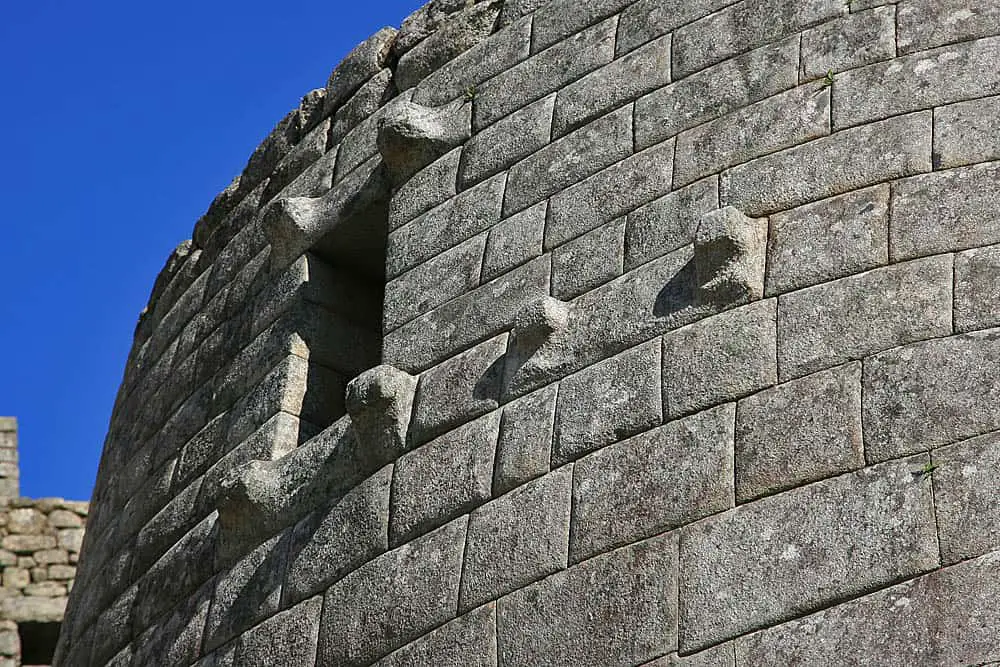                                   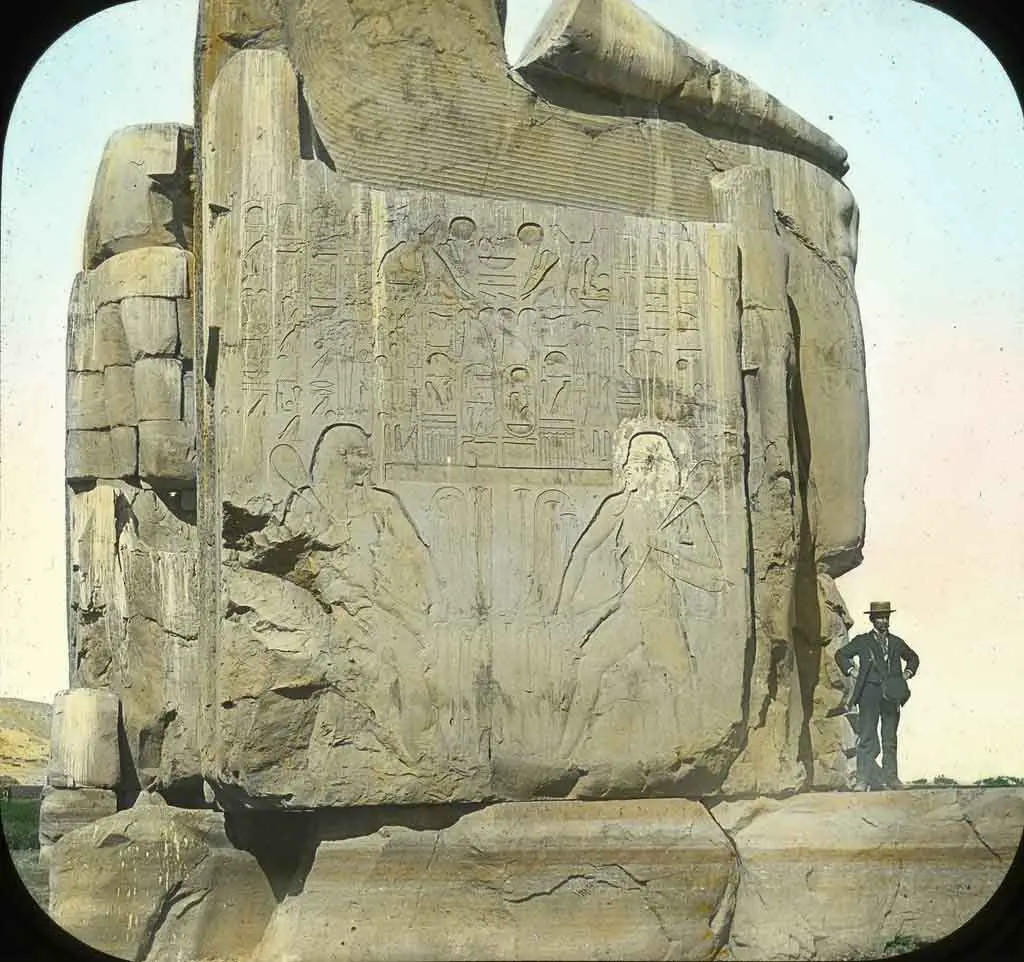     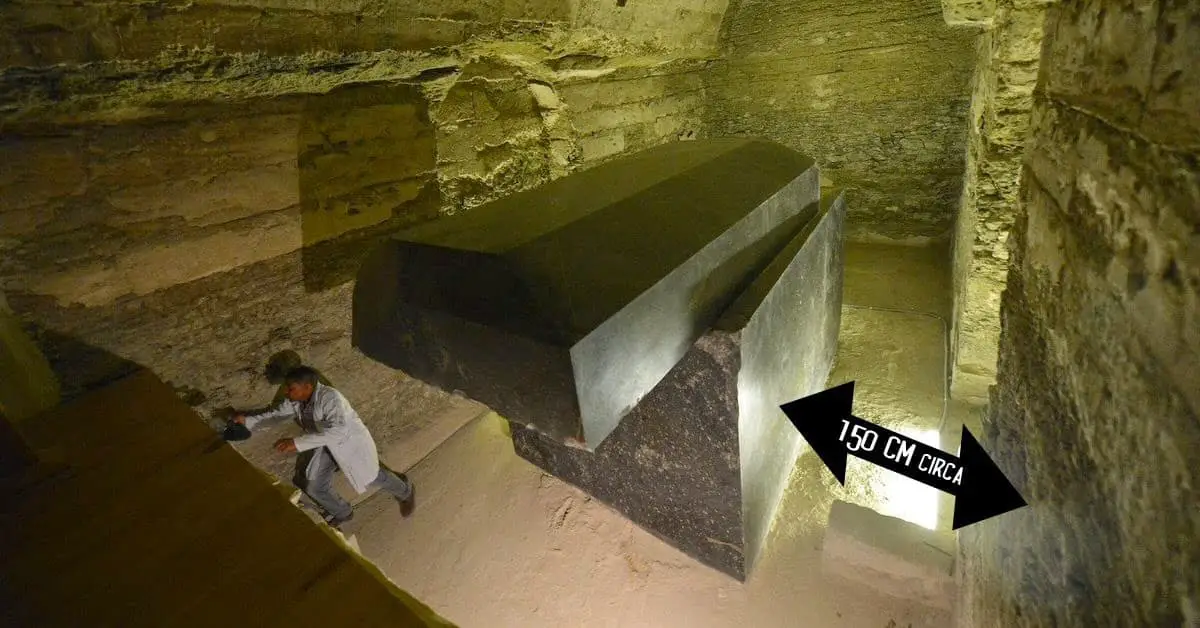    High up in Earth’s orbit, millions of human-made objects large and small are flying at speeds of over 15,000 miles per hour. The objects, which range from inactive satellites to fragments of equipment resulting from explosions or collisions of previously launched rockets, are space debris, colloquially referred to as space junk. Sometimes the objects collide with each other, breaking into even smaller pieces.
Of the seven Earth-sized worlds orbiting the red dwarf star TRAPPIST-1, one planet in particular has attracted the attention of scientists. This planet orbits the star within the “Goldilocks zone”—a distance where water on its surface is theoretically possible, but only if the planet has an atmosphere. And where there is water, there might be life.
In the leading model of cosmology, most of the universe is invisible: a combined 95% is made of dark matter and dark energy. Exactly what these dark components are remains a mystery, but they have a tremendous impact on our universe, with dark matter exerting a gravitational pull and dark energy driving the universe’s accelerating expansion.
Like a toddler right before naptime, TRAPPIST-1 is a small yet moody star. This little star, which sits in the constellation Aquarius about 40 light-years from Earth, spits out bursts of energy known as “flares” about six times a day.
NASA’s next big eye on the cosmos is now fully assembled. On Nov. 25, technicians joined the inner and outer portions of the Nancy Grace Roman Space Telescope in the largest clean room at the agency’s Goddard Space Flight Center in Greenbelt, Maryland.
Quantum technology is accelerating out of the lab and into the real world, and a new article argues that the field now stands at a turning point—one that is similar to the early computing age that preceded the rise of the transistor and modern computing.
A collaborative research team from the Institute of Solid State Physics, the Hefei Institutes of Physical Science of the Chinese Academy of Sciences, has discovered a high-energy-density barocaloric effect in the plastic superionic conductor Ag₂Te₁₋ₓSₓ.
When Middletown Police Department officers responded to the stabbing, the suspect fled on foot, climbed through a window of a locked cruiser and drove off
Acoustic signals have been important markers during NASA’s Mars missions. Measurements of sound can provide information both about Mars itself—such as turbulence in its atmosphere, changes in its temperature, and its surface conditions—and about the movement of the Mars rovers.
MPE Director and Nobel Laureate Reinhard Genzel is spearheading an open letter signed by nearly 30 eminent international astronomers urging the Chilean government to relocate the proposed INNA industrial complex. The project threatens the world-renowned dark skies over ESO’s Paranal Observatory, the premier site for cutting-edge astronomical research.
Most normal matter in the universe isn’t found in planets, stars or galaxies: An astronomer explainsIf you look across space with a telescope, you’ll see countless galaxies, most of which host large central black holes, billions of stars and their attendant planets. The universe teems with huge, spectacular objects, and it might seem like these massive objects should hold most of the universe’s matter.
Searching for technosignatures—signs of technology on a planet that we can see from afar—remains a difficult task. There are so many different factors to consider, and we only have the technological capabilities to detect a relatively small collection of them.
|
||
|
Copyright © 2026 Paranormal News Network - All Rights Reserved Powered by WordPress & Atahualpa 100 queries. 0.145 seconds. |
||