The former Madera County deputy was being arrested by Fresno police when he resisted and was tased; he was taken to a hospital, where he attacked an officer and took his gun
|
|
||
|
Scientists have released a new study on the arXiv preprint server that catalogs the universe by mapping huge clusters of galaxies.
A radio pulsar is like a cosmic lighthouse, a highly dense, rapidly rotating star that emits beams of radio waves. If Earth happens to be in the path, a “pulse” of radio waves will be detected.
Very early on in our universe, when it was a seething hot cauldron of energy, particles made of matter and antimatter bubbled into existence in equal proportions. For example, negatively charged electrons were created in the same numbers as their antimatter siblings, positively charged positrons. When the two particles combined, they canceled each other out.
Around the world, research is advancing to efficiently confine fusion plasma and harness its immense energy for power generation. However, it is known that turbulence occurring at various scales within the plasma causes the release of plasma energy and constituent particles, degrading the confinement performance.
University of Houston researchers have made a discovery in thermal conductivity that overturns an existing theory that boron arsenide (BAs) couldn’t compete with the heat conduction of a diamond.
Researchers have uncovered ‘giant’ hand axes believed to date back between 200,000 and 300,000 years. It is believed the hand axes were used by a mysterious human ancestor to cut prey in prehistoric Europe, report experts. The ‘giant’ tools were used by ancient man to process hard materials such as wood and carcasses and were discovered at an archaeological site at Proto Maior in Spain. Furthermore, a recent study carried out on the giant hand axes, suggests that there may have been two species of ancient humans, who lived close to each other for long periods of time. 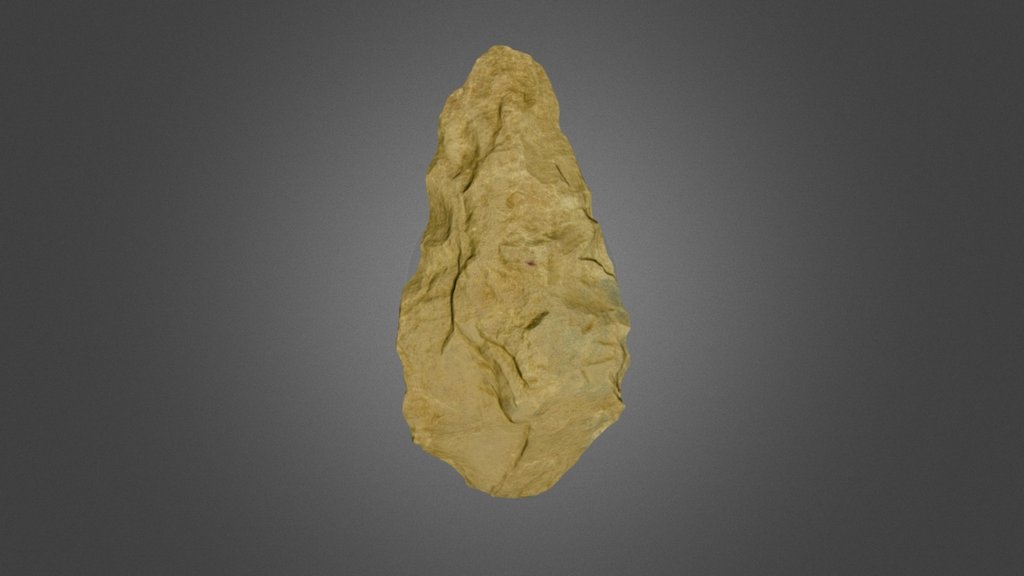 One group used technologies recently imported from Africa, while the others were long-standing residents. In Porto Maior, located in Galicia, a group of archaeologists, led by experts from the National Center for Human Evolution Research, have found an important repository of large tools dating back nearly 300,000 years. The tools have a distinctive style known as Acheulian, which is seen much more frequently in Africa and the Middle East than in Europe. The nature of the finding suggests that humans may have used these tools to cross the Mediterranean 300,000 years ago, but we have no idea how. It also shows that the Acheulean style coexisted for a long period of time with another style of tools, most likely belonging to a different species of primitive humans. The conclusions, recently published in the journal Scientific Reports, point out that although similar tools had already been found in southwestern Europe, they had never been found in this amount. Experts have recovered a total of 159 pieces, with a weight of 118 kilograms. The pieces are larger and heavier than those found in other parts of Europe, while they are consistent with those of other continents. ‘Porto Maior introduces further complexity to this overlapping technological pattern, and suggests that distinct early human populations of different geographical origins coexisted during the Middle Pleistocene (between 773,000 and 125,000 years ago)’, researchers, led by Dr. Martina Demuro, a research fellow at the University of Adelaide wrote in the Conversation. To explain this finding, two theories are currently considered by experts. The first involves an African population crossing the Mediterranean, while the second indicates an independent invention of a very similar style. The defenders of the second theory call attention to the subtle differences between the European findings and those of Africa. The authors of the study, on the other hand, are inclined towards the African option, arguing; “Any hypothetical reinvention of Acheulian technology in Europe would have occurred 1 million years after the appearance of Acheulean in Africa in a different environmental and technocultural context, and most likely by a human species that was very different from Homo ergaster, the species responsible for this technology.” “The discovery of Porto Maior is further evidence of the arrival of this technology from Africa, given the similarities that the site shares with deposits of African tools,” conclude experts. Featured image credit: The large tools are consistent with a culture known as Acheulean. Eduardo Mendez Quintas During the traffic stop, agents boxed the suspect in with their vehicles as they tried to arrest him; he then rammed into the vehicles in front of and behind him
In 1867, Lord Kelvin imagined atoms as knots in the aether. The idea was soon disproven. Atoms turned out to be something else entirely. But his discarded vision may yet hold the key to why the universe exists.
Electron-capture supernovae (ECSNe) are stellar explosions that occur in stars with initial masses around 8–10 times that of the sun. These stars develop oxygen-neon-magnesium cores, which become unstable when electrons are captured by neon and magnesium nuclei.
Using ESA’s Gaia satellite, astronomers have detected 87 stellar streams associated with globular clusters (GCs) in our Milky Way galaxy. The discovery, which doubles the number of known GC stellar streams, was detailed in a research paper published October 16 on the arXiv pre-print server.
In the 1960s, Frank Sinatra’s song “Fly Me to the Moon” became closely associated with the Apollo missions. The optimistic track was recorded in 1964, when US success against the Soviet Union in the moon race was not assured.
Astronomers using the James Webb Space Telescope (JWST) have captured the most detailed look yet at how galaxies formed just a few hundred million years after the Big Bang—and found they were far more chaotic and messy than those we see today.
An image snapped by NASA’s Apollo 17 astronauts has created controversy among Ufologists. According to claims, the image cataloged as AS17-135-20680HR shows what many believe is a Pyramid on the lunar surface. But… Long story short? No, they did not, but the image is evidence of how easily we can be tricked into seeing things that aren’t really there, or how our mind identified familiar patterns.  There are pyramids all over the planet. For a reason, we are yet to find out, ancient civilizations, spread across Earth, and isolated from one another, built massive pyramid structures thousands of years ago. Some say these ancient monuments were built as tombs, others say they were erected to pay tribute to the gods. But the real reason why there are thousands of pyramids on Earth remains a mystery. And while pyramids on Earth remain a hotly debated subject, finding pyramids on another planet or moon goes beyond reason, venturing out into what many call a massive conspiracy. Thanks to the various space programs, we have explored our neighboring planets and moons like never before. But it all started with NASA’s Apollo missions.  The Apollo Program was a manned space program developed by the United States in the 1960s in the framework of the space race with the Soviet Union during the Cold War. The project began in July 1960, when the US space agency NASA announced it, as a continuation of the Mercury missions. Apollo ran from 1961 to 1972, with the first manned flight in 1968. The Apollo 17 mission, which lasted from December 7-19 marked the end of manned lunar exploration. The mission was characterized by being the only Saturn V night launch. The crew landed in Taurus-Littrow, and it was the final manned Moon landing. Surface EVA time: 22:02 hours, after which astronauts returned 110.40 kg of samples back to Earth. However, the Apollo 17 mission was also marked by another peculiar occurrence. While digging through some of the images made available to the public, UFO hunters came across an image cataloged as AS17-135-20680HR. This image at first glance might not draw your attention, but upon closer examination, you will notice a triangle shaped object hiding in the background, which has led UFOlogists and UFO hunters to ask, what exactly did the Apollo 17 mission photograph on the moon? Is this image the result of a camera malfunction, Parts of the Rover? Or is there perhaps, a structure on the moon? We decided to investigate a bit more and examined the image further and as we played around with the contrast and brightness of the image we managed to get some pretty nice results that helped us see this object in a better way. And despite the fact that after cleaning the image up a bit we do get a ‘pyramid-shaped structure,’ the truth is that it’s not really a pyramid, and there a couple reasons as to why. First of all, you can check out the sheer amount of images and videos from the Apollo 17 mission by checking out this link: https://www.hq.nasa.gov/alsj/a17/images17.html#MagG. We are interested in the following material:
From there, you can check out the images and videos taken by the astronauts during their 22:02 hour EVA. We need to jump to image AS17-135-20680 (OF300) ( 209k or 1402k ) found under Magazine 135/G (B&W) EVA-2, Frames 20533-20680. The image in question: AS17-135-20680HR. The result? A blurry image with a strange shape in the middle. Pyramid you say? I beg to differ.  Let’s check out some other images taken before it. Let’s begin with image AS17-135-20674 (OF300) (151k or 1343k). NASA describes the image: “LRV traverse from the SEP site to Station 2. This photo shows the trough that runs along the base of the South Massif. The Station 2 boulders are the two large ones at the right edge of the picture. The big crater mentioned in the dialog is at the left, farther up the slope.” Note: LRV stands for Lunar Roving Vehicle.  If we take a look at the images snapped later, we see the following: We are looking at Station 2, LRV Floor. AS17-135-20678 (OF300) ( 95k or 1032k )  The next image, AS17-135-20679 (OF300) ( 100k or 1275k ) are described as Station 2, LRV Floor. Sunstruck, but the Astronaut who took the picture did not get the exposure right, which resulted in a blurry image.  Finally, we arrive at our image in question, AS17-135-20680 (OF300) ( 209k or 1402k) which NASA describes as LRV Floor? Sunstruck. The next image, AS17-136-20681was blank. Image AS17-136-20682 (OF300) (138k or 1041k) which is the next visible image shows parts of the LVR but also Sunstruck:  Verdict? The curious pyramid-like shape we see in the image is, in fact, the result of low-quality images snapped by astronauts. Position, light, and angle, all played an important role in obtaining a curious image that some have interpreted as a Pyramid on the moon when actually the only thing the astronauts snapped was the LVR under peculiar light conditions. Note that Images labeled “OF300” are from the original film and are presented at the equivalent of 300 DPI on a 7.5-inch by 7.5-inch reproduction. So, while there may certainly be peculiar things on the moon, structures that we may not be able to explain, these images snapped by Apollo 17 astronauts are not one of them. Featured image credit: Artist’s illustration of a Pyramid on the Moon. |
||
|
Copyright © 2026 Paranormal News Network - All Rights Reserved Powered by WordPress & Atahualpa 101 queries. 0.120 seconds. |
||