Cartels have issued bounties ranging from $2,000 to dox and surveil ICE and CBP officers to $50,000 for assassinating government officials, DHS Secretary Kristi Noem said
|
|
||
|
Impulse Space, the California-based venture founded by veteran SpaceX engineer Tom Mueller, today unveiled its proposed architecture for delivering medium-sized payloads to the moon by as early as 2028.
An international team of astronomers has discovered the first tidal disruption event (TDE) producing bright radio emission outside the center of a galaxy. The findings are published in The Astrophysical Journal Letters.
Using ESA’s Gaia satellite and NASA’s Transiting Exoplanet Survey Satellite (TESS), astronomers from the Ege University in Turkey and elsewhere have observed a galactic open cluster known as NGC 2506. Results of the observational campaign, published October 7 on the arXiv pre-print server, put more constraints on the properties of this cluster.
A research team led by Rice University physicist Frank Geurts has successfully measured the temperature of quark-gluon plasma (QGP) at various stages of its evolution, providing critical insights into a state of matter believed to have existed just microseconds after the Big Bang, a scientific theory describing the origin and evolution of the universe.
Massive monoliths quarried by man can be found all over the planet. The most straightforward definition of a monolith? A monolith can be a large piece of rock that is intended or was used to build a structure or a monument, alone or together with other stones. Ancient mankind has had the ability to quarry transport and place into position massive blocks of stone (monoliths) that weigh more than 100 tons. A monolith can be a monument in itself (statue, monolithic stone). Monolithic sacred stones are found from prehistoric times (menhirs) and in many civilizations, such as the Mayan civilization (steles representing the sovereigns or even the original “zoomorphs” of Quiriguá) and the Aztec civilization (the Coatlicue monolith, representing the goddess of death, or the decorated monolith of Tizoc that represents fifteen victories of this sovereign). The stone spheres of Costa Rica are more than 500 monoliths that weight up to 16 tons. These spheres are associated with constellations and astronomical events. Researchers place them around 6,000 BC, and others say that they could date back as far as 12,000 BC. The first buildings composed of monoliths are dolmens, which date back from the 5th millennium BC. The largest anthropogenic monoliths
 The largest monolith ever carved by man (if we are to ignore the megaliths of Gornaya Shoria in Russia) is the unfinished obelisk of Aswan, which has a weight of around 1200 tons. This massive obelisk never left the quarry, as the massive rock cracked before being separated from the bedrock.  The largest stone ever carved and moved by man is the massive stone of Baalbek, called Hadjar-el-Qoublé (the stone of the South), with dimensions of 21.50 × 4.80 × 4.20 m, the massive rock is believed to weigh between 900 and 1100 tons, according to fairly constant estimates. It left the quarry but remained planted at an angle, not far from the site of its extraction. 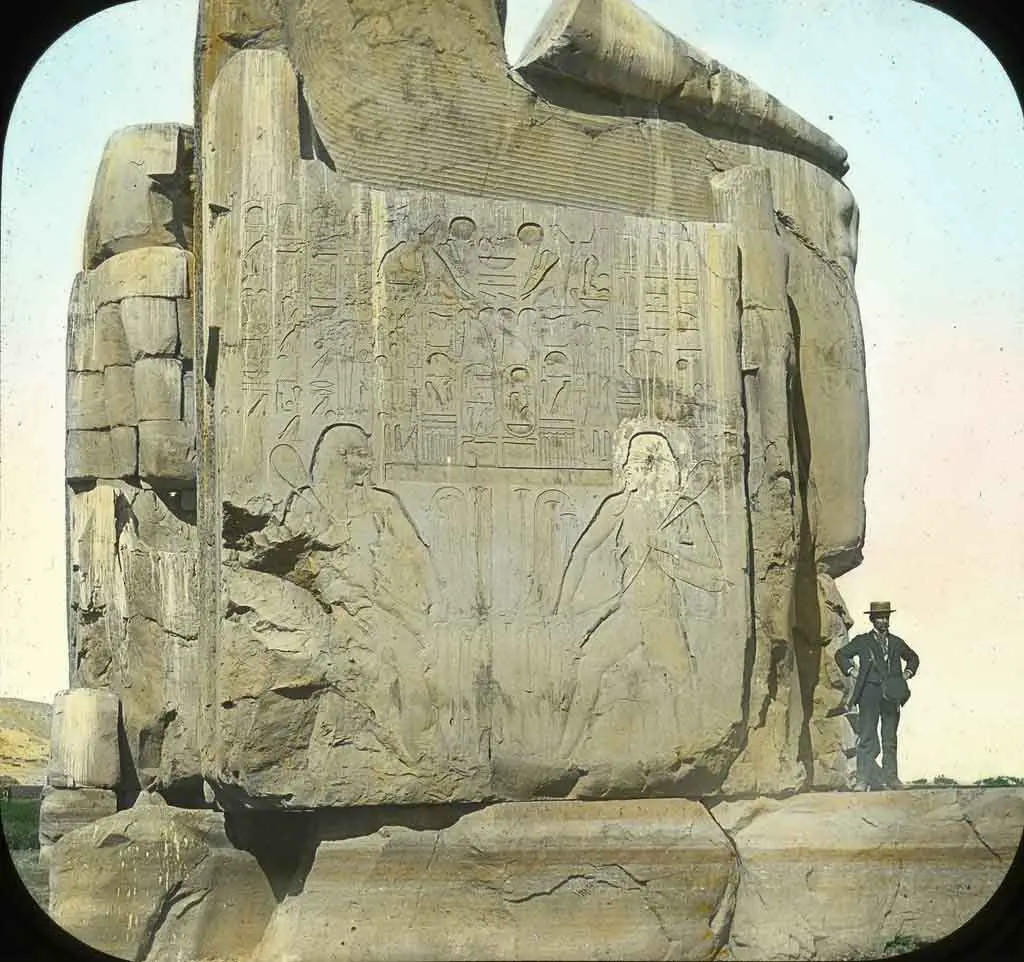 Worthy of mention are also the colossi of Memnon. The two giant stone statues represent the pharaoh Amenhotep III, and located on the west bank of the Nile, opposite the Egyptian city of Luxor, near Medinet Habu and south of the great Tebanas necropolis. The Colossi of Memnon have a weight of 1300 tons each. (The statues itself have 750 tons while the pedestal each weighing 550 tons).
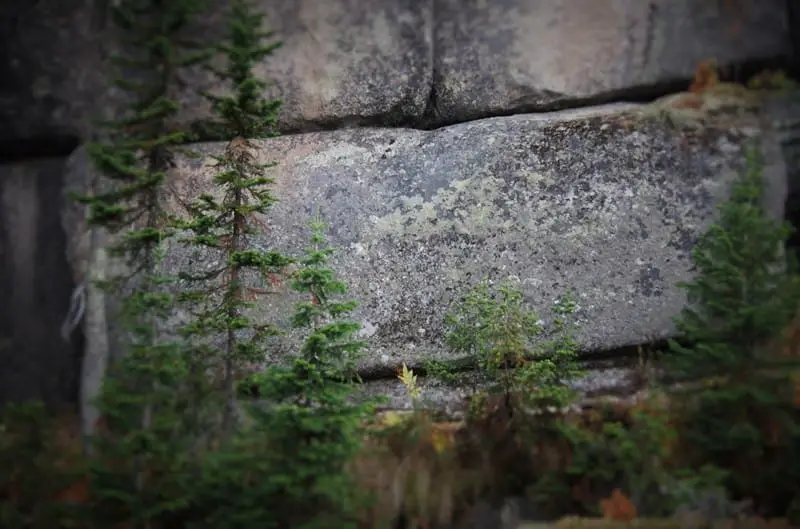
The monoliths of Gornaya Shoria are also considered some of the largest ever carved. However, there is a great debate among experts whether these monoliths are naturally occurring, or were carved by an unknown ancient civilization from Siberia. It is reported that the largest sections or blocks of stone have estimated weights between three and four thousand tons, which would make them larger than the megaliths at Baalbek, in Lebanon.  The Stone statues on Easter Island—the Moai—are also massive monoliths created by ancient man. So far, experts have identified more than 900 Moai Statues sculpted by the ancient Rapa Nui scattered throughout the island. Most of them were carved in tufa from the Rano Raraku volcanic cone, where more than 400 Moai remain in mixed phases of construction. According to historical data, the entire development of the various construction techniques was developed on the island between 700 AD and 1600 AD. Everything indicates that the quarry was suddenly abandoned and half-carved statues were left in the rock. The largest Moai statue is the Te Tokanga—the giant. This Moai is located at the main quarry of Rano Raraku and remains unfinished. With a weight of more than 270 tons, it remains a mystery as to how the ancient builders planned on moving it. Such a feat is even unthinkable for modern technology. Island tradition holds that this Moai was destined for the Ahu Vinapu ceremonial center.  The ‘Menhir de Champ-Dolent’ is the tallest of Brittany’s standing stones. Its height above ground is between 9.3 and 9.5 meters, and is made of pinkish granite. This massive standing stone has an estimated weight of around 100 tons. Featured image credit: Shutterstock. People tend to think of quantum materials—whose properties arise from quantum mechanical effects—as exotic curiosities. But some quantum materials have become a ubiquitous part of our computer hard drives, TV screens, and medical devices. Still, the vast majority of quantum materials never accomplish much outside of the lab.
By analyzing the available data from various space observatories and ground-based telescopes, Indian astronomers have conducted a long-term multiwavelength study of a changing-look active galactic nucleus (AGN) known as NGC 3822. Results of the new study, published October 7 on the arXiv pre-print server, provide more insights into the behavior of this AGN.
On July 2, 2025, NASA’s Fermi Gamma-ray Burst Monitor (Fermi-GBM) captured around three hours’ worth of signals that appeared to come from the same source. When scientists compiled this data with signals picked up by multiple other instruments, like the Einstein Probe (EP) Wide-field X-ray Telescope and the Russian gamma-ray spectrometer, Konus-Wind, they found that they were dealing with the longest gamma ray burst (GRB) ever recorded. At around 25,000 seconds in duration (around seven hours), the GRB event scientists refer to as “GRB 250702B” beat out the prior record-holder, GRB 111209A, by 10,000 seconds.
Quantum information systems, systems that process, store or transmit information leveraging quantum mechanical effects, could, in principle, outperform classical systems in some optimization, computational, sensing, and learning tasks. An important aspect of quantum information science is the reliable quantification of quantum states in a system, to verify that they match desired (i.e., target) states.
Pulsars suggest that ultra–low-frequency gravitational waves are rippling through the cosmos. The signal seen by international pulsar timing array collaborations in 2023 could come from a stochastic gravitational-wave background—the sum of many distant sources—or from a single nearby binary of supermassive black holes.
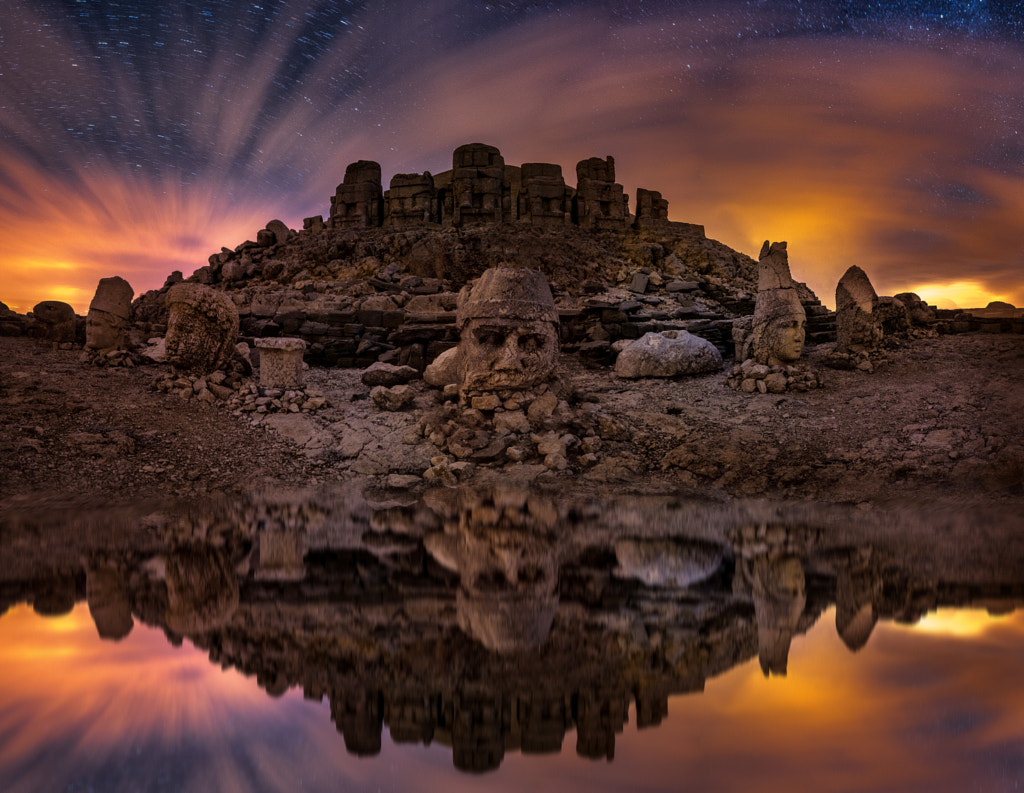
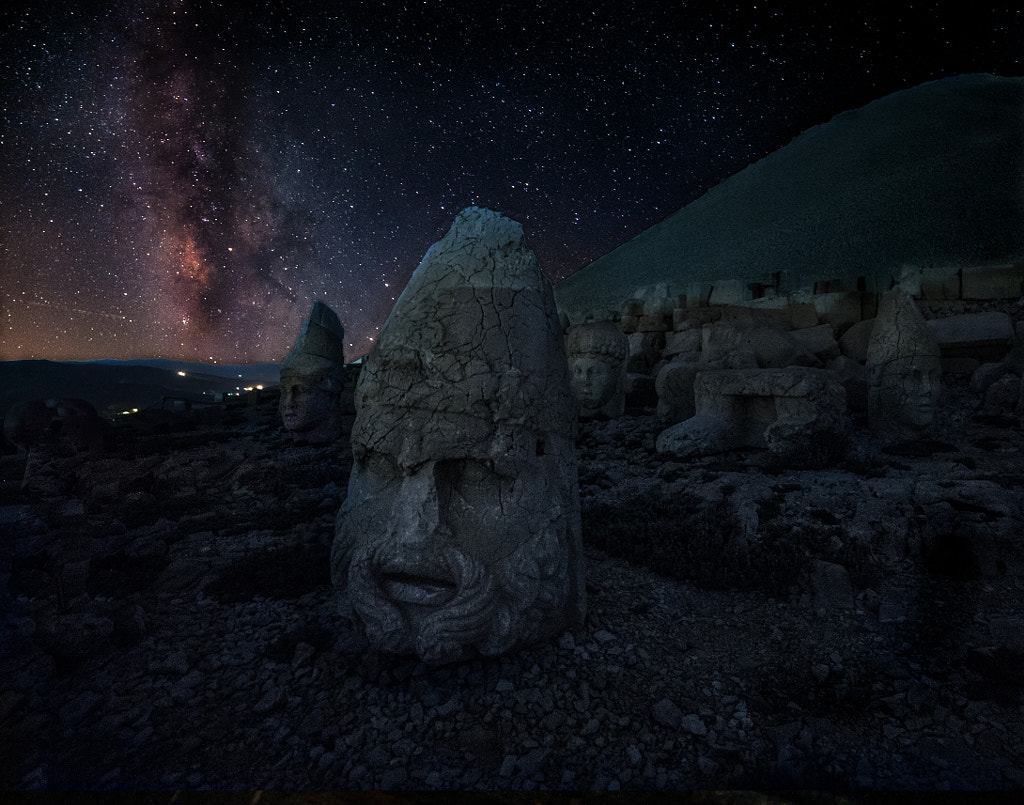
YouTube Video Here: https://www.youtube.com/embed/Lq89er-ETQU?feature=oembed&enablejsapi=1 Located in Southeastern Turkey, more than 2,000 meters above sea level on Mount Nemrut, lie the ancient ruins of the lost Kingdom of Commagene. Thousands of years ago, to be more precise in 62 BC, Kling Antiochus erected a mysterious royal sanctuary there and made sure it would forever be remembered. Supermassive statues of lions, Eagles, Persian and Greek Gods, as well as sculptures of the king himself, were built imposingly. Three terraces, to the North, East, and West, surround the 50 meters high mound (145 meters in diameter) formed by small limestones: On the East terrace, we find two rows of stone stelae with sculptures in relief: one of them with the Macedonian ancestors of Antiochus I and another with their Persian ancestors. On the west terrace, there is also a row of stelae, where Leo’s horoscope and Antiochus I himself is shown shaking hands with a deity. On the north terrace, the existing stelae have neither reliefs nor inscriptions.
Archaeologists have found evidence that the statues were once seated, with names of each god inscribed on them. Now, the heads of the statues are scattered on the ground; damage to the heads (especially the noses) suggests that they were deliberately produced by iconoclasts. There are also stone slabs with bas-relief figures that are thought to have been part of a large frieze. Statues that depict King Antiochus shaking hands with the ‘Gods,’ as if the gods recognize him as one of their own, welcoming him to the stars. This royal sanctuary, as well as the kingdom, were strangely abandoned in the first century AD. So far, experts have not discovered the king’s legendary burial chamber. Researchers did, however, find a shaft that King Antiochus had built into the mountain, which according to experts, displays exceptional knowledge of advanced astronomy. The shaft runs into the mountainside at an angle of 35 degrees to the horizontal, and it is believed to be about 150 meters long. Curiously, there’s nothing at the bottom. Computer analysis has revealed that on two days of the year, the sun’s rays would illuminate the bottom of the shaft; once when in line with the constellation of Leo and once when in line with Orion. This is a particularly exciting area in the night sky since it happens to be the path where the sun crosses over the Milky Way galaxy. Curiously, this to the ancient world was known as the Gate of Heaven. Even more interesting is the fact that there were Gates to Heaven; one where they cross in the north and the other where they cross in the south. More from Great Big Story Featured image credit: Shutterstock. In science and engineering, it’s unusual for innovation to come in one fell swoop. It’s more often a painstaking plod through which the extraordinary gradually becomes ordinary.
Researchers at the Niels Bohr Institute, University of Copenhagen, steered very thin conductors from superconductivity to insulation—creating an “impossible,” strange state between the two mutually exclusive states.
|
||
|
Copyright © 2026 Paranormal News Network - All Rights Reserved Powered by WordPress & Atahualpa 101 queries. 0.115 seconds. |
||
 Officially speaking, the biggest stone ever moved by man is the granite pedestal of the Bronze Horseman, which was transported to St. Petersburg in 1770,. It is considered as the largest stone ever moved by man, having an estimated weight of about 1500 tons.