A judge found Sgt. Erik Duran guilty after determining he acted recklessly by throwing a cooler at a fleeing suspect during a 2023 narcotics operation
|
|
||
|
Trooper Hunter Bennett, 28, and Pilot Robert Skankey, 61, were killed while supporting ground units during an active shooter incident
Invisible light beyond the range of human vision plays a vital role in communication technologies, medical diagnostics, and optical sensing. Ultraviolet and near-infrared wavelengths are routinely used in these fields, yet detecting them directly often requires complex instrumentation.
Two-dimensional (2D) materials, in general, allow the realization of unique quantum phenomena unattainable in the common three-dimensional (3D) world. A prime example is graphene. Transition metal dichalcogenides (TMDs) have a similar structure. Both can be stacked to form van der Waals heterostructures or can be exfoliated into single layers. But TMDs have an extra variety of excellent properties, including strong spin-orbit coupling and superconductivity.
Concerns that quantum computers may start easily hacking into previously secure communications has motivated researchers to work on innovative new ways to encrypt information. One such method is quantum key distribution (QKD), a secure, quantum-based method in which eavesdropping attempts disrupt the quantum state, making unauthorized interception immediately detectable.
The properties of a quantum material are driven by links between its electrons known as quantum correlations. A RIKEN researcher has shown mathematically that, at non-zero temperatures, these connections can only exist over very short distances when more than two particles are involved. This finding, now published in Physical Review X, sets a fundamental limit on just how “exotic” a quantum material can be under realistic, finite-temperature conditions.
Researchers in Australia have unveiled the largest quantum simulation platform built to date, opening a new route to exploring the complex behavior of quantum materials at unprecedented scales.
Authorities say leaked police data was used to facilitate shootings, drug trafficking and an attempted murder of an Ontario corrections manager
The security effort spans Santa Clara, San Francisco and San Jose; agencies involved include the FBI, DEA, ATF, U.S. Coast Guard, CBP and the Cybersecurity and Infrastructure Security Agency
In a new study published in Physical Review Letters, scientists have performed the first global simulations of monster shocks—some of the strongest shocks in the universe—revealing how these extreme events in magnetar magnetospheres could be responsible for producing fast radio bursts (FRBs).
Time crystals, a collection of particles that “tick”—or move back and forth in repeating cycles—were first theorized and then discovered about a decade ago. While scientists have yet to create commercial or industrial applications for this intriguing form of matter, these crystals hold great promise for advancing quantum computing and data storage, among other uses.
A study led by the Center for Astrobiology (CAB), CSIC-INTA, using modeling techniques developed at the University of Oxford, has uncovered an unprecedented richness of small organic molecules in the deeply obscured nucleus of a nearby galaxy, thanks to observations made with the James Webb Space Telescope (JWST).
Body camera footage shows an EMS dispatcher railing against Harford County deputies, expressing that she hoped they were killed and that “nobody likes cops”
EPFL physicists have found a way to measure the time involved in quantum events and found it depends on the symmetry of the material. “The concept of time has troubled philosophers and physicists for thousands of years, and the advent of quantum mechanics has not simplified the problem,” says Professor Hugo Dil, a physicist at EPFL. “The central problem is the general role of time in quantum mechanics, and especially the timescale associated with a quantum transition.”
YouTube Video Here: https://www.youtube.com/embed/xvAvN5xn5oY?feature=oembed&enablejsapi=1 Deep in the heart of northern Kansas, researchers excavated farmland that used to be under the ocean and ended up finding a brand new species of shark that lurked beneath the surface around 91 million years ago. During the middle to the late Cretaceous period, the region of the United States we know now as the Great Plains was submerged under the North American Western Interior Seaway, with Mitchell County, Kansas lying at the edge of the eastern boundary of the water.
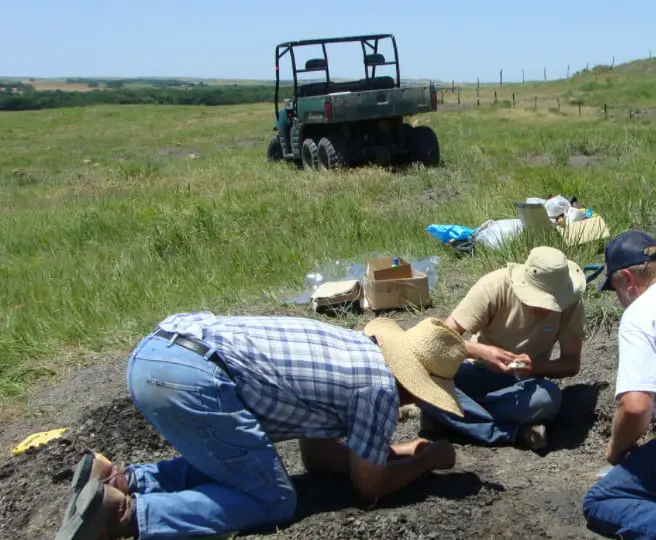 Just as the oceans are teeming with life today, so too did the ancient seaway. And also like today, sharks were an apex predator that most marine animals feared. DePaul University professor of paleobiology Kenshu Shimada and Michael Everhart from the Sternberg Museum of Natural History at Fort Hays State University thought they had uncovered the remains of a prehistoric shark species known as Credotus crassidens, which ranged from England to North America. However, when they compared the teeth they had found to known Credotus crassidens teeth, they realized to their delight that they had just found a brand new species of shark, which they named Cretodus houghtonorum in honor of Keith and Deborah Houghton, who owned the land where the specimen was found and donated it to the museum.

The pair of researchers found more than just teeth, which they explained in a paper published in the Journal of Vertebrate Paleontology:
 Bigger than the Great WhiteThe teeth, of course, tell us a lot about sharks both living and extinct. But this specimen revealed even more.
Based on the vertebrae, the team estimated the shark’s length at around 17 feet, and that it could have possibly reached 22 feet, bigger than a Great White Shark named Deep Blue estimated to be 20 feet in length and is also a distant cousin of the Credotus along with the Tiger Shark.

Indeed, sharks are vulnerable to extinction today due to the demand for shark fin soup. But if sharks disappear, ocean eco-systems would be thrown into chaos. In addition, Shimada and Everhart believe Credotus houghtonorum engaged in cannibalism before birth, much like modern-day sharks.
But that was not the most exciting part of the excavation. Like a forensic team, Shimada and Everhart had the opportunity to map out a series of events that occurred 91 million years ago, starting with the ingestion of a hybodontid shark by the Credotus, only for the Credotus to die and be scavenged upon by a Squalicorax shark before it, too, succumbed to whatever killed it near the same spot.
That’s a fascinating find that certainly provides a clear picture of the eat or be eaten world of Cretaceous period oceans. These waters were obviously dangerous.  Related: Are billionaires buying up land away from the coasts based on prophecies or inside information? In the end, the scientists understand that without the cooperation of landowners, they would not be able to make discoveries like this one, which is why they hope to foster goodwill among landowners across Kansas and the rest of the world so that further research can shed more light on these ancient eras in Earth’s history and fill in the gaps with new species so we can further understand the creatures living among us today.
Sharks are an important foundational species in the ocean environment. Letting them go extinct would be a great loss. Sharks have survived on this planet for over 91 million years. If they die out now, we only have ourselves to blame and we’ll suffer for it just as much as every species that relies on the ocean. More about sharks on the Great Plains from PBS Eons:
|
||
|
Copyright © 2026 Paranormal News Network - All Rights Reserved Powered by WordPress & Atahualpa 106 queries. 0.151 seconds. |
||