The man, suspected in a shooting, fled from Racine County Sheriff’s deputies before being captured and arrested across the street from a corrections center
|
|
||
|
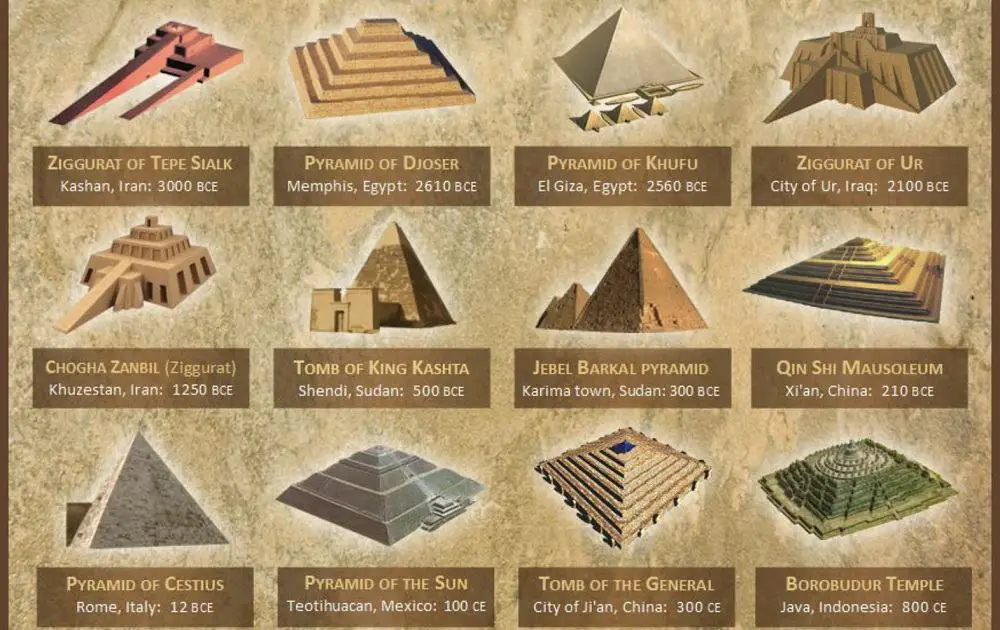
YouTube Video Here: https://www.youtube.com/embed/fDWmQCAr7bE?start=1&feature=oembed For centuries have scholars maintained that Pyramids were built to serve as tombs for mighty rulers to rest. For thousands of years have ancient civilizations around the globe built majestic structures reaching for the sky. The most famous pyramids ever built were erected in ancient Egypt. The Great Pyramid of Giza is one of the most amazing pyramids ever constructed on Earth. However, despite what many may believe, this pyramid isn’t the largest one. The entire property mimics ancient Egypt. Half-way around the world, in Mexico to be more precise, ancient cultures built equally stunning monuments. The Great Pyramid of Cholula is considered the largest pyramid on the surface of the planet in terms of volume. But no matter where you look, you’ll find pyramids that were erected in the distant past, as if thousands of years ago, ancient builders used the same blueprint to construct these massive structures. And since pyramids have become an equivalent of mystery, many people have tried understanding why were pyramids so important to our ancestors. There are more than 1000 pyramids in Central America alone? There are 300 Pyramids in China and over 200 Pyramids in Sudan.
Countless Pyramids exist around the globe. Egypt boasts only around 120 Pyramids. To try to get to the bottom of the Pyramid ‘mystery’, a Ukrainian scientist decided to study these majestic structured and see whether there is a chance that pyramids were contextured for a far greater purpose than what we have been led to believe. Dr. Volodymyr Krashnoholovets, a physicist from Ukraine, who has curiously spent over a decade building and researching pyramids, has been fascinated by these ancient structures for a long time. He discovered incredible details about pyramids. Endorsed by the Russian government, he created a 144-foot-tall pyramid outside of Moscow. He is a man who believes to have finally cracked the mystery behind pyramids and why they were built, and according to him, this is a summary of his discoveries on the effects of Pyramids:
Author David Wilcock talks about this and other Russian research into the pyramids below Building a replicaThis is the replica of the Great Pyramid of Giza. In the 1970s, a man called Jim Onan discovered a study by the University of Wisconsin that supposedly claimed the ancient Egyptians used the pyramids as energy-producing machines. Onan decided to perform a series of experiments, trying to recreate the energetic properties of the pyramid. YouTube Video Here: https://www.youtube.com/watch?v=7VvZVmO39uo He eventually built a few smaller pyramids and placed them around his house. According to reports, his friends and family soon began noticing a number of strange phenomena when located near the Pyramids. It is claimed that the smaller pyramids built by Onan produced a sort of energy vortex coming from their summit. YouTube Video Here: https://www.youtube.com/watch?v=nPlGe4jjtGk Eventually, Onan and his friends decided to build an even larger pyramid. He constructed a 13-foot tall structure and invited a botanist to plant plants inside the pyramid. According to claims, plants grew 3 times faster inside the pyramid then what they would grow normally. Onan is said to have built an exact replica of the pyramid of Egypt at 1/9th of their size, of course. Reports suggest that a man named ‘Ralph’ who worked maintenance at the Onan’s property drank spring water every day while working on the Pyramid. Ralph allegedly had high blood pressure. Eventually, he noticed that his blood pressure was lower. Finally, word got out and people started coming to the Onan’s mysterious Pyramid to drink the ‘miracle’ water. Many people claimed to feel better or to have certain ailments cured. This could all be the placebo effect (mind over matter), or there could be some validity as we now know that water is living and charging water and for it to be alive has more health value, notes Enlightened Consciousness. The residence built by Onan is truly remarkable. It features a 50-foot statue of King Tutankhamun, as well as a massive metal palm tree. The gold pyramid home has become an American landmark. Pawleys Island PD Chief Michael Fanning, whose skills grew from an interest in his own family tree, helped identify the body of Malquan Tyreek Hawkins after nearly a decade
The Michigan Gun Violence Prevention Task Force also recommended required waiting periods for all firearm purchases and prohibiting the possession of large-capacity magazines
A strong geomagnetic storm in spring 2024 brought the northern lights unusually far south, as the auroral oval expanded well beyond its typical position. “I am surprised at how sparse the measurement network is, even though we know that the impacts of space weather can vary greatly from one area to another,” says Doctoral Researcher Otto Kärhä from the University of Oulu, Finland.
A cosmological simulation study by researchers from the Shanghai Astronomical Observatory of the Chinese Academy of Sciences has systematically revealed, for the first time, how the interaction between dark matter and dark energy significantly influences the rotation and shape alignment of dark matter halos in the universe.
A new study led by the Yunnan Observatories of the Chinese Academy of Sciences has detected quasi-periodic oscillation (QPO) signals in an unusual gamma-ray burst (GRB) event. The findings are published in The Astrophysical Journal.
Scientists have captured an exceptionally rare, high-resolution view of an active region that produced two powerful X-class solar flares—an achievement rarely possible from Earth. Using the GREGOR solar telescope in Tenerife, researchers recorded the explosive activity of the sun’s most energetic sunspot group of 2025, revealing twisted magnetic structures and the early stages of flare ignition with unprecedented detail. The flares triggered fast coronal mass ejections that lit up Earth’s skies with vivid auroras in the nights that followed.
Stars usually form in clusters, which can also form in pairs or groups. Binary clusters (BCs) are defined as pairs of open clusters closely associated both in position and kinematics. They provide insight into how stars form within giant molecular clouds, making them important indicators of star formation and cluster evolution.
When describing collective properties of macroscopic physical systems, microscopic fluctuations are typically averaged out, leaving a description of the typical behavior of the systems. While this simplification has its advantages, it fails to capture the important role of fluctuations that can often influence the dynamics in dramatic manners, as the extreme examples of catastrophic events such as volcanic eruptions and financial market collapse reveal.
A new paper published in Nature Communications could put scientists on the path to understanding one of the wildest, hottest, and most densely packed places in the universe: a neutron star.
Acoustic frequency filters, which convert electrical signals into miniaturized sound waves, separate the different frequency bands for mobile communications, Wi-Fi, and GPS in smartphones. Physicists at RPTU have now shown that such miniaturized sound waves can couple strongly with spin waves in yttrium iron garnet. This results in novel hybrid spin-sound waves in the gigahertz frequency range.
When a plate drops or a glass smashes, you’re annoyed by the mess and the cost of replacing them. But for some physicists, the broken pieces are a source of fascination: Why does everything break into such a huge variety of sizes? Now, Emmanuel Villermaux at Aix-Marseille University in France and the University Institute of France has come up with a simple, elegant law for how objects shatter, whether they are brittle solids, liquid drops, or exploding bubbles.
Researchers at the University of Sydney have cracked a long-standing problem in microchip-scale lasers by carving tiny “speed bumps” into the devices’ optical cavity in their quest to produce exceptionally “clean” light. This exquisitely narrow spectrum light could be used in future quantum computers, advanced navigation systems, ultra-fast communications networks and precision sensors.
YouTube Video Here: https://www.youtube.com/embed/2pGhEu9elnA?feature=oembed&enablejsapi=1 In Brief: Gilgamesh was an ancient ruler of the city of Uruk in the land of Sumer, Mesopotamia. Gilgamesh is described as a hero and a demigod who possessed superhuman strength. Gilgamesh was two-thirds God from his mother, the goddess Ninsun, and one-third human from his father, the former king of Uruk Lugalbunda. Historical evidence suggests that Gilgamesh built the city walls of Uruk to defend his people. Gilgamesh fought against the demon Humbaba (or Huwawa), along with his former enemy Enkidu. After killing the daemon, they brought his head back to Uruk on a raft, built from massive trees. Gilgamesh and Enkidu also defeated the Bull of Heaven sent by the furious goddess Ishtar after Gilgamesh refused to become her lover. According to the Sumerian King List, Gilgamesh was the son of the goddess Ninsun and the Priest-King Lugalbanda. Gilgamesh was the ruler of the district of Kulab and fifth king of the city Uruk (Erech in biblical texts, current Warqa, in Iraq) around the year 2750 BC. The Sumerian King List states him as a postdiluvian ruler, meaning that he lived after the great flood.  He is perhaps the best-known ancient Mesopotamian hero, as a number of tales, poems and legends have been told about Gilgamesh. He succeeded King Lugalbanda and reigned for 126 years leaving the throne to his son Ur-Nungal, who ruled for 30 years. He is perhaps best known from the Epic of Gilgamesh, (believed to have been written circa 2150—1400BCE) the great Sumerian poetic work, considered as the oldest piece of epic world literature, predating Homer’s writings by at least 1,500 years. The Epic of Gilgamesh tells the story of how the citizens of Uruk, being oppressed, asked the gods for help, who sent to Earth a being named Enkidu to fight Gilgamesh and defeat him. But the fight becomes very even, without a clear winner. Finally, Enkidu recognizes Gilgamesh as a king and the two fighters become friends. Together they decide to take a long journey in search of adventure, in which they face fantastic and dangerous, legendary animals. In Gilgamesh’s absence, the goddess Inanna (known to the Babylonians as Ishtar and later as Astarte) cares for and protects the city. Inanna declares her love to Gilgamesh, but he rejects her as he insists that Inanna has mistreated all her former lovers, provoking the wrath of the goddess, who in revenge sends the Bull of Heaven to destroy the two characters and the entire city. Gilgamesh and Enkidu kill the Bull of Heaven and offer its heart to Shamash, but the gods are enraged by this fact and punish Enkidu with death. Gilgamesh falls into a deep grief after the death of his friend (brother) and he begins to question the meaning of life, and the value of human accomplishment in the face of final extinction, as he cries out: How can I rest, how can I be at peace? Despair is in my heart. What my brother is now, that shall I be when I am dead. Because I am afraid of death I will go as best I can to find Utnapishtim whom they call the Faraway, for he has entered the assembly of the gods. (Sandars, 97) Gilgamesh, A Demigod? Ancient Alien? Or Mortal Human? As Gilgamesh was the son of the Goddess Ninsun, he was considered a Demigod, one of the reasons why he is believed to have lived an exceptionally long life, since he is thought to have ruled over Uruk for 126 years. But in addition to his long life, Gilgamesh was thought to have had super-human strength. …Hercules anyone? The most important and interesting thing is, in my opinion, that most historians mostly agree that Gilgamesh was a real, fresh and blood King, who ruled sometime between 2900 – 2350 BC. Despite the fact that scholars have accepted Gilgamesh’s existence as an historical fact, it is hard to say when exactly he lived. As explained by Stephanie Dalley, a scholar of the ancient Near East: “precise dates cannot be given for the lifetime of Gilgamesh, but they are generally agreed to lie between 2800 and 2500 BC.” Evidence of his existence can be found in the Tummal Inscription, a thirty-four-line text written between 1953 – 1920 BC. The inscription credits Gilgamesh as the builder of the walls of Uruk. “For a second time, the Tummal fell into ruin, Gilgamesh built the Numunburra of the House of Enlil. Ur-lugal, the son of Gilgamesh, Made the Tummal pre-eminent, Brought Ninlil to the Tummal.” —The Sumerians: Their History, Culture, and Character by Samuel Noah Kramer. “Gilgamesh became the hero par excellence of the ancient world—an adventurous, brave, but tragic figure symbolizing man’s vain but endless drive for fame, glory, and immortality” From historical records, poems and legends we know he existed, we know he was a powerful ruler, and we know that after his death, he was considered a God reborn, a deity which many later Mesopotamian rulers worshiped. Gilgamesh was referred to as a God in a number of Sumerian Poems. It must be noted that later Mesopotamian rulers, in the twenty-first century BC, would invoke his name and associate his lineage with their own. Utu-hengal, the king of Uruk, adopted Gilgamesh as his patron deity. King Shulgi of Ur (2029 – 1982 BC considered the greatest king of the Ur III Period (2047-1750 BCE)) declared himself the son of Lugalbanda and Ninsun and the brother of Gilgamesh. |
||
|
Copyright © 2026 Paranormal News Network - All Rights Reserved Powered by WordPress & Atahualpa 96 queries. 0.120 seconds. |
||