Grand Island police broke a window and pulled the man from a smoke-filled vehicle moments before it was fully engulfed in flames
|
|
||
Firearms found in Baltimore FD trainee’s car after police respond to threats made against classmatesPolice say a Baltimore City Fire Academy trainee threatened to “stack bodies” before classmates alerted instructors, leading officers to seize multiple firearms from his vehicle
There are a number of ancient cities—considered myths by most authors—that some believe existed before written history, in different places on Earth. The Lost City of Z, just like Atlantis is one such mysterious place. The most famous person to ever search for this lost city was a man called Percy Harrison Fawcett a renowned explorer who tried discovering the long-lost city thought to remain hidden somewhere in the Amazon jungle. According to myths and legends, the lost City of Z would have been erected in very ancient times by the descendants of Atlantis. It is believed that the Atlanteans who survived the destruction of their home and escaped to a number of different regions on Earth, and some of them ended up in the Amazon, where they eventually settled down. Fawcett made eight expeditions, disappearing in the last in strange circumstances. Did he find the lost city of Z in the Amazonian jungle? Could the Lost City of Z be connected to El Dorado and Atlantis? And what exactly happened to Fawcett in his last expedition? No one seems to have answers for these questions. But where to stories about massive cities made of gold, inhabited by powerful beings come from? We can say that part of the stories come from the old continent. In other words, when the Europeans explorers began arriving at the Americas, the myths and legends of supernatural creatures and pseudo-human tribes slowly gave way to stories of massive ancient cities hidden in the heart of the jungle. But what exactly is the reason? Some authors would argue that thanks to the abundance of indigenous communities that the Europeans faced and their exuberant religious rites fed the European fantasies which quickly spread. Thinking of a great civilization whose wealth one cannot imagine was quickly acknowledged as a common idea. An idea that would later—acoridng to many authors—become known as the legend of El Dorado and that, moreover, satisfied the delirious hunger for gold of the first, and several of the following, visitors to the continent. The Lost City of Z and Col. Percy Harrison Fawcett Col. Percy Harrison Fawcett was a British explorer who named the Lost City of Z in 1912 after finding an ancient document titled Manuscript 512, kept in the National Library of Brazil. It is believed that his conviction was fed in part due to the rediscovery of the lost city of Machu Picchu in 1911.  The document—Manuscript 512—is believed to have been authored by Portuguese Bandeirantes, João da Silva Guimarães, who allegedly discovered the ruins of a mighty ancient city, containing arches, statues, and temples covered in hieroglyphs, deep in the Amazonian Jungle in 1753. While Guimarães described the city in great detail, he failed to give off its location. The enigmatic manuscript is completed with curious details, such as documenting the discovery of a bag of gold coins bearing the silhouette of an archer and a crown, or the reproduction of hieroglyphs copied from various corners of the city, which some say bare an uncanny similarity with Greek and Phoenician letters. In some way, Fawcett was obsessed with lost cities. Throughout his travels, Fawcett had heard rumors of a secret ancient underground city located ‘somewhere’ in the jungles of Chile, which, according to tales, legends, and reports, was made of streets paved with silver and roofs of gold. Fawcett wrote about the Lost City of Z in a letter to his son in 1912:
The mystery behind Fawcett’s disappearance So, what happened to one of the most famous explorers in history? In 1921, the first expedition to find the Lost City of Z was assembled by Fawcett. His search for Z culminated with his disappearance and the appearance of many myths and tales surrounding his faith. His last expedition was set in March in April of 1925, this time financed by newspapers and societies such as the Royal Geographic Society and the Rockefellers. Fawcett was certain that his expedition would culminate with the discovery of the mythical city. In May of 1925, the expeditions had reached the edge of uncharted territory, exploring an area that no foreigner had ever dared crossing. Fawcett’s beliefs were greatly influenced on what the Indians had told him about alleged Lost Cities spread across the Amazon jungle. Even his penultimate letter – nine days before he mysteriously vanished, mentions one such tale. Correspondence from Colonel Fawcett dated May 20th, 1925
The team traveled into territory that no one had ever seen. They faced many dangers, but they wouldn’t give up. Eventually, they reached an area called ‘Dead Horse Camp’ when Fawcett sent back dispatches for another five months, finally stopping after the fifth. In this dispatch, he would send a letter to his wife saying (dated 29th May 1925):
Those were the final words of Col. Percy Harrison Fawcett. Two years passed and nothing was heard from Fawcett nor his team. This resulted in many expeditions being launched in order to find them. Mysteriously, each expedition suffered the same fate as Fawcett’s. Fawcett’s disappearance resulted in a total of 13 expeditions being mounted in which more than a hundred people lost their lives, attempting to find not only Fawcett but the Legendary Lost City of Z as well. No one knows what exactly happened to Fawcett, his expedition and to more than one hundred people that set out to search for him. Numerous theories were proposed eventually. Some say Fawcett and his team were killed by an Amazonian tribe, while otters suggest they may have starved, drowned, or suffered a disease. There are some who also say that they may have been robbed and killed by bandits in the region. Featured Image Credit: Leon Tukker. Posted with permission. What can mapped drainage systems on Mars teach scientists about the red planet’s watery past? This is what a recent study published in the Proceedings of the National Academy of Sciences hopes to address as a team of scientists from the University of Texas at Austin (UT Austin) conducted a first-time mapping study involving Martian river basins. This study has the potential to not only gain insight into ancient Mars and how much water existed there long ago, but also develop new methods for mapping ancient river basins on Mars and potentially other worlds.
Astronomers have captured images of two stellar explosions—known as novae—within days of their eruption and in unprecedented detail. The breakthrough provides direct evidence that these explosions are more complex than previously thought, with multiple outflows of material and, in some cases, dramatic delays in the ejection process.
Stars form in massive clouds of gas called molecular clouds. As they form, they accrete gas from these clouds, and as the stars rotate, gas and dust accumulates in a rotating disk around the star called a protoplanetary disk. As the name makes clear, this is where planets form by accreting material from the disk.
A team from the Faculty of Physics and the Center for Quantum Optical Technologies at the Center of New Technologies, University of Warsaw has developed a new method for measuring elusive terahertz signals using a “quantum antenna.”
The suspect named a specific officer in written plans that also included a map of the campus police station, according to a probable cause affidavit
Our planet is filled with incredible stories, myths, and legends about incredible civilizations and cultures that inhabited Earth tens of thousands of years ago, before written history. Among all these fascinating legends, including Atlantis, Lemuria, Mu, and Shambala among others, there is one especially suggestive for which the ancient Greek historians were interested. It was the so-called land of Hyperborea, which was said to rival the mythical Atlantis. A place in which, according to the myths, the gods who descended from heaven lived, a place of incredible prosperity, technology, and history. This mythical land is said to have been like no other. Hyperboreans were said to have been immortal, in addition to being described as Gods. Hyperborea was said to have been a theocracy ruled by three priests of the god Apollo.  Furthermore, the god Apollo drove his flying vehicle to this region every nineteen years to rejuvenate. It is also said that Medusa was banished to those lands. Various fragments about Pythagoras claimed that he came from the Hyperboreans. Located far to the north, somewhere near the icy regions of the North Pole, the legends speak of an ancient and almost forgotten civilization. Mythical in character, it is said that the Hyperborean civilization flourished in the northernmost region of planet Earth at a time when the area was suitable for human life and development. Certain esoteric systems and spiritual traditions speak of Hyperborea as the terrestrial and celestial principle of civilization. In other words, the home of the ancient people. The original human. Some authors have even proposed several theories suggesting that Hyperborea was the original Garden of Eden, the exact place where the earthly planes and celestial planes meet. The land was described in a number of legends as being the perfect place on Earth, hence its connection to the Garden of Eden. Hyperborea is said to have been a land where the Sun shone twenty-four hours a day. Greek Mythology and the Hyperboreans It is in Greek Mythology where we find a lot of details about this mythical land. According to Greek literature, Hyperborea was a place inhabited by a race of Giants who were described as living in a place ‘beyond the north wind’. The Ancient Greek believed that Boreas, the God of the North Wind inhabited Thrace, and therefore Hyperborea was commonly referred to as a place located far to the north of Thrace. As the Greek described Hyperborea as a place where the Sun shone twenty-four hours a day, modern authors have suggested they may have described a location within the North Circle of our planet. 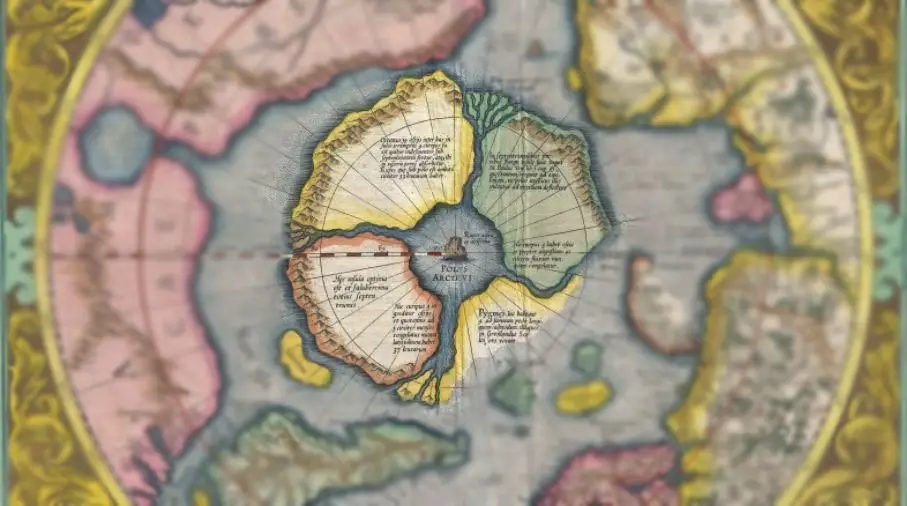 However, some authors argue that Hyperborea had no actual location. According to Pindar, a Greek poet:
Pindar also described the otherworldly perfection of the Hyperboreans:
But it is Greek historian Herodotus who describes this incredible place with detail in his book Histories (Book IV, Chapters 32–36). Herodotus reported three initial references that apparently mentioned the Hyperboreans, including Hesiod and Homer, the latter purportedly having written about Hyperborea in his lost work Epigoni. Herodotus also recorded that the 7th-century BC poet Aristeas wrote of the ancient Hyperboreans in a poem (now regrettably lost) called Arimaspea which speaks about a journey to the Issedones, who are thought to have lived in the Kazakh Steppe. Beyond these lived the one-eyed Arimaspians, further on the gold-guarding griffins, and beyond these the Hyperboreans. Herodotus thought that Hyperborea prevailed somewhere in Northeast Asia. So, if Hyperboreans did exist, where was it located then? Different sources indicate different locations. Some authors argue that the ancient Hyperboreans were located somewhere beyond the snowy Riphean Mountains–a mountain range mentioned by various authors of classical antiquity but whose locations remains a profound mystery. (The Montes Riphaeus mountain range on Earth’s Moon is named in honor of the Riphean Mountains.) If we take a look at the work of Pausanias: “The land of the Hyperboreans, men living beyond the home of Boreas.” According to Homer, Boreas was in Trace, so Hyperborea was in his opinion north of Thrace, in Dacia. But, as the Riphean Mountain’s location was a heavily discussed topic in ancient time, it was a difficult task to agree on the location of both the mountains and the land where the Hyperboreans lived. According to Hecataeus of Miletus, an early Greek historian, and geographer, the Riphean Mountains were located near the Black Sea. Pindar, however, was convinced that the Ripehean Mountains and Borea was located near the Danube, while Heraclides Ponticus and Antimachus, in contrast, identified the Riphean Mountains with the Alps. They were also convinced that the Hyperboreans were a Celtic tribe who lived beyond the Riphean Mountains. Hyperborea was also identified as Britain by Hecataeus of Abdera in the 4th century BC. In a fragment by Diodorus Siculus we read: “In the regions beyond the land of the Celts there lies in the ocean an island no smaller than Sicily. This island, the account continues, is situated in the north and is inhabited by the Hyperboreans, who are called by that name because their home is beyond the point whence the north wind (Boreas) blows; and the island is both fertile and productive of every crop, and has an unusually temperate climate…” Plutarch, on the other hand, wrote in the first century AD that the Hyperboreans were most likely the Gauls, who attacked and sacked Rome in the Fourth century BC. Legends speak of mighty ancient civilizations To the ancient Greek and Romans, Thule and Hyperborea were one of several terrae incognitae, regions that have not been mapped or documented. In these uncharted lands, Pliny, Pindar, and Herodotus among others believe that people lived incredible longevous lifespans, surpassing the age of one thousand years. According to a number of ancient authors, the sun supposedly rose and set only once a year, meaning that if such civilization existed, it was most likely located above or on the arctic circle. 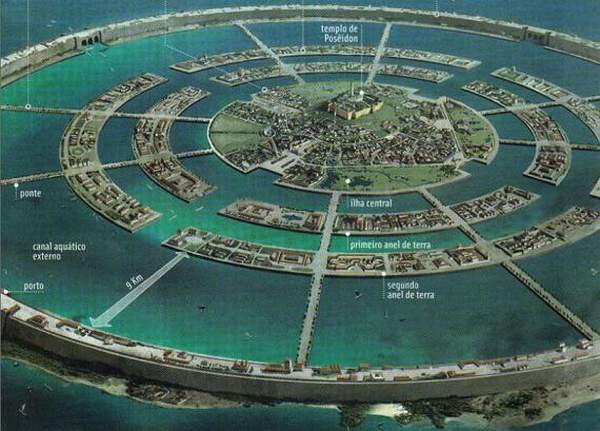 The Hyperboreans were allegedly once on the verge of war against a race of soldiers which many authors suggest may have been the Atlanteans. However, the war never happened as the soldiers realized the inhabitants of Hyperborea were far too strong. This account was preserved by Aelian–a Roman author and teacher of rhetoric. Some beleive the account by Aelian was a work of satire or comedy Featured Image Credit: Julian Faylona. Posted with permission. Genesee County commissioners are poised to approve a $50,000 partnership with the American Red Cross that would equip paramedics with Type O blood for emergency transfusions
While Boston PD statistics show a slight decline in overall crime, there have been 30 homicides in the city, up from 22 in 2024
Ask and Embla, in Norse mythology, were the first two human beings created by the gods, analogous to Adam and Eve. The Norse creation myth or cosmogony is considered as one of the richest of such accounts in all of world literature. And while today we aren’t discussing the myth behind the creation of the Cosmos but how the Norse Gods created mankind, it is noteworthy to mention that the creation of the cosmos according to Norse Mythology is a powerful, and an exceptionally entertaining story worth reading.  Ask and Embla are attested in both the Poetic Edda, written sometime in the 13th century from earlier traditional sources and the Prose Edda, written in the 13th century by Snorri Sturluson. Just like numerous other ancient mythologies and ancient legends mentions the creation of man, Norse Mythology too mentions that mankind was created. It was crafted. And it did not come into existence on its own. Before mankind was created, the gods had already designed Midgard as the abode of man. Since there were still no human beings to inhabit it, the Gods decided to populate it. According to chapter 9 of the Prose Edda book Gylfaginning, one day, Odin his brothers, Ve and Vili, were walking along the seashore and they found two trees, the ash tree (Ask) and the elm (Embla) whose whimsical shapes seemed humanoid. The gods watched in silence the inert wood. Odin, realizing the use that could be given to him, endowed them with souls. Vili granted them the movement and the senses, and Ve contributed with blood and a healthy complexion. The Gods had given them everything they needed. Thus endowed with speech and intellect, and with the power to love, wait and work, and with life and death, the newly created man (Ask) and woman (Embla) were granted the freedom to rule Midgard at their will. Eventually, they populated it with their offspring, while the gods, remembering that they had been the ones who had endowed them with life, became very interested in all their activities, watching over them and frequently granting them their help and protection. What I find extremely interesting is that no matter which ancient culture you look at, you’ll find written evidence that the Gods created mankind. The Gods, who were not from Earth—and therefore extraterestrial—are the ones who gave mankind everything they needed to survive. They created them in their own liking and watched over them from above. For example if we take a look at 1:26 we read: Then God said, “Let Us make man in Our image, after Our likeness, to rule over the fish of the sea and the birds of the air and the livestock, and over all the earth itself and every of creature that crawls upon it.” Keywords here are ‘Let Us make man…’ Us. Mankind was Created. It was built. Featured Image Credit: Severine Pineaux The video shows an Ontario Provincial Police officer diving off the side of the roadway as an out-of-control vehicle slid toward him, narrowly avoiding being hit
Detective Tim Jones was 24 years old when he was shot in the head while responding to a break-in; the injury left him paralyzed
The Cleveland PD stated that the Pawnee County Sheriff’s Office was notified of a planned warrant service; Sheriff Shawn Price stated he did not know about it until 15 minutes beforehand
|
||
|
Copyright © 2026 Paranormal News Network - All Rights Reserved Powered by WordPress & Atahualpa 99 queries. 0.102 seconds. |
||