Solar physicists say they have found a key source of intense gamma rays unleashed when Earth’s nearest star produces its most violent eruptions.
|
|
||
|
How does a star affect the makeup of its planets? And what does this mean for the habitability of distant worlds? Carnegie’s Luke Bouma is exploring a new way to probe this critical question—using naturally occurring space weather stations that orbit at least 10% of M dwarf stars during their early lives. He is presenting his work at the 247th American Astronomical Society meeting.
Over half of the exhaust methane from lunar spacecraft could end up contaminating areas of the moon that might otherwise yield clues about the origins of Earthly life, according to a recent study. The pollution could unfold rapidly regardless of a spacecraft’s touchdown site; even for a landing at the South Pole, methane molecules may “hop” across the lunar surface to the North Pole in under two lunar days.
Astronomers analyzing data from Vera C. Rubin Observatory have discovered the fastest-ever spinning asteroid with a diameter over half a kilometer—a feat uniquely enabled by Rubin. The study provides crucial information about asteroid composition and evolution, and demonstrates how Rubin is pushing the boundaries of what we can discover within our own solar system.
Sandblasting on Mars: Camera reveals how prevailing winds shape elongated landforms in volcanic zoneMartian winds can have quite an impact. ESA’s Mars Express has spotted them whipping up sand grains and acting as a cosmic sandblaster, carving out intriguing grooves near Mars’s equator.
Terahertz (THz) radiation, which occupies the frequency band between microwaves and infrared light, is essential in many next-generation applications, including high-speed wireless communications, chemical sensing, and advanced material analysis.
Researchers at Princeton and North Carolina State University have developed a technique that substantially improves the ability to convert low-energy light into a high-energy version. The method has immediate applications in lighting and displays.
Scientists at the Paul Scherrer Institute PSI have, for the first time, demonstrated a technique that synchronizes ultrashort X-ray pulses at the X-ray free-electron laser SwissFEL. This achievement opens new possibilities for observing ultrafast atomic and molecular processes with attosecond precision.
In the future, quantum computers are anticipated to solve problems once thought unsolvable, from predicting the course of chemical reactions to producing highly reliable weather forecasts. For now, however, they remain extremely sensitive to environmental disturbances and prone to information loss.
You can’t see, feel, hear, taste or smell them, but tiny particles from space are constantly raining down on us.
The vast majority of us learned about ancient Egypt in elementary and high school, and it’s likely that we all have the same basic set of references and images that come to mind when someone mentions the subject. Those are likely to be:
But while we may have the basics of ancient Egypt memorized enough to carry on a conversation about the subject, there are plenty of things most people don’t know. Call them secrets or interesting trivia, but they’ll probably surprise you. Here’s 10 secrets of ancient Egypt to wow your friends and relatives with: 1. Who really built the pyramids?No, it wasn’t slaves from Israel. As the fascinating website Ten Things Of.com notes:
2. MedicineThe Egyptians were so known for the medical knowledge that rulers from other nations would ask the pharaoh to send physicians to treat them and their loved ones:
3. A different JesusIn 2013, an ancient Egyptian text was deciphered that told of the crucifixion of Jesus, but there were some unexpected changes that will come as a surprise to most Christians:
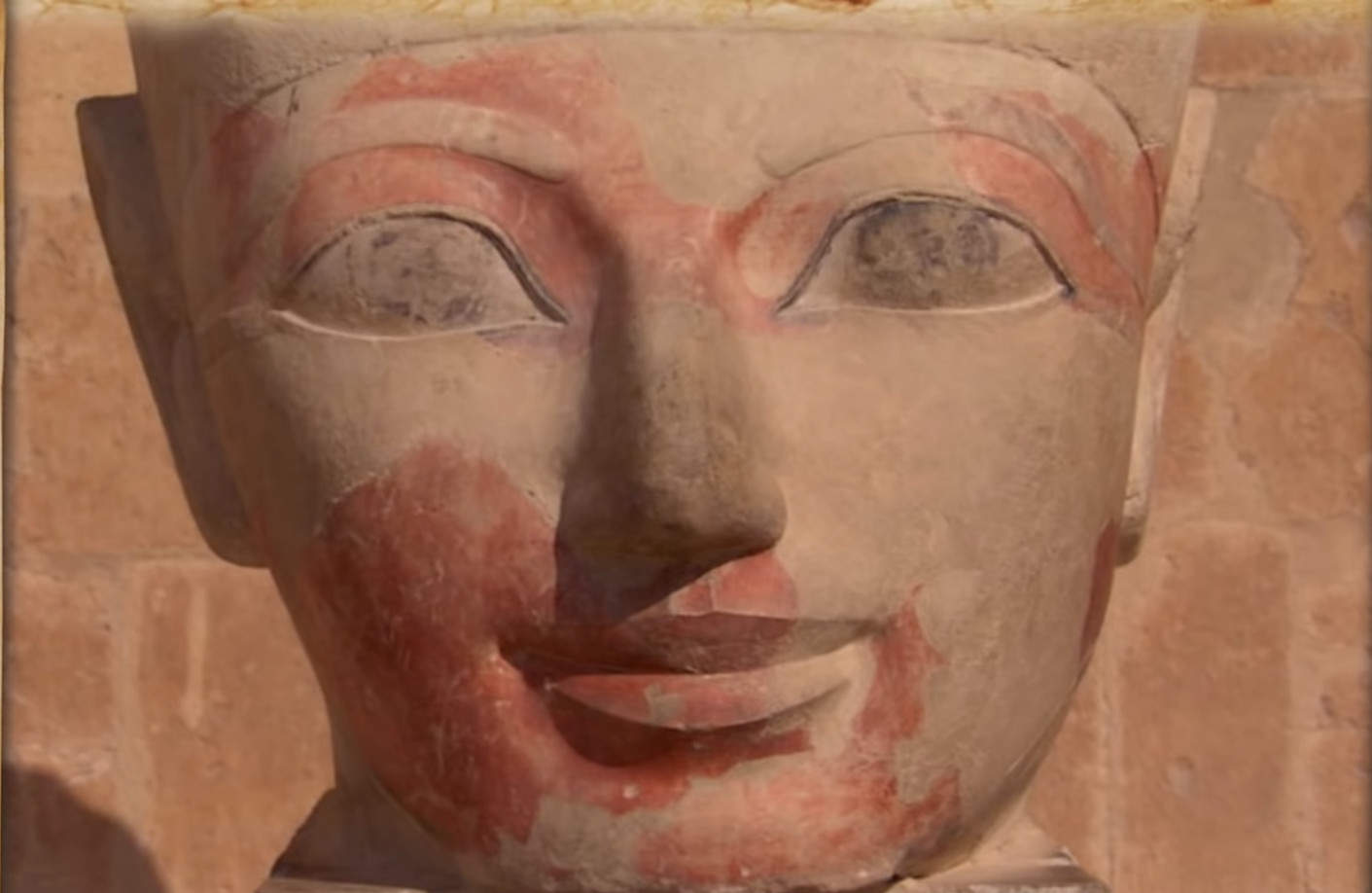
 4. The female pharaohYes, there was a female pharaoh, and her name was Hatshepsut. She came to the throne around 1478 BCE and Egypt enjoyed great peace and prosperity during her reign. But years after her death, almost all traces of her were erased from the country:
 Related: Women in ancient Egypt and the Matriarchal society that prospered for thousands of years 5. Feats of StrengthDid you know that the Egyptian pharaohs had to prove they were still able to be leader of their nation? It was an event known as Heb-Sed, which took place after a pharaoh had been in power for 30 years. But what they had to do sounds like something out of “Seinfeld”:
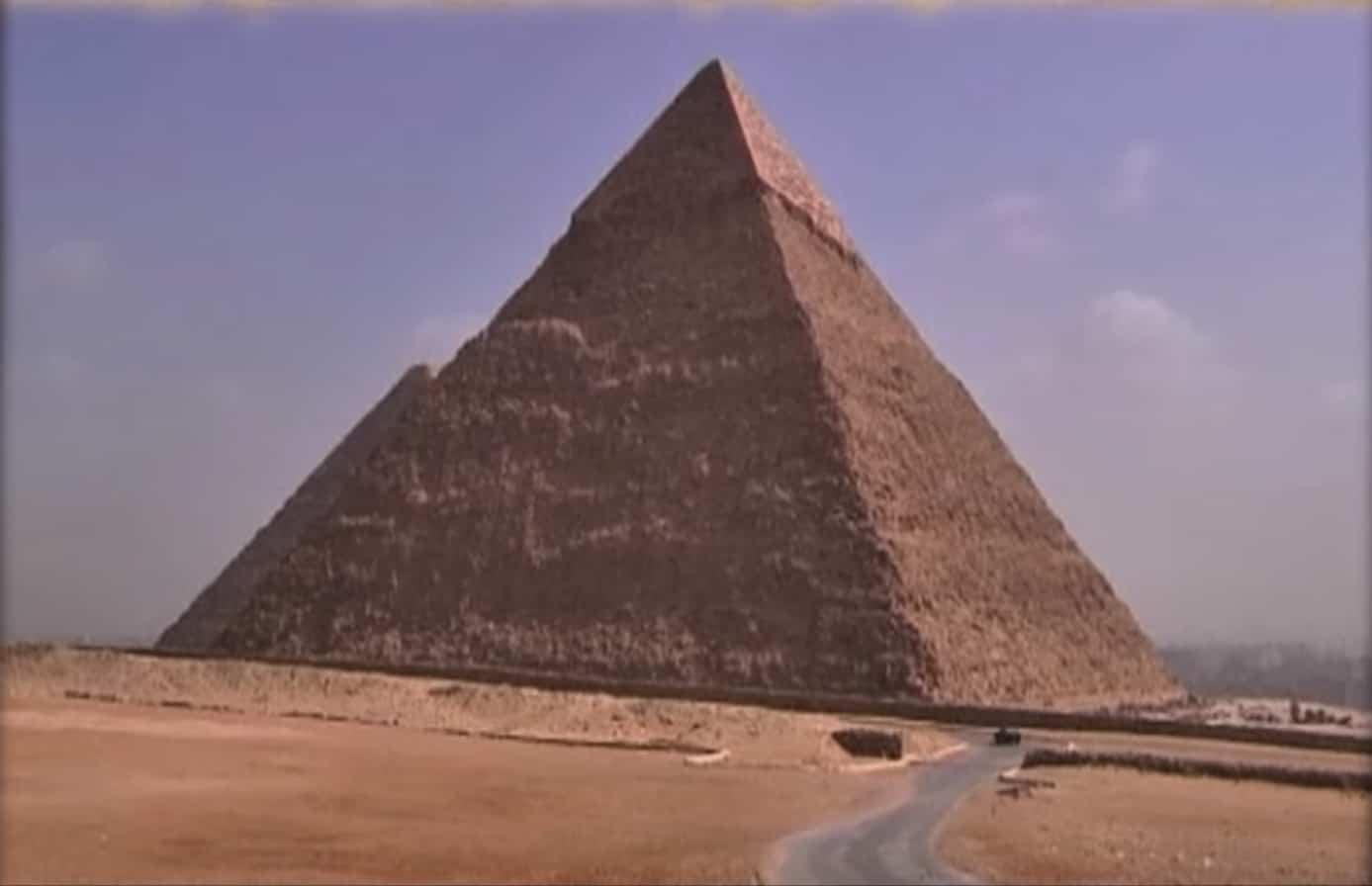
If you were unable to finish the race, you were sacrificed and replaced. If that doesn’t give you performance anxiety, nothing will. 6. The White PyramidsYes, the pyramids were originally white, and this was accomplished by plating the surface with white limestone that had been polished. When the sun would hit the pyramid, it would shine in the sunlight. Sadly, time and natural events took the white sheen off the structures:
7. Sunken CitiesThonis-Heracleion, which was one of the greatest cities of ancient Egypt, was missing for 1,000 years. It was rediscovered a couple of decades ago. Turns out it was underwater all along:
As you can tell from looking at this list, the things we thought we knew about Egyptian history are outweighed by the many mysteries we didn’t know about until now. For even more mysteries about ancient Egypt, take a look at this incredible video from Alltime10s: YouTube Video Here: https://www.youtube.com/watch?v=JQs4QyKnYMQ Featured Image Via YouTube Screenshot Uxbridge Police Department Officer Stephen Laporta was fatally struck while helping a driver in a broken-down vehicle
Federal authorities say the woman tried to strike officers with her vehicle during a DHS immigration sweep targeting suspected fraud
Sources told the AP that HSI agents were going door-to-door investigating allegations of fraud, human smuggling and unlawful employment practices
|
||
|
Copyright © 2026 Paranormal News Network - All Rights Reserved Powered by WordPress & Atahualpa 100 queries. 0.127 seconds. |
||