EPFL physicists have found a way to measure the time involved in quantum events and found it depends on the symmetry of the material. “The concept of time has troubled philosophers and physicists for thousands of years, and the advent of quantum mechanics has not simplified the problem,” says Professor Hugo Dil, a physicist at EPFL. “The central problem is the general role of time in quantum mechanics, and especially the timescale associated with a quantum transition.”
|
|
||
|
YouTube Video Here: https://www.youtube.com/embed/xvAvN5xn5oY?feature=oembed&enablejsapi=1 Deep in the heart of northern Kansas, researchers excavated farmland that used to be under the ocean and ended up finding a brand new species of shark that lurked beneath the surface around 91 million years ago. During the middle to the late Cretaceous period, the region of the United States we know now as the Great Plains was submerged under the North American Western Interior Seaway, with Mitchell County, Kansas lying at the edge of the eastern boundary of the water.
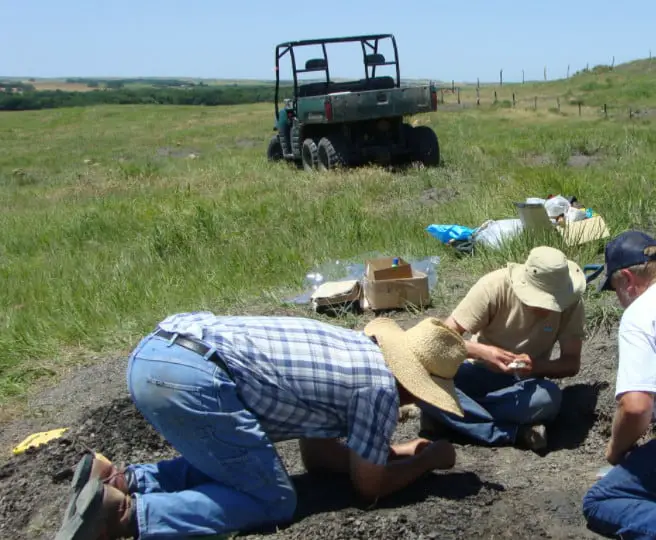 Just as the oceans are teeming with life today, so too did the ancient seaway. And also like today, sharks were an apex predator that most marine animals feared. DePaul University professor of paleobiology Kenshu Shimada and Michael Everhart from the Sternberg Museum of Natural History at Fort Hays State University thought they had uncovered the remains of a prehistoric shark species known as Credotus crassidens, which ranged from England to North America. However, when they compared the teeth they had found to known Credotus crassidens teeth, they realized to their delight that they had just found a brand new species of shark, which they named Cretodus houghtonorum in honor of Keith and Deborah Houghton, who owned the land where the specimen was found and donated it to the museum.

The pair of researchers found more than just teeth, which they explained in a paper published in the Journal of Vertebrate Paleontology:
 Bigger than the Great WhiteThe teeth, of course, tell us a lot about sharks both living and extinct. But this specimen revealed even more.
Based on the vertebrae, the team estimated the shark’s length at around 17 feet, and that it could have possibly reached 22 feet, bigger than a Great White Shark named Deep Blue estimated to be 20 feet in length and is also a distant cousin of the Credotus along with the Tiger Shark.

Indeed, sharks are vulnerable to extinction today due to the demand for shark fin soup. But if sharks disappear, ocean eco-systems would be thrown into chaos. In addition, Shimada and Everhart believe Credotus houghtonorum engaged in cannibalism before birth, much like modern-day sharks.
But that was not the most exciting part of the excavation. Like a forensic team, Shimada and Everhart had the opportunity to map out a series of events that occurred 91 million years ago, starting with the ingestion of a hybodontid shark by the Credotus, only for the Credotus to die and be scavenged upon by a Squalicorax shark before it, too, succumbed to whatever killed it near the same spot.
That’s a fascinating find that certainly provides a clear picture of the eat or be eaten world of Cretaceous period oceans. These waters were obviously dangerous.  Related: Are billionaires buying up land away from the coasts based on prophecies or inside information? In the end, the scientists understand that without the cooperation of landowners, they would not be able to make discoveries like this one, which is why they hope to foster goodwill among landowners across Kansas and the rest of the world so that further research can shed more light on these ancient eras in Earth’s history and fill in the gaps with new species so we can further understand the creatures living among us today.
Sharks are an important foundational species in the ocean environment. Letting them go extinct would be a great loss. Sharks have survived on this planet for over 91 million years. If they die out now, we only have ourselves to blame and we’ll suffer for it just as much as every species that relies on the ocean. More about sharks on the Great Plains from PBS Eons:
Ciaran O’Hare scribbles symbols using colored markers across his whiteboard like he’s trying to solve a crime—or perhaps planning one. He bounces around the edges of the board, slowly filling it with sharp angles and curling letters. I watch on, and when he senses I’m losing track, he pauses intermittently, allowing my brain to catch up. Ciaran speaks with an easy to understand British inflection, but the language on the whiteboard might as well be hieroglyphics.
YouTube Video Here: https://www.youtube.com/embed/x_7eHqWOrKA?feature=oembed&enablejsapi=1 Archaeologists made a fascinating find in Norway recently by uncovering not just one ancient Viking boat grave, but two. And the mysterious bit is that the man and the woman in the double grave were buried 100 years apart. Vikings often buried important members of their society inside boat graves, which is a mound that covers a longboat. Some of these boats have even been recovered and are currently on display in Denmark at the Viking Ship Museum.  In addition to the bodies of the deceased, Vikings would bury items they believed a person would need in the afterlife such as jewelry, livestock, and weapons. As you can imagine, archaeologists get pretty excited when they find a Viking boat grave. And that’s exactly what archaeologists from the Norwegian University of Science and Technology (NTNU) Museum found at a farm known as Skeiet at Vinjeøra on the side of a cliff. Only they didn’t just find one, they found two. First, the team excavated the boat grave of a woman who died during the 9th century. With her was buried a brooch that turned out to be a decorative harness fitting that Vikings likely seized during a raid in Ireland.
 Vikings frequently raided coastal lands in the United Kingdom and continental Europe seeking treasure and new territories to colonize, including Ireland. In fact, the Vikings actually saved Ireland from a steep population decline in the 10th century.
The brooch is not the only item in the grave. The woman was also buried with a spinning wheel, a pearl necklace, scissors and the head of a cow.  But then the team dug a little bit deeper and were shocked to discover that a man in a similar boat grave had been buried earlier during the 8th century. The woman had been buried in a smaller boat right above him as if the Vikings were reusing the burial mound.
Indeed, what’s even more fascinating is that the man was buried during the Merovingian era, which researchers figured out based on the style of the sword they found in the grave.
 The Merovingian kings were a royal dynasty that ruled a large swath of territory in Western Europe, including France from the middle of the 5th century AD to around 751 AD in the middle of the 8th century. And that’s why Sauvage says the mound dates back to that era as well, making it a very rare find.
Sauvage went on to point out that the farm likely belonged to a single family for generations, which means the mound could be a family grave.
Further evidence that the two share a familial relationship is that the woman’s brooch is also from the Merovingian era, possibly being passed down through the years.
However, only DNA testing will tell us for sure.
And we also know that these individuals must have been particularly important because of where the mound is located on the property.
Anyone who looked up at the cliff from the fjord would have seen this burial mound, almost certainly ensuring that the family would be remembered and revered. Either that or they just wanted a nice view in the afterlife. Once again, researchers have found Viking boat graves, which seem to be less rare these days, especially as technology improves. Unfortunately, the mound had been plowed over by farmers for hundreds of years, which is why it had not been found sooner. And this is just one part of the mound. There could be more in the center and the other sides. It’s just a matter of excavating the site further. Until then, we must wait in anticipation. Featured Image: YouTube screenshot The man shot during the Miami-Dade Sheriff’s Office warrant service was the brother of a man suspected of possessing child pornography; both men worked as TSA agents
When Apollo 17 astronauts returned from the moon in 1972, they visited NASA Langley Research Center in Hampton, Virginia, to thank staff for their contributions to the mission, saying “we stood on the shoulders of giants as we shot for the stars.”
SpaceX launched 26 missions from Kennedy Space Center’s Launch Pad 39-A in 2025, including four human spaceflight missions. That era is coming to an end. A massive crane was put in place this week with speculation it will soon remove the crew access arm from the historic launch site that hosted most of the Apollo and space shuttle missions as SpaceX shifts plans for all future launches of its Crew Dragon spacecraft to its neighboring pad at Cape Canaveral Space Force Station.
An international collaboration of astrophysicists that includes researchers from Yale has created and tested a detection system that uses gravitational waves to map out the locations of merging black holes—known as supermassive black hole binaries—around the universe. Such a map would provide a vital new way to explore and understand astronomy and physics, just as X-rays and radio waves did in earlier eras, the researchers say. The new protocol demonstrated by the North American Nanohertz Observatory for Gravitational Waves (NANOGrav) offers a detection protocol to populate the map.
Earth’s magnetic field is generated by the churn of its liquid nickel-iron outer core, but it is not a constant feature. Every so often, the magnetic north and south poles swap places in what are called geomagnetic reversals, and the record of these flips is preserved in rocks and sediments, including those from the ocean floor. These reversals don’t happen suddenly, but over several thousand years, where the magnetic field fades and wobbles while the two poles wander and finally settle in the opposite positions of the globe.
A newly discovered comet has astronomers excited, with the potential to be a spectacular sight in early April. C/2026 A1 (MAPS) was spotted by a team of four amateur astronomers with a remotely operated telescope in the Atacama desert on January 13.
Today’s most powerful computers hit a wall when tackling certain problems, from designing new drugs to cracking encryption codes. Error-free quantum computers promise to overcome those challenges, but building them requires materials with exotic properties of topological superconductors that are incredibly difficult to produce. Now, researchers at the University of Chicago Pritzker School of Molecular Engineering (UChicago PME) and West Virginia University have found a way to tune these materials into existence by simply tweaking a chemical recipe, resulting in a change in many-electron interactions.
Measuring conditions in volatile clouds of superheated gases known as plasmas is central to pursuing greater scientific understanding of how stars, nuclear detonations and fusion energy work. For decades, scientists have relied on a technique called Thomson scattering, which uses a single laser beam to scatter from plasma waves as a way to measure critical information such as plasma temperature, density and flow.
The Pauli exclusion principle is a cornerstone of the Standard Model of particle physics and is essential for the structure and stability of matter. Now an international collaboration of physicists has carried out one of the most stringent experimental tests to date of this foundational rule of quantum physics and has found no evidence of its violation. Using the VIP-2 experiment, the team has set the strongest limits so far for possible violations involving electrons in atomic systems, significantly constraining a range of speculative theories beyond the Standard Model, including those that suggest electrons have internal structure, and so-called “Quon models.” Their experiment was reported in Scientific Reports in November 2025.
A research team from the Xi’an Institute of Optics and Precision Mechanics (XIOPM) of the Chinese Academy of Sciences, along with collaborators from the Institute National de la Recherche Scientifique, Canada, and Northwest University, has developed a single-shot compressed upconversion photoluminescence lifetime imaging (sCUPLI) system for high-speed imaging.
Recently, a research team from the Hefei Institutes of Physical Science of the Chinese Academy of Sciences successfully grew a high-entropy garnet-structured oxide crystal and achieved enhanced laser performance at the 2.8 μm wavelength band. By introducing a high-entropy design into a garnet crystal system, the team obtained a wide emission band near 2.8 μm and continuous-wave laser output with improved average power and beam quality, demonstrating the material’s strong potential as a high-performance gain medium for mid-infrared ultrashort-pulse lasers.
|
||
|
Copyright © 2026 Paranormal News Network - All Rights Reserved Powered by WordPress & Atahualpa 99 queries. 0.124 seconds. |
||
