This image, taken with ESO’s Very Large Telescope (VLT), seems to have captured a cosmic hawk as it spans its wings. While the dark clouds in the middle of the image make up the head and body of the bird of prey, the filaments extending away from the body to the left and right compose its wings. Below it is a mesmerizing blue nebula with massive newly born stars, whose intense radiation make the gas around them glow brightly.
|
|
||
|
Astronomers with the Hobby-Eberly Telescope Dark Energy Experiment (HETDEX) have used data from the project to make the largest, most accurate 3D map yet of the light emitted by excited hydrogen in the early universe, 9 billion to 11 billion years ago. This specific form of light, called Lyman alpha, is emitted in large quantities when hydrogen atoms are exposed to a star’s energy. That makes it a great tool for finding bright galaxies in this far-off time, which experienced a rash of star creation. However, the locations of fainter galaxies and gas, which also emit Lyman alpha, have remained largely unknown.
The best candidate for next-generation magnetic devices—technology that can power, store, sense or transport information—may be, counterintuitively, antiferromagnets. Today, the most widely used magnetic materials are ferromagnets, which exhibit permanent magnetization and therefore strongly attract each other. Their opposite, called antiferromagnetic materials, exhibit no net magnetization at all. Despite a net zero magnetic field, they offer appealing properties that would solve the challenges of current magnetic technologies, like stray magnetic field generation or slow operation.
Tiny life forms tucked into debris from an asteroid hit could catapult to other planets—including Earth—and survive, a new Johns Hopkins University study finds. The work demonstrates that a certain hardy bacterium easily withstands extreme pressure comparable to an ejection from Mars after an asteroid hit, as well as the inhospitable conditions it would face during the ensuing interplanetary journey.
A new computational method allows modern atomic models to learn from experimental thermodynamic data, according to a University of Michigan Engineering and Université Paris-Saclay study published in Nature Communications. Leveraging a machine learning technique called score matching, the method expresses the thermodynamic free energy of atomic systems as a function of the underlying atomic interaction model, unlike standard schemes where the interaction model is fixed.
After more than 25 months of successful operations in space, the SpIRIT mission has ended, marking a major milestone for Australia’s growing space capability. Led by the University of Melbourne, in collaboration with the Italian Space Agency, the Space Industry Responsive Intelligent Thermal (SpIRIT) nanosatellite exceeded its original two-year design life.
To uncover the history of our solar system, it is necessary to study the dynamic evolution of the ancient solar nebula materials. These materials interacted and coevolved with the weak but widespread magnetic field of the solar nebula, which was generated by the weakly ionized nebular gas in the protoplanetary disk. During the formation or alteration, the magnetization of these materials can become locked in for billions of years, a phenomenon known as natural remanent magnetization (NRM). NRM measurements of primordial astromaterials can therefore provide critical information on the spatiotemporal evolution of the early solar system.
One of the most striking features of quantum physics is that certain properties cannot be measured at the same time. Every measurement may inevitably affect the object’s physical state being measured—and therefore also the outcome of any subsequent measurement. How fast something is moving, for example, can depend on whether its position was measured beforehand.
After being shot in the hand, a San Jose sergeant returned fire before the suspect shot the sergeant a second time, striking him in the head
The Volusia County deputy was working with a trainee on his eighth day of patrol when a suspect opened fire; despite being wounded, he broadcast suspect details before being rushed to a trauma center
Acting ICE director Todd Lyons said many requests involved assault, weapons and drug charges
When you reach the bottom of a container of milk or honey, you might be tempted to tip the container over to get that last pesky little bit out. After all, you only need another teaspoon for that recipe, and you’re sure it’s in there. From emptying jars to drying dishes, research about thin film flows in the kitchen highlights everyday connections to physics.
Antioch officials say the department has revised use of force, pursuit and bias-policing policies amid a multiyear federal compliance deal
Physicists in China have unveiled new clues to the origins of high-temperature superconductivity in an iron-based material just a single unit-cell thick. Led by Qi-Kun Xue and Lili Wang at Tsinghua University, the team’s experiments show that the effect emerges through a striking dichotomy between two atomic “sublattices” in the material—offering deeper insight into how superconductivity arises. Their results are published in Physical Review Letters.
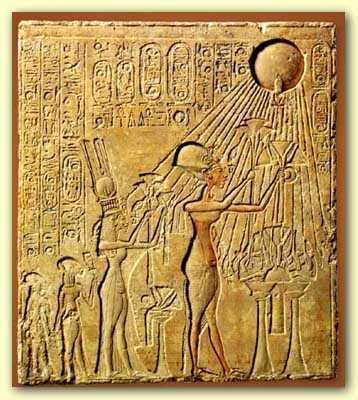 Akhenaten the Heretic PharaohAkhenaten was known before the fifth year of his reign as Amenhotep IV. He was a Pharaoh of the Eighteenth dynasty of Egypt who ruled for 17 years and was the father of Tutankhamun. He is especially noted for abandoning traditional Egyptian polytheism and introducing worship centered on the Aten. The Aten, the sun-disk, is first referred to as a deity in The Story of Sinuhe from the 12th dynasty, in which the deceased king is described as rising as a god to the heavens and uniting with the sun-disk, the divine body merging with its maker. By analogy, the term “silver Aten” was sometimes used to refer to the moon. The solar Aten was extensively worshiped as a god in the reign of Amenhotep III when it was depicted as a falcon-headed man much like Ra. Akhenaten claimed, “There is only one god, my father. I can approach him by day, by night.” This was a very, very strange statement for the time. Akhenaten could have been the first monotheist in all of history, a precursor to Abraham, Isaac, Jacob and Muhammad as prophets who worshiped one god. In the reign of Amenhotep III’s successor, Amenhotep IV or Akhenaten, the Aten became the central god of Egyptian state religion, Amenhotep IV changed his name to Akhenaten to reflect his close link with the new supreme deity.  Akhenaten was one of the most controversial Pharaohs to rule Egypt. According to Egyptian Mythology he descended from the gods who arrived on Earth at the time of Tep Zepi and until today, people still believe that this Pharaoh did, in fact, come from the Stars. In 1352 BC, Akhenaten ascended to the throne as the tenth pharaoh of the 18th dynasty. Almost immediately, he instituted a series of radical religious changes, including a ban on references to multiple gods. He abandoned traditional Egyptian polytheism and introduced the worship of the Aten. An early inscription likens him to the sun as compared to the stars. Akhenaten, upon becoming Pharaoh ordered all the iconography of previous gods to be removed. He only allowed one emblem, which was a sun emblem, literally a sun disk with curious arms or rays pointing down. According to writings by Akhenaten and poems that were written about him later on, he was visited by beings that descended from the sky, who told Akhenaten what he needed to do, and perhaps this is why he removed all other symbols of other gods from Egypt and implemented most of the changes he went on to do. Akhenaten claimed to be a direct descendant of Aten and like any other pharaoh Akhenaten regarded himself to be divine, he was a God, but not only did he believe himself to be a god, the whole nation saw him as a god and worshiped him like one. During his time as Pharaoh Akhenaten made numerous changes but he also ordered the construction of a new capital city which he called Amarna and he dedicated it to the sun. Akhenaten spent the next ten years there and in that time he instituted changes in art and culture and on of the most notable changes were how he would be publicly depicted, and this was important because in Egyptian iconography, Pharaohs are depicted as these triangular shaped beings, strong shoulders and these very skinny waists, so basically they were depicted as being strong, like heroes, this would reflect power and it was very important but Akhenaten would go on and shows himself perhaps as he really is, a strange look, unlike other Pharaohs. Strange bodyThe list of peculiarities is lengthy: an elongated skull, long neck, sunken eyes, thick thighs, long fingers, backward-turned knee joints, a prominent belly that suggests pregnancy and female-like breasts. The first thing that is strange is his elongated skull, and in all of the statues and depictions of him, we see this elongated skull. In general his body was sort of like a feminine and masculine mixture. The change in royal iconography of Akhenaten depicted him with a misshapen head, with a potbelly a sunken chest, elongated arms, larger thighs and this was totally opposed to the idealized iconography of traditional Egyptian artists that showed these big and strong looking Pharaohs. Why would he make changes in the royal iconography to show him as this “weak” Pharaoh? His wife Nefertiti was also depicted having an elongated skull, did they have some kind of genetic anomaly that caused their heads– and body’s in general to be misshaped and disproportional? Or is there something more to this strange Pharaoh and his origins? Is it possible that he was actually a hybrid human being? with genes and DNA from Extraterrestrials? What is for sure is that he was not like other Pharaohs and human beings in general, when you look at his statues and depictions you immediately point out these strange, unlike humanoid characteristics. He is simply put a strange “human”.  Dr. Braverman (Professor of dermatology at Yale University School of Medicine) attributes the king’s female form to familial gynecomastia, brought on by an inherited syndrome called aromatase excess syndrome. This diagnosis is the first to be associated with Akhenaten. As for the shape of Akhenaten’s head, Dr. Braverman attributes this to a condition called craniosynostosis, in which sutures, the fibrous joints of the head, fuse at an early age, and interfere with the process of skull formation. The specific condition, called a sagittal suture, is dominantly inherited. Dr. Braverman says he observed this abnormality in the king’s daughters as well as in Queen Hatshepsut, daughter of Tuthmosis I, founder of Akhenaten’s paternal line, and in King Tut, who ended this line. After AkhenatenAfter his reign the city of Amarna was abandoned and temples to the sun were destroyed, images of Akhenaten were deliberately defaced and Ancient Egypt rapidly “recovered” and returned to its old ways, worshiping many gods.Today, many Egyptologists believe that Akhenaten was actually forced to abdicate and flee from Egypt with his loyal followers. In 1907, the actual body of Akhenaten was discovered in Egypt’s Valley of the Kings by British archaeologist named Edward Ayrton. After unearthing Akhenaten’s mummified remains, Edward Ayrton was able to confirm that the ancient pharaoh’s skull was misshapen and elongated. Akhenaten was succeeded by his son, Tutankhamun, who became the most renowned pharaoh of all time. When his tomb was discovered in 1922 by Howard Carter, Tutankhamun was also found to have an elongated skull. In February 2010, the results of DNA tests confirmed that he was the son of Akhenaten.  written by Ivan P.- Ancient-Code.com |
||
|
Copyright © 2026 Paranormal News Network - All Rights Reserved Powered by WordPress & Atahualpa 100 queries. 0.109 seconds. |
||